Field Troubleshooting Guide for Vertical Powder and Bulk Material Lifting Systems
Bucket Elevator Backflow in Cement and Fly Ash Handling Systems
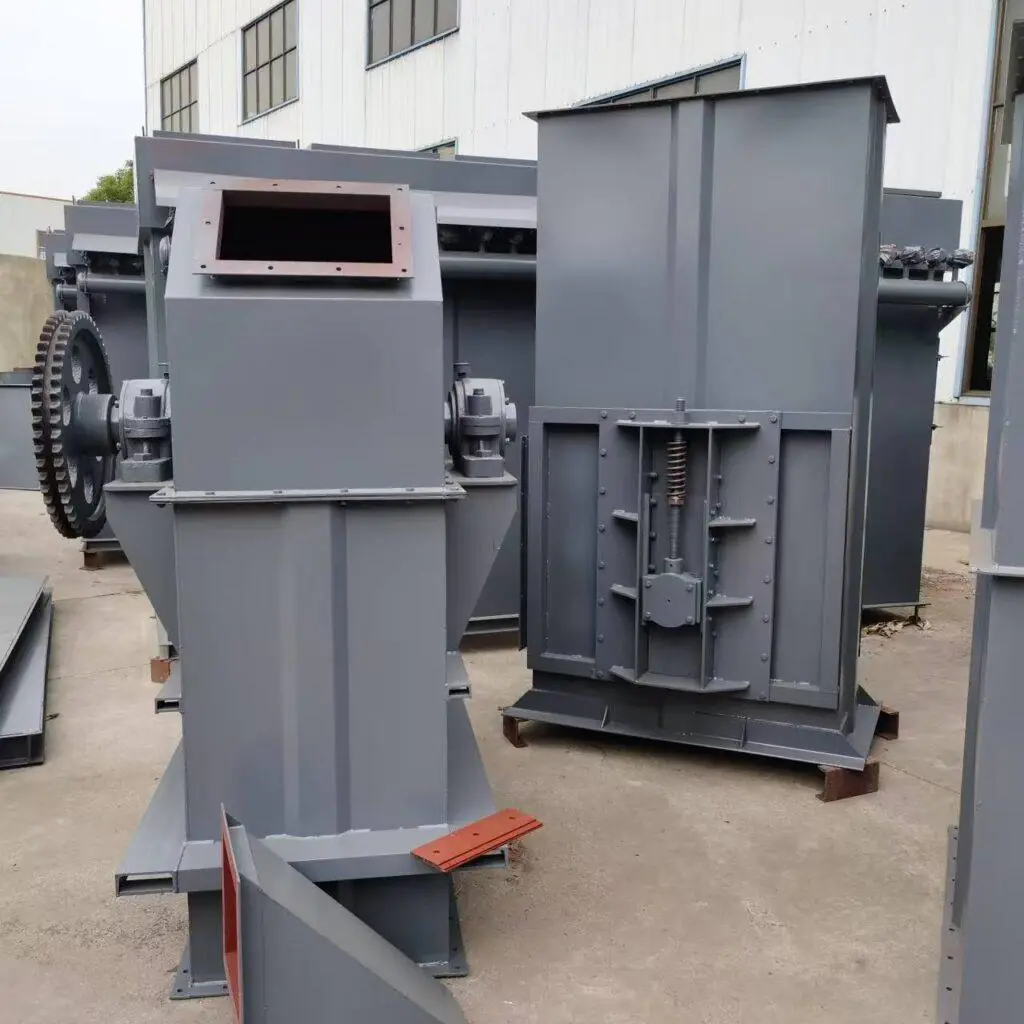
Bucket elevator backflow is a common field problem in cement plants, grinding stations, fly ash terminals, lime powder systems, and bulk material handling projects. A bucket elevator is used to lift powder, granules, clinker dust, or other bulk materials vertically from one process point to another.
In cement and fly ash applications, a bucket elevator may work after a silo discharge system, screw conveyor, air slide conveyor, bag filter hopper, rotary valve, flow control gate, or packing line. When the system runs well, material is lifted smoothly and discharged into the next process. When backflow appears, part of the material does not leave the head section correctly. Instead, it falls back inside the elevator casing or returns to the boot section.
This problem can reduce lifting capacity, increase dust, overload the boot section, damage buckets, accelerate belt or chain wear, and cause frequent shutdowns.
For cement powder, fly ash, clinker dust, slag powder, and lime powder, bucket elevator backflow should not be treated as a small operating issue. It usually means that feeding, speed, discharge design, bucket condition, belt alignment, or downstream equipment needs to be checked.
Why Bucket Elevator Backflow Happens
A bucket elevator lifts material through buckets fixed on a belt or chain. Material enters the boot section, fills the buckets, moves upward, and discharges at the head section. If the filling, lifting, or discharge process is not stable, material may fall back inside the casing.
In real plant operation, bucket elevator backflow is usually caused by one or more of these issues:
✔ Overfeeding at the inlet
✔ Unsuitable belt or chain speed
✔ Poor head section discharge
✔ Worn, damaged, or unsuitable buckets
✔ Belt misalignment or chain wear
✔ Material buildup in the boot section
✔ Downstream outlet restriction
The key is to identify where the material starts returning. If the problem appears near the inlet, it may be a feeding issue. If it appears at the head section, the cause may be discharge speed, bucket shape, or outlet restriction. If material accumulates in the boot section, the elevator may already be suffering from repeated backflow.
For broader conveyor and bulk handling equipment categories, CEMA provides useful references for engineered bulk handling equipment.
Cause 1: Overfeeding at the Inlet
Overfeeding is one of the most common causes of bucket elevator backflow. If too much material enters the boot section at once, the buckets cannot pick up and lift it efficiently. Excess material remains at the bottom, builds up around the boot pulley or sprocket, and may be carried unevenly.
This often happens when the upstream screw conveyor, rotary valve, flow control gate, or silo outlet feeds faster than the bucket elevator can handle.
Field Signs
✔ Material accumulates in the boot section
✔ Motor current rises soon after feeding starts
✔ Elevator capacity becomes unstable
✔ Dust increases near the inlet or boot section
✔ The elevator works normally at a lower feed rate
✔ Blockage happens after sudden full feeding
Field Troubleshooting
Check whether the upstream feeding equipment is sending material at a stable rate. Look at the screw conveyor, rotary valve, flow control gate, or silo discharge outlet. If material enters in sudden surges, the bucket elevator may be overloaded even if the rated capacity looks sufficient on paper.
Also check the starting sequence. The elevator should run before material feeding starts. If material enters the boot section before the elevator reaches normal speed, backflow or buildup may happen quickly.
Practical Solution
Control the feeding rate and avoid sudden full feeding. Use a rotary valve, flow control gate, or screw conveyor adjustment to match the elevator capacity. For automated systems, use interlock control so the bucket elevator starts before upstream feeding equipment begins discharging.
Cause 2: Belt or Chain Speed Is Not Suitable
The speed of the belt or chain directly affects bucket filling and material discharge. If the speed is too low, material may not discharge properly at the head section. If the speed is too high, buckets may not fill correctly, and material may scatter or create excessive dust.
For cement powder and fly ash, the correct speed depends on material bulk density, particle size, bucket type, elevator height, and discharge method.
Field Signs
✔ Material does not discharge cleanly at the head section
✔ Powder falls back inside the casing
✔ Dust increases around the outlet
✔ Capacity is lower than expected
✔ Bucket filling is uneven
✔ Motor load fluctuates during operation
Field Troubleshooting
Check the actual belt or chain speed and compare it with the original design. Also check whether the elevator was modified after installation. In many plants, production capacity increases over time, but elevator speed and bucket size remain unchanged.
If the elevator is used for a different material than originally designed, the old speed may no longer be suitable.
Practical Solution
Adjust the speed according to material condition and capacity requirement. Do not increase speed blindly. A stable bucket elevator needs proper matching between feeding rate, bucket filling, discharge trajectory, and downstream receiving capacity.
Cause 3: Poor Discharge at the Head Section
The head section is where the bucket elevator discharges material into the outlet chute. If the discharge trajectory is wrong, material may hit the casing, fall back, or accumulate near the head pulley.
This problem is common when the outlet chute is too narrow, the discharge angle is unsuitable, or the material does not leave the bucket cleanly.
Field Signs
✔ Material hits the head casing during discharge
✔ Powder falls back into the elevator leg
✔ Outlet capacity is unstable
✔ Dust appears near the head section
✔ Material buildup is found near the discharge chute
✔ Abnormal noise appears at the head section
Field Troubleshooting
Open the inspection cover and check whether material discharges smoothly into the outlet. Look for impact marks, buildup, narrow chute sections, sharp bends, and poor transition design.
Also check whether the bucket type is suitable for the material. Fine powder, clinker dust, and granular materials may require different bucket shapes or discharge conditions.
Practical Solution
Improve the discharge chute design and make sure material can leave the head section smoothly. Avoid narrow outlets, sharp transitions, and dead corners. If needed, adjust the bucket type, speed, or head section design to improve discharge efficiency.
Cause 4: Worn, Damaged, or Wrong Bucket Type
Buckets are the working parts that carry material upward. If buckets are worn, cracked, deformed, loose, or unsuitable for the material, they may not fill or discharge correctly. This can cause bucket elevator backflow and reduced lifting capacity.
In cement plants, buckets may wear faster when handling abrasive materials such as clinker dust, slag powder, limestone powder, or raw meal. In fly ash systems, fine powder may stick inside buckets if moisture is present.
Field Signs
✔ Bucket edges are worn or broken
✔ Some buckets are loose or missing
✔ Material remains inside buckets after discharge
✔ Capacity gradually decreases over time
✔ Backflow becomes worse after long-term operation
✔ Abnormal vibration appears during running
Field Troubleshooting
Inspect the buckets during shutdown. Check bucket wear, bolt tightness, deformation, cracks, spacing, and material buildup inside the bucket. Also confirm whether replacement buckets match the original design.
Sometimes backflow increases after bucket replacement because the new bucket type is not suitable for the original discharge design.
Practical Solution
Replace damaged buckets in time and use a bucket type suitable for cement, fly ash, or bulk material handling. For abrasive materials, choose wear-resistant buckets. For sticky powder, reduce moisture and check whether material is remaining inside the bucket after discharge.
Cause 5: Belt Misalignment or Chain Wear
Belt misalignment and chain wear can also cause bucket elevator backflow. If the belt runs to one side, buckets may scrape the casing, tilt, or discharge material unevenly. If the chain is worn, bucket movement may become unstable.
This problem can lead to casing wear, abnormal noise, bucket damage, reduced lifting efficiency, and material falling back into the elevator leg.
Field Signs
✔ Belt runs to one side
✔ Buckets touch the casing
✔ Abnormal noise appears during operation
✔ Material discharge becomes uneven
✔ Bucket bolts loosen frequently
✔ Chain elongation or uneven tension is visible
✔ Dust leakage increases around inspection doors
Field Troubleshooting
Check belt tracking, pulley alignment, chain tension, sprocket wear, and bearing condition. Inspect whether the elevator casing is straight and whether material buildup is pushing buckets out of alignment.
Also check whether the boot section has too much accumulated material. An overloaded boot section may worsen belt tracking problems.
Practical Solution
Adjust belt tracking or chain tension according to site requirements. Replace worn sprockets, pulleys, chains, or damaged bearings when necessary. Keep the boot section clean to prevent material from interfering with bucket movement.
Cause 6: Material Buildup in the Boot Section
The boot section is where material enters the bucket elevator. If material accumulates there, buckets may not fill correctly, the belt or chain may drag through material, and the elevator may suffer from repeated backflow.
Boot section buildup can be caused by overfeeding, poor inlet design, moisture, low speed, worn buckets, or material falling back from the head section.
Field Signs
✔ Material remains in the boot after shutdown
✔ Elevator requires frequent cleaning
✔ Motor current rises during startup
✔ Buckets pick up material unevenly
✔ Dust appears near the boot inspection door
✔ Blockage happens after several operating cycles
Field Troubleshooting
Open the boot section inspection cover and check the material level. Look for compacted powder, hardened lumps, foreign objects, and material buildup around the pulley or sprocket.
Also check whether material is falling back from the head section. If backflow from the top is not solved, the boot section will keep accumulating material even after cleaning.
Practical Solution
Keep the boot section clean and improve the inlet feeding condition. Avoid excessive material accumulation before startup. If buildup is caused by moisture, improve sealing and material storage. If buildup is caused by head section backflow, solve the discharge problem first.
Cause 7: Downstream Outlet Restriction
A bucket elevator may work correctly, but if the downstream chute, storage bin, air slide conveyor, screw conveyor, or receiving equipment cannot accept material, discharge becomes restricted. Material then accumulates at the outlet and may fall back inside the elevator.
This issue is often overlooked because operators focus only on the elevator itself.
Field Signs
✔ Backflow happens after the elevator runs for a while
✔ Material accumulates at the outlet chute
✔ Downstream equipment is stopped or overloaded
✔ Dust increases near the head discharge area
✔ The elevator works better when downstream flow is clear
✔ Outlet chute has material buildup or blockage
Field Troubleshooting
Check whether downstream equipment starts before the bucket elevator feeds material. Inspect the outlet chute, receiving bin, air slide conveyor, screw conveyor, valve, or dust collector hopper. A narrow outlet or blocked receiving point can create back pressure and cause material to fall back.
Practical Solution
Make sure downstream equipment is ready before material discharge starts. Keep the outlet chute clear and avoid narrow transitions. Use interlock control when the bucket elevator is part of an automated cement or fly ash handling system.
Field Troubleshooting Checklist for Bucket Elevator Backflow
When bucket elevator backflow happens, do not only clean the boot section and restart the machine. The problem may return if the root cause is not found.
Use this field checklist:
✔ Is the feeding rate higher than elevator capacity?
✔ Is the bucket elevator started before material feeding begins?
✔ Is the belt or chain speed suitable?
✔ Is the discharge chute clear?
✔ Are buckets worn, loose, or damaged?
✔ Is the belt tracking correctly?
✔ Is the chain tension correct?
✔ Is there buildup in the boot section?
✔ Is downstream equipment running properly?
✔ Does backflow happen at startup, during running, or near shutdown?
The timing of backflow helps locate the issue:
✔ Backflow at startup often means boot buildup or wrong starting sequence
✔ Backflow during normal running often means overfeeding, speed mismatch, or bucket wear
✔ Backflow near the head section often means discharge restriction or poor trajectory
✔ Backflow after long operation often means buildup, downstream blockage, or material moisture
This troubleshooting method helps operators find the real cause instead of replacing parts without direction.
How to Prevent Bucket Elevator Backflow
Preventing bucket elevator backflow requires correct system matching, proper operation, and regular inspection. A bucket elevator should not be treated as an isolated machine. It works together with upstream feeding equipment and downstream receiving equipment.
For cement and fly ash handling systems, plants should:
✔ Control the feeding rate
✔ Avoid sudden material surges
✔ Start the elevator before feeding begins
✔ Keep the boot section clean
✔ Inspect buckets regularly
✔ Check belt alignment or chain tension
✔ Keep the discharge chute clear
✔ Maintain downstream conveyors or storage bins
✔ Prevent moisture from entering powder materials
✔ Monitor motor current and abnormal noise
Stable operation depends on the full material path: feeding, lifting, discharge, and downstream receiving. If one part is not matched, bucket elevator backflow may appear again.
Bucket Elevator vs Screw Conveyor: Which Is Better for Vertical Conveying?
A bucket elevator and a screw conveyor can both move bulk materials, but they are suitable for different layouts.
A bucket elevator is more suitable for:
✔ Vertical lifting
✔ Medium to high lifting height
✔ Cement, fly ash, clinker dust, and granular materials
✔ Compact plant layouts
✔ Feeding silos, bins, or process lines at higher elevation
A screw conveyor is more suitable for:
✔ Short-distance horizontal transfer
✔ Controlled feeding
✔ Silo discharge or batching
✔ Small to medium capacity powder transfer
✔ Enclosed mechanical conveying
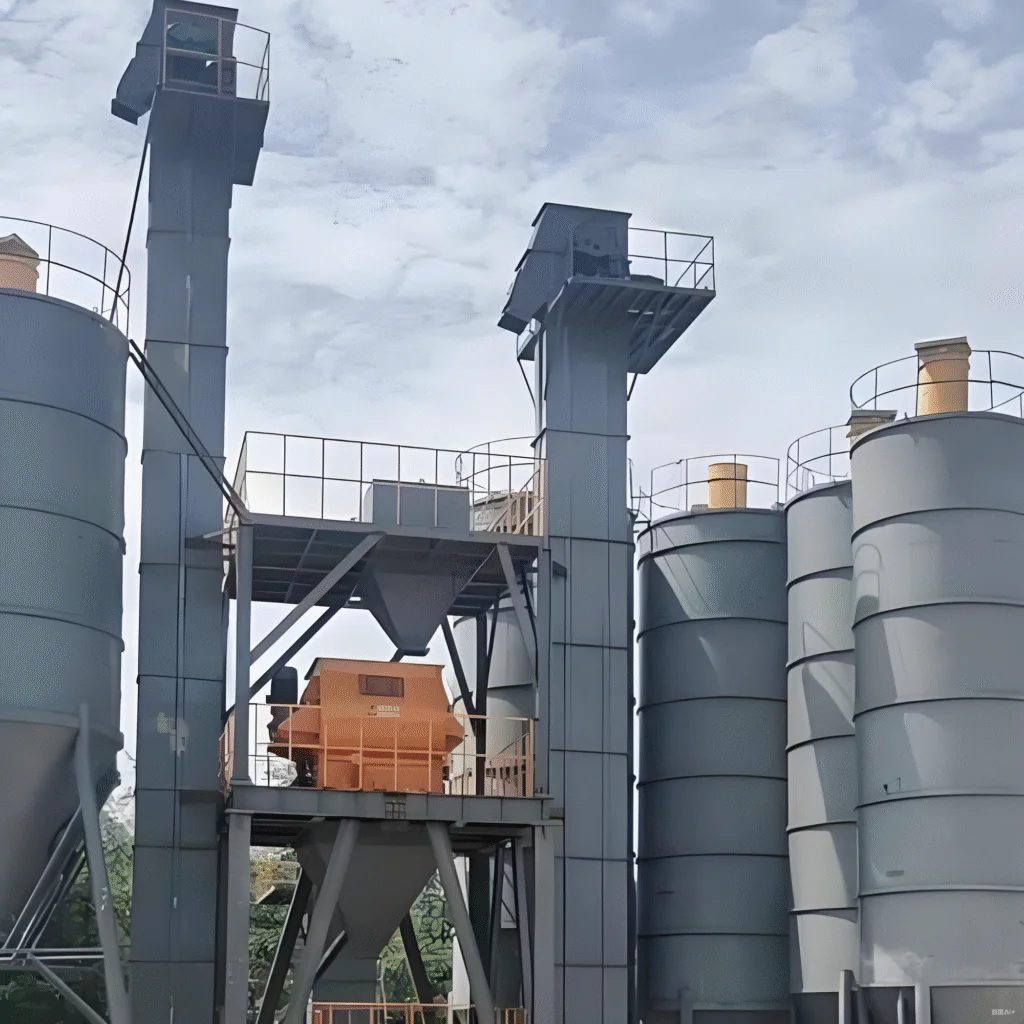
For cement plants, the two systems are often used together. A screw conveyor may feed material into a bucket elevator, and the bucket elevator lifts it to a silo, bin, packing machine, or downstream process.
The best choice depends on conveying distance, lifting height, capacity, material type, installation space, and maintenance preference.
When Should a Bucket Elevator Be Upgraded?
A bucket elevator should be upgraded when bucket elevator backflow becomes frequent and normal cleaning or adjustment cannot solve the problem. Repeated backflow often means the equipment no longer matches the actual operating condition.
Upgrade should be considered when:
✔ Production capacity has increased
✔ Material type has changed
✔ Buckets are badly worn or unsuitable
✔ Belt misalignment happens repeatedly
✔ Chain wear is serious
✔ The discharge chute is too small
✔ The boot section frequently accumulates material
✔ Motor overload happens often
✔ Dust leakage becomes difficult to control
✔ Downstream equipment has been modified
For cement and fly ash systems, upgrading the bucket elevator may improve lifting capacity, reduce downtime, and make the whole bulk material handling process more stable.
Conclusion
Bucket elevator backflow in cement and fly ash handling systems is usually caused by more than one factor. Overfeeding, unsuitable speed, poor head discharge, worn buckets, belt misalignment, boot section buildup, and downstream outlet restriction can all reduce lifting efficiency and cause material to fall back.
For cement powder, fly ash, clinker dust, lime powder, slag powder, and other bulk materials, the best solution is to check the full material flow path. The upstream feeder, bucket elevator, outlet chute, and downstream equipment must work together.
A properly selected and maintained bucket elevator can improve vertical conveying efficiency, reduce backflow, protect downstream equipment, and support stable operation in cement plants, grinding stations, fly ash terminals, and dry bulk material handling systems.
FAQs – Bucket Elevator Backflow and Troubleshooting
What causes bucket elevator backflow in cement and fly ash handling?
Bucket elevator backflow in cement and fly ash handling is usually caused by overfeeding, unsuitable belt or chain speed, poor head section discharge, worn buckets, belt misalignment, boot section buildup, or downstream outlet restriction. In most cases, backflow is a system problem, not only an elevator problem.
How do you troubleshoot bucket elevator backflow?
To troubleshoot bucket elevator backflow, first check where the material falls back. Then inspect the feeding rate, boot section buildup, belt or chain speed, bucket condition, head discharge chute, belt alignment, chain tension, and downstream equipment condition.
Why does a bucket elevator overload at the boot section?
A bucket elevator overloads at the boot section when too much material enters at once, material falls back from the head section, or powder accumulates because of moisture or poor inlet design. Boot buildup can increase motor load and cause unstable bucket filling.
Can overfeeding cause bucket elevator backflow?
Yes. Overfeeding is one of the most common causes of bucket elevator backflow. If the upstream screw conveyor, rotary valve, or flow control gate feeds faster than the elevator capacity, material will accumulate in the boot section and reduce lifting efficiency.
Why does cement powder fall back inside a bucket elevator?
Cement powder may fall back inside a bucket elevator when discharge at the head section is poor, bucket speed is unsuitable, buckets are worn, or the outlet chute is restricted. Fine powder can also fall back when airflow, dust, or material buildup affects normal discharge.
How can fly ash bucket elevator backflow be reduced?
Fly ash bucket elevator backflow can be reduced by controlling feed rate, keeping material dry, checking bucket condition, maintaining belt or chain alignment, cleaning the boot section, and ensuring that the outlet chute and downstream equipment are not blocked.
Is bucket elevator speed important for material discharge?
Yes. Bucket elevator speed is important because it affects bucket filling, lifting stability, and discharge trajectory. If the speed is too low or too high, material may not discharge correctly and may fall back inside the elevator casing.
What is the difference between bucket elevator backflow and bucket elevator blockage?
Bucket elevator backflow means material falls back inside the elevator after lifting or poor discharge. Bucket elevator blockage means material accumulates and restricts movement, often in the boot section, inlet, or outlet. Backflow can gradually lead to blockage if the root cause is not solved.
When should bucket elevator buckets be replaced?
Bucket elevator buckets should be replaced when they are worn, cracked, deformed, loose, or unable to fill and discharge material properly. Damaged buckets can reduce capacity and increase the risk of bucket elevator backflow.
How can cement plants prevent bucket elevator backflow?
Cement plants can prevent bucket elevator backflow by controlling upstream feeding, starting the elevator before feeding begins, keeping the boot section clean, inspecting buckets, maintaining belt or chain alignment, and ensuring that downstream discharge equipment is clear.
Indonesian Short Version
Masalah Bucket Elevator Backflow pada Sistem Semen dan Fly Ash
Masalah bucket elevator backflow sering terjadi pada sistem penanganan semen, fly ash, clinker dust, slag powder, lime powder, dan material curah lainnya. Backflow berarti material tidak keluar dengan benar di bagian head section, lalu jatuh kembali ke dalam casing atau boot section.
Penyebab backflow biasanya bukan hanya satu komponen. Masalah dapat berasal dari overfeeding, kecepatan belt atau chain yang tidak sesuai, desain discharge chute yang kurang baik, bucket yang aus, belt misalignment, penumpukan material di boot section, atau downstream equipment yang tersumbat.
Untuk troubleshooting, operator perlu memeriksa feeding rate, kondisi bucket, belt atau chain alignment, boot section buildup, head discharge chute, dan kondisi equipment setelah bucket elevator. Jika material menumpuk di boot section, penyebabnya bisa berasal dari overfeeding atau material jatuh kembali dari head section. Jika masalah terjadi di outlet, kemungkinan ada restriction pada discharge chute atau downstream conveyor.
Bucket elevator cocok untuk vertical lifting pada semen, fly ash, clinker dust, dan material curah lain. Untuk operasi yang stabil, sistem feeding, elevator, discharge, dan downstream equipment harus bekerja secara seimbang. Dengan desain dan perawatan yang tepat, backflow dapat dikurangi, kapasitas lifting menjadi lebih stabil, dan downtime di cement plant atau powder handling system dapat ditekan.
CTA
Need a reliable Bucket Elevator for cement, fly ash, or bulk material handling systems?
Contact LVRUI today for fast delivery and expert technical support.
Email: info@lvrui-conveyor.com
Website: https://lvrui-conveyor.com
✅ Get expert quotation and customized solution within 12 hours
✅ Factory direct supply with strict quality control
✅ Professional engineering support from experienced team
✅ Stable delivery for overseas industrial projects