How Twin Shaft Structure Affects Lump Handling, Throughput and Selection
Why Shaft Design Matters in Lump Breaking
A lump breaker should not be selected only by motor power or nominal capacity. Shaft structure influences how the machine engages compacted material, handles irregular lumps and maintains stable throughput.
For cement and other dry bulk materials, the required shaft arrangement depends on lump size, lump hardness, feed consistency and required capacity. Material behavior should be evaluated under representative operating conditions because moisture, consolidation, particle properties and storage history can significantly change how a bulk solid behaves.
Twin shaft lump breaker design becomes particularly relevant when larger or harder agglomerates must be pulled consistently into the breaking zone. For lighter-duty applications with smaller and softer lumps, a single shaft design may be sufficient.
The purpose is deagglomeration rather than fine grinding: oversized lumps are reduced into smaller, more manageable pieces before entering the downstream process.
What Is a Twin Shaft Lump Breaker Design?
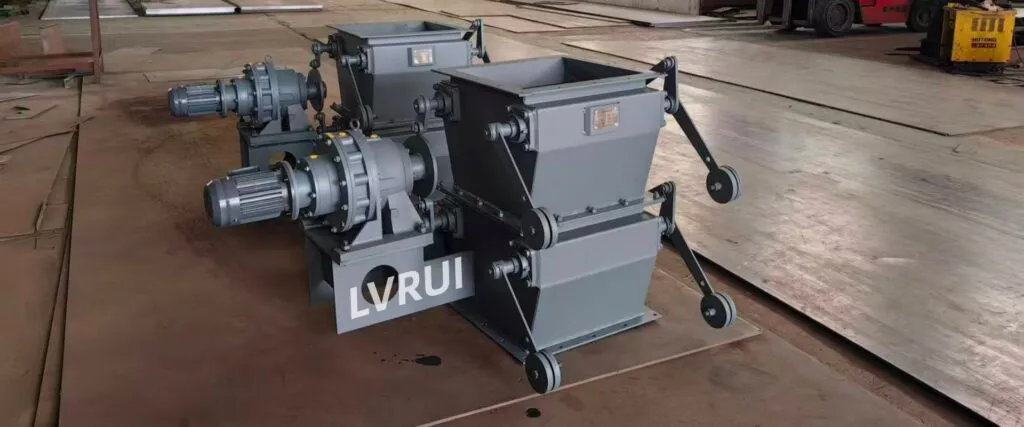
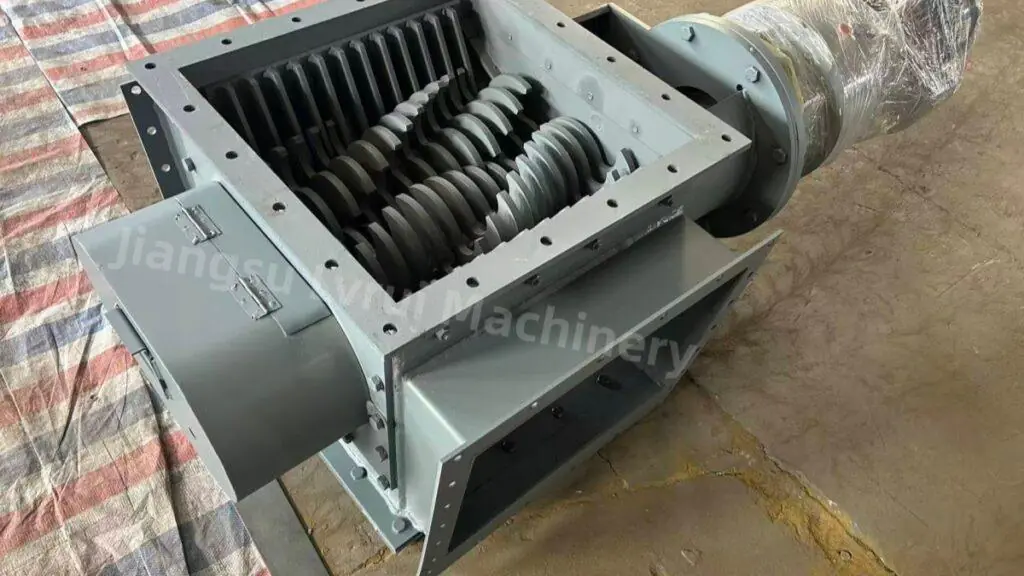
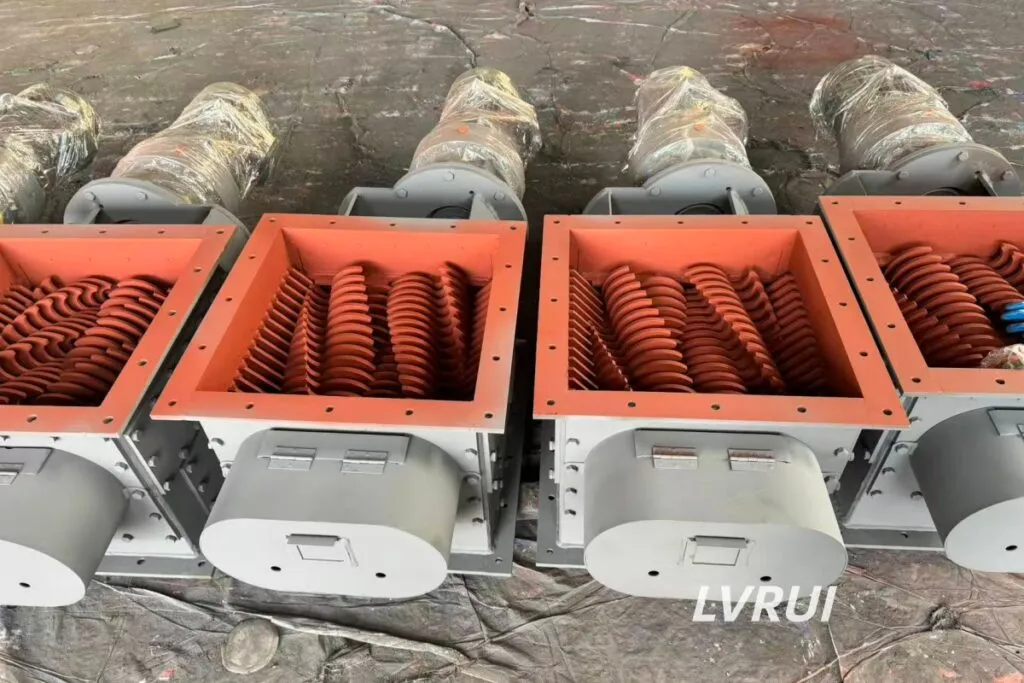
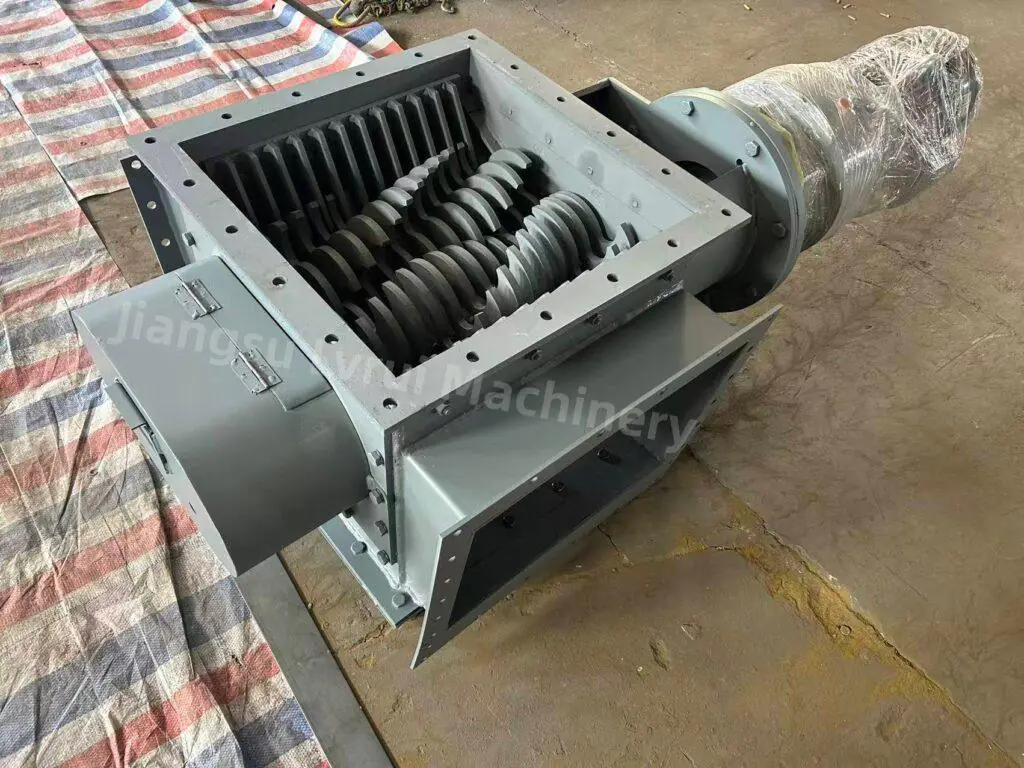
A twin shaft lump breaker design uses two rotating shafts fitted with blades, teeth or other breaking elements inside a common housing.
The shafts normally rotate toward the central breaking zone, helping engage oversized agglomerates and reduce them into smaller pieces.
This configuration is also sometimes described as a dual rotor lump breaker because two active rotating elements act on the material.
Compared with a single shaft design, a properly designed twin shaft structure can provide:
✓ Two active breaking lines
✓ Stronger material engagement
✓ More consistent handling of irregular lumps
✓ Better suitability for higher lump loads
✓ More distributed mechanical loading across two shafts
Actual performance still depends on shaft spacing, blade geometry, rotational speed, drive torque and material condition.
How a Twin Shaft Lump Breaker Works
When lumpy material enters the housing, the two rotating shafts engage the oversized pieces and pull them into the breaking zone.
The blades or teeth then apply a combination of shearing, compression and impact, depending on the rotor geometry.
A typical process is:
✓ Material enters from the silo, hopper or upstream feed point
✓ Oversized lumps reach the rotating shafts
✓ The two shafts engage the material
✓ Blades or teeth reduce the agglomerates
✓ Smaller pieces pass through the outlet
Twin shaft lump breakers normally operate at relatively low speed compared with high-speed crushers. Their purpose is to restore manageable material flow rather than grind the complete product into fine particles.
Twin Shaft vs Single Shaft Lump Breaker
| Design Factor | Single Shaft | Twin Shaft |
|---|---|---|
| Shaft Structure | One rotating shaft | Two rotating shafts |
| Breaking Action | Rotor works against a fixed breaking area | Two shafts actively engage the material |
| Typical Lump Condition | Smaller or softer lumps | Larger or more irregular lumps |
| Feed Condition | Relatively stable | More variable or difficult feed |
| Throughput Potential | Suitable for lighter-duty applications | Often better suited to higher lump loads |
| Material Engagement | Simpler | Stronger engagement in many designs |
| Maintenance | Fewer moving components | More components to inspect |
| Initial Cost | Usually lower | Usually higher |
| Typical Selection | Light deagglomeration | More demanding lump-breaking duty |
The correct choice depends on actual lump size, material condition, required throughput and installation constraints. Twin shaft design should not be selected simply because it is structurally heavier.
When Is Twin Shaft Design Better?
Twin shaft design may be preferred when the application requires more consistent engagement with difficult lumps.
Typical conditions include:
✓ Larger or harder agglomerates
✓ Higher lump load or required throughput
✓ Uneven material feeding
✓ Repeated oversized lumps reaching the discharge point
✓ A single shaft cannot engage the material consistently
✓ Downstream equipment requires better protection from oversized pieces
For example, if hardened cement lumps repeatedly reach the inlet of a screw conveyor or other sensitive equipment, a twin shaft lump breaker may provide more reliable pre-conditioning.
When Single Shaft Design May Be Enough
Twin shaft equipment is not necessary for every application.
A single shaft lump breaker may be sufficient when:
✓ Lumps are relatively small and soft
✓ Required throughput is moderate
✓ Material feed is stable
✓ Installation space is limited
✓ Simpler maintenance and lower equipment cost are priorities
For light deagglomeration duties, a properly selected single shaft design may provide adequate performance without the additional complexity of two shafts.
Why Lump Size Matters Before Downstream Equipment
Oversized agglomerates can create problems when they enter equipment designed for more uniform material.
Twin shaft lump breakers may therefore be installed upstream of equipment such as:
- Screw conveyors
- Air slide conveyors
- Rotary valves
The lump breaker reduces oversized material before it enters the next process. It does not regulate discharge rate or replace the function of the downstream conveyor or valve.
Whether twin shaft structure is required depends on the actual lump condition rather than the downstream equipment name alone.
Key Twin Shaft Design Factors
Before confirming a twin shaft lump breaker design, review the following factors:
Maximum Lump Size
Confirm the largest expected agglomerate entering the machine. This affects rotor spacing, blade arrangement and inlet dimensions.
Lump Hardness and Condition
Soft powder agglomerates require different breaking action from compacted or partially hardened material.
Required Throughput
The machine should handle both normal material flow and the expected lump load without becoming the bottleneck. For a more detailed capacity review, see our Lump Breaker Sizing Calculation Guide.
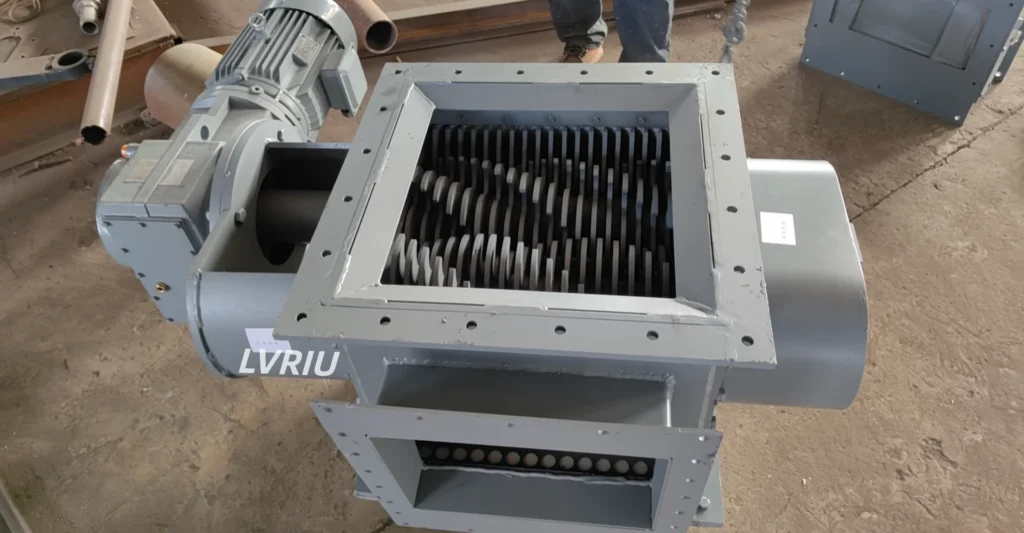
Shaft and Blade Arrangement
Shaft spacing, blade profile and tooth arrangement influence how effectively material is engaged and reduced.
Rotational Speed
Lower speeds are commonly used for controlled deagglomeration, but the final speed should match the material and rotor design.
Drive Torque
Motor power alone does not define breaking capability. Reducer ratio and available shaft torque must also suit the expected lump resistance.
Installation Space
Confirm inlet and outlet dimensions, available height and space for removing shafts or blades during maintenance.
Maintenance Access
Bearings, shaft seals, blades and inspection openings should remain accessible after installation.
For complete equipment selection covering material properties, lump size, capacity, installation position and downstream requirements, see our Lump Breaker Selection Guide.
Because twin shaft equipment contains more rotating components than a single shaft design, maintenance access should be considered during equipment layout. Shafts, blades, bearings and seals should remain accessible for routine inspection. Detailed mounting, alignment and commissioning procedures are covered separately in our Lump Breaker Installation Guide.
Twin Shaft Lump Breaker Design for Cement Silo Discharge
Cement stored for long periods may form compacted agglomerates, particularly when moisture, storage pressure or repeated shutdowns affect material condition.
If these lumps reach a silo-bottom lump breaker, twin shaft design may be considered when:
✓ Lump size is relatively large
✓ Agglomerates are difficult to engage consistently
✓ Lump load is frequent rather than occasional
✓ Required discharge throughput is high
✓ Downstream equipment is sensitive to oversized pieces
The lump breaker should be viewed as a downstream material-conditioning device. It cannot correct arching, rat-holing or hardened material that remains inside the silo and never reaches the breaker inlet.
For complete equipment selection, refer to the Lump Breaker product page.
Twin shaft structures may also be used for other friable dry bulk materials when lump size, hardness and throughput justify a two-shaft design. For broader material and industry use cases, see our Industrial Lump Breaker Applications guide.
Conclusion
Twin shaft lump breaker design is most useful when the material condition requires stronger and more consistent engagement than a simpler single shaft structure can provide.
The decision should be based on actual lump size, hardness, lump load, throughput and installation constraints rather than assuming that two shafts are automatically better.
For demanding cement silo and dry bulk applications, a correctly designed twin shaft or dual rotor lump breaker can provide reliable deagglomeration before oversized material reaches downstream equipment.
FAQs About Twin Shaft Lump Breaker Design
What is twin shaft lump breaker design?
Twin shaft lump breaker design uses two rotating shafts to engage and reduce oversized agglomerates. It is generally considered for more demanding lump conditions, higher lump loads or unstable feeding.
Is a twin shaft lump breaker the same as a dual rotor lump breaker?
The terms are often used to describe the same basic two-rotor concept. However, actual shaft arrangement, blade geometry, rotation direction and drive configuration should always be confirmed from the equipment design.
When is twin shaft better than single shaft?
Twin shaft design may be preferable when lumps are larger, material feed is uneven, throughput is higher or a single shaft cannot engage the material consistently.
Is twin shaft always better than single shaft?
No. Small, soft lumps and lighter-duty applications may be handled effectively with a simpler single shaft design.
What information is needed to confirm a twin shaft design?
Provide the material, maximum lump size, lump condition, required throughput, inlet and outlet dimensions, available installation space and downstream equipment.
Is twin shaft design suitable for cement silo discharge?
Yes, when cement agglomerates repeatedly reach the breaker and their size or condition justifies the stronger two-shaft structure. It should not be expected to solve material-flow problems that remain inside the silo.
Need Help Selecting a Twin Shaft Lump Breaker?
Send us the material, maximum lump size, required capacity, inlet and outlet dimensions, available installation space, and any drawings or site photos.
LVRUI can review whether a twin shaft or single shaft structure is more suitable and recommend a practical lump breaker configuration.
WhatsApp: +86-18261998937
WeChat: +86-18261998937
Email: info@lvrui-conveyor.com