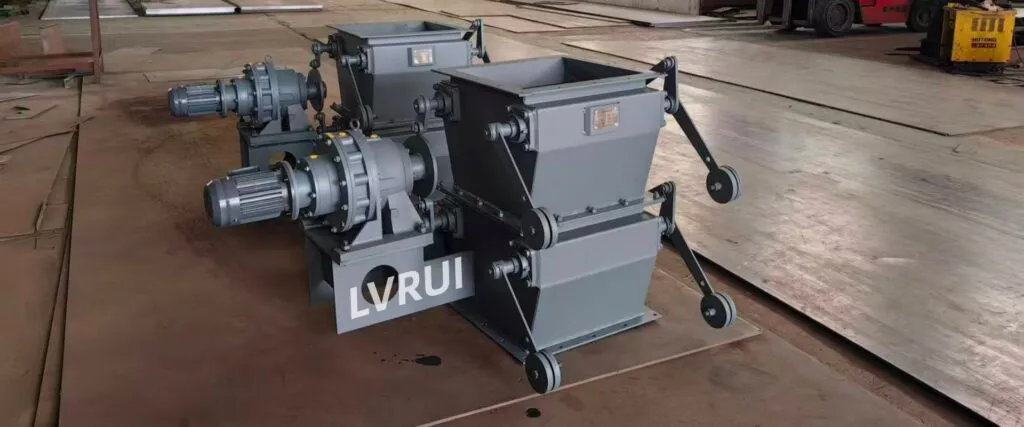
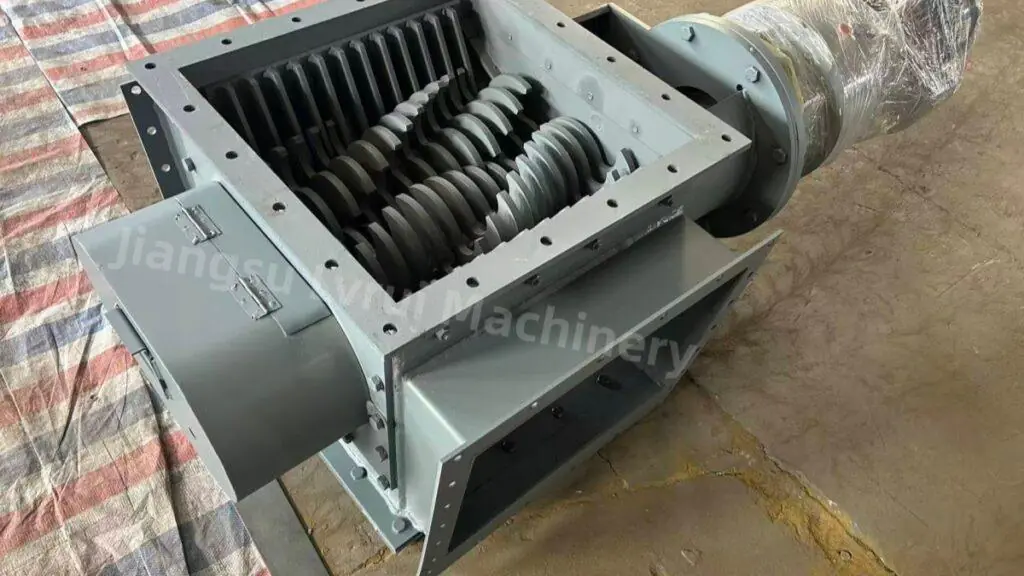
How to Decide When a Single-Rotor Structure Is Suitable and When a Twin-Shaft Design Is More Appropriate
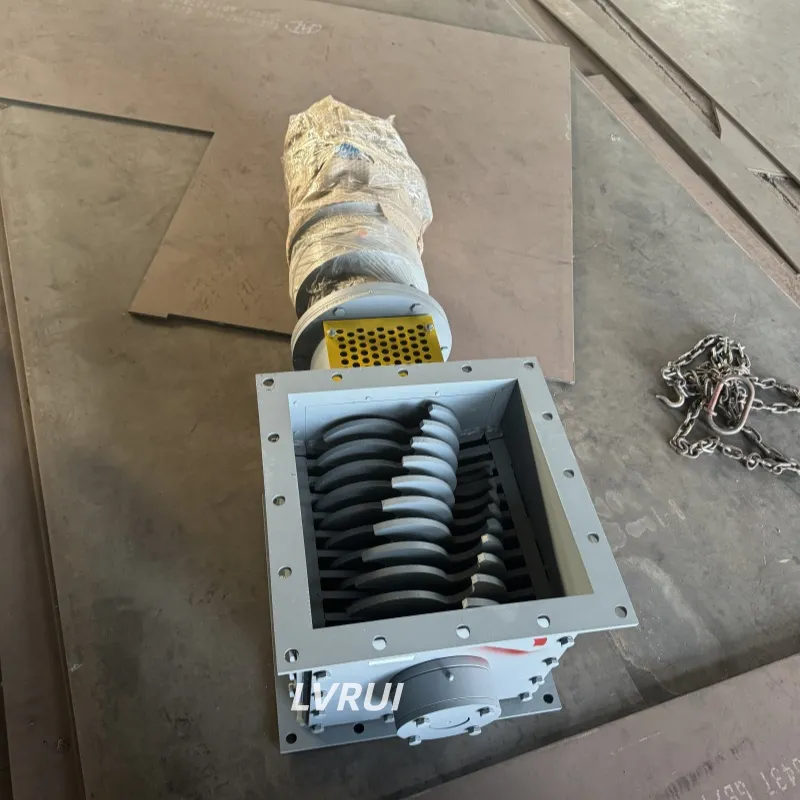
Why Single Shaft Lump Breaker Design Matters
Single Shaft Lump Breaker Design is most suitable for applications where moderate lumps can be reduced effectively with one rotor without requiring a heavier twin-shaft structure.
Not every dry bulk handling application requires a heavy twin shaft lump breaker.
Where lumps are moderate, friable and occur only occasionally, a single shaft design may provide sufficient deagglomeration with a simpler and more compact mechanical structure.
The important question is not whether single shaft or twin shaft is “better.” The correct question is whether the selected rotor structure provides enough breaking action for the actual material, lump size, throughput and downstream requirement.
A single shaft lump breaker should therefore be selected according to the real duty condition rather than simply as a lower-cost alternative to a twin shaft machine.
What Is a Single Shaft Lump Breaker?
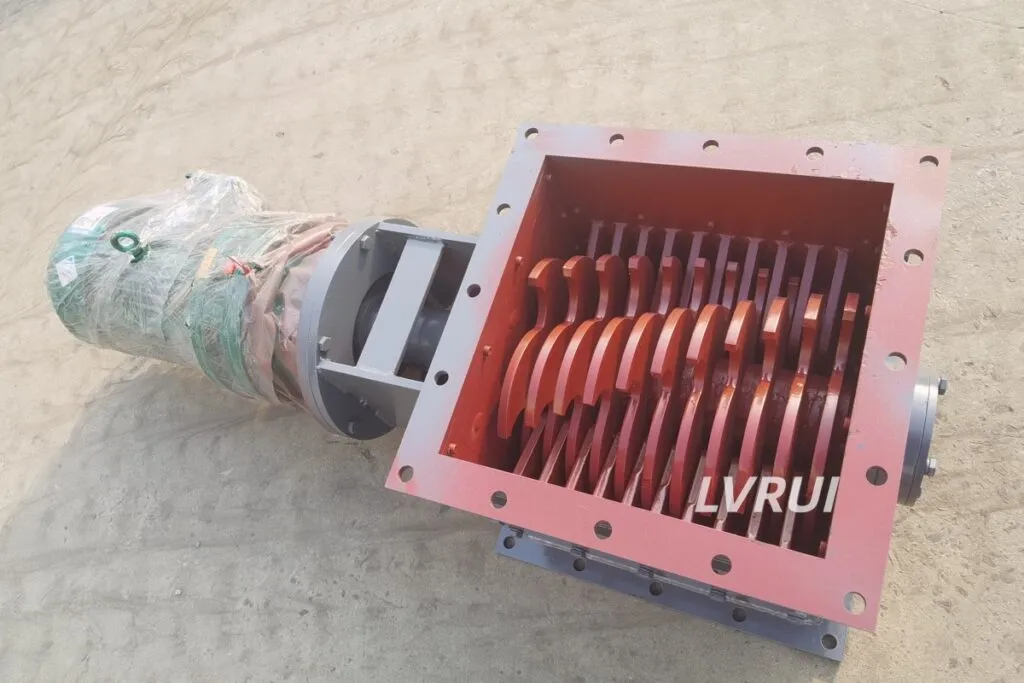
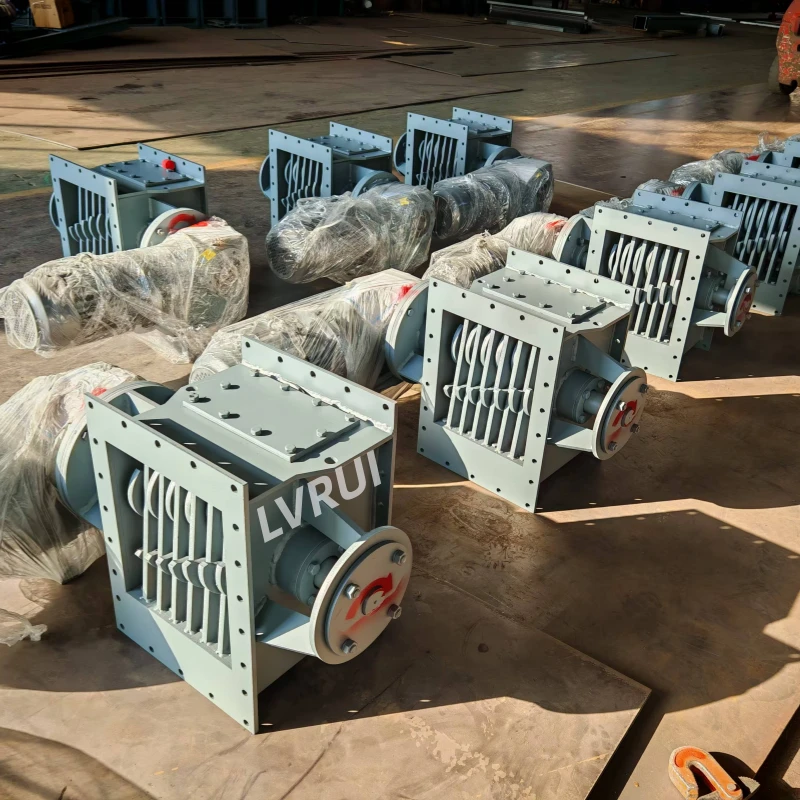
A single shaft lump breaker uses one rotating shaft fitted with blades, teeth or other breaking elements inside a housing.
As agglomerated material enters the breaking chamber, the rotating elements apply controlled impact, shear or compression to reduce oversized lumps into smaller pieces that can pass through the downstream process more reliably.
A single shaft lump breaker is also commonly described as a single rotor lump breaker. The exact internal arrangement varies by manufacturer and application, but the defining feature is one active rotating shaft.
The objective is normally deagglomeration or coarse lump reduction rather than fine grinding. For product configurations, shaft options, model specifications and quotation requirements, see our Lump Breaker product page.
This makes the design suitable for applications where the process needs to restore material flow or protect downstream equipment without using a high-speed crusher.
How a Single Shaft Lump Breaker Works
Material enters the lump breaker by gravity from a silo, hopper, chute or upstream feeding device.
Inside the housing, the rotating shaft carries breaking elements through the material. Oversized agglomerates are subjected to mechanical force until they are reduced sufficiently to pass through the available clearance or discharge section.
A typical sequence is:
- Lumpy material enters the chamber.
- The single rotor engages the agglomerates.
- Breaking elements reduce friable or moderately compacted lumps.
- Reduced material exits toward the downstream equipment.
The actual breaking performance depends on rotor geometry, blade or tooth arrangement, shaft speed, available torque, internal clearance and the physical properties of the lumps.
For this reason, the term “single shaft” describes the rotor arrangement but does not by itself determine capacity or maximum lump size.
When Is a Single Shaft Design Usually Enough?
A single shaft lump breaker may be suitable when the breaking duty is relatively moderate.
Typical conditions include:
✓ Lumps are soft, friable or moderately compacted
✓ Maximum lump size is within the capability of the selected rotor design
✓ Material is predominantly dry and suitable for mechanical deagglomeration
✓ Required throughput is moderate
✓ Lumps occur occasionally rather than forming a continuous heavy load
✓ A compact installation is preferred
In these conditions, a single shaft design can provide useful lump reduction without introducing the additional shafts, bearings and internal components associated with a twin shaft structure.
However, the final decision should still be based on actual material samples or operating data where the lump condition is uncertain.
When May a Single Shaft Design Be Insufficient?
A single shaft structure may not provide adequate performance when the lump-breaking duty becomes substantially more demanding.
Conditions that require further evaluation include:
✓ Large or heavily compacted lumps
✓ High and continuous lump loading
✓ High required throughput
✓ Frequent hard blocks entering the breaker
✓ Applications requiring stronger material engagement or more intensive breaking action
In these cases, a twin shaft lump breaker or another suitable breaker configuration may provide more effective material engagement.
Wet or highly sticky material should be evaluated separately. Changing from a single shaft to a twin shaft design does not automatically solve material buildup, adhesion or moisture-related flow problems.
Single Shaft vs Twin Shaft Lump Breaker
The difference between single shaft and twin shaft designs is not simply the number of rotors. The appropriate structure depends on the duty level and how the material interacts with the breaking elements.
| Design Factor | Single Shaft | Twin Shaft |
|---|---|---|
| Rotor arrangement | One rotating shaft | Two rotating shafts |
| Typical duty | Light to moderate | Moderate to heavier duty |
| Lump condition | Friable or moderate agglomerates | Larger or more compacted agglomerates |
| Material engagement | One active breaking line | Two active breaking lines |
| Installation | Generally more compact | Usually requires more space |
| Mechanical complexity | Simpler | More moving components |
A single shaft design is not an inferior version of a twin shaft machine. It is a different configuration for applications where one rotor provides sufficient material engagement.
Similarly, a twin shaft structure should not be selected automatically simply because the capacity is higher. Lump characteristics, rotor geometry, torque and the required output condition should all be reviewed.
Typical Uses of a Single Shaft Lump Breaker
Single shaft lump breakers are commonly used where moderate agglomerates need to be reduced before entering equipment that is sensitive to oversized pieces.
Typical locations may include upstream of:
- Screw conveyors
- Air slide conveyors
- Rotary valves
- Feeders
- Packing or filling equipment
The suitability of a single shaft structure depends on the severity and frequency of the lumps rather than the downstream equipment name alone.
For a broader review of installation locations and industries, see our Industrial Lump Breaker Applications guide.
Key Factors That Determine Whether Single Shaft Is Suitable
Before choosing a single shaft structure, evaluate the factors that directly affect the breaking duty.
Maximum Lump Size
The largest expected lump must be able to enter the breaker and engage effectively with the rotor.
Lump Hardness and Compaction
Soft or friable agglomerates generally require less intensive breaking than dense, heavily compacted blocks.
Material Condition
Confirm whether the material is dry, slightly damp, sticky, abrasive or prone to buildup.
Required Throughput
The breaker must handle the actual material flow without becoming the bottleneck in the process.
Required Lump Reduction
The required material condition after breaking should be determined by the downstream process.
Available Installation Space
Check the inlet, outlet, overall height and access required for inspection and maintenance.
These factors determine whether a single shaft design is sufficient.
For complete equipment selection, including drive configuration, inlet and outlet dimensions, control requirements and overall system matching, refer to our Lump Breaker Selection Guide.
After the shaft configuration is selected, mounting, alignment, support, rotation checks and commissioning should be handled separately. See our Lump Breaker Installation Guide.
When Should You Consider a Twin Shaft Lump Breaker Instead?
A twin shaft design should be evaluated when:
✓ Lumps are larger or more heavily compacted
✓ Lump loading is frequent or continuous
✓ Required throughput is high
✓ The process requires stronger material engagement
✓ A single shaft configuration cannot provide the required breaking consistency
Twin shaft designs use two active rotors, which can provide additional engagement with material under more demanding conditions.
However, shaft count alone should not determine the final selection. Rotor geometry, drive torque, lump properties and the required process result remain important.
For a detailed comparison of twin-shaft structure and duty limits, see our Twin Shaft Lump Breaker Design guide.
Conclusion
Single shaft lump breaker design is most suitable when moderate lumps can be reduced effectively with one rotor and the application does not require heavy continuous breaking duty.
The correct decision depends on lump size, hardness, material condition, throughput, required lump reduction and available installation space rather than shaft count alone.
A single shaft structure can provide a compact and practical solution for many dry bulk applications, while larger or more demanding lump loads may justify a twin shaft or another breaker configuration.
The objective is not to select the most complex machine, but to use the simplest structure that can reliably perform the required breaking duty.
FAQs About Single Shaft Lump Breaker Design
What is a single shaft lump breaker?
A single shaft lump breaker uses one rotating shaft fitted with breaking elements to reduce friable or moderately compacted agglomerates before the material continues through the process.
Is a single shaft lump breaker the same as a single rotor lump breaker?
In most industrial terminology, both terms describe the same basic one-rotor concept. The actual blade, tooth, clearance and housing design may still differ between manufacturers and applications.
When is a single shaft lump breaker sufficient?
It may be sufficient when lumps are moderate, material is suitable for mechanical deagglomeration, throughput is not excessively demanding and one rotor can provide the required breaking action.
When should a twin shaft lump breaker be considered?
A twin shaft design may be more appropriate for larger or more heavily compacted lumps, frequent lump loading, higher throughput or applications requiring stronger material engagement.
Can a single shaft lump breaker handle wet or sticky material?
It depends on the material. Highly sticky or wet products may adhere to the rotor and housing, so the application should be reviewed before assuming that either a single or twin shaft design will solve the problem.
What information is needed to confirm single shaft suitability?
Provide the material, maximum lump size, lump hardness, moisture condition, required throughput, required material condition after breaking, inlet and outlet dimensions, and available installation space.
Need Help Choosing Between Single and Twin Shaft Lump Breakers?
Send us the material, maximum lump size, lump hardness, moisture condition, required capacity, inlet and outlet dimensions, and available installation drawing or site photos.
LVRUI can review whether a single shaft lump breaker is sufficient or whether a twin shaft configuration is more appropriate for the required duty.
WhatsApp: +86-18261998937
WeChat: +86-18261998937
Email: info@lvrui-conveyor.com