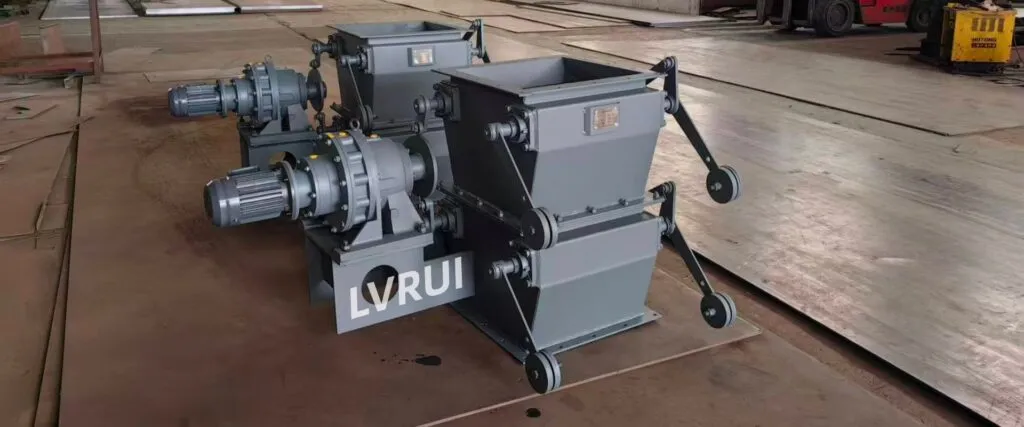
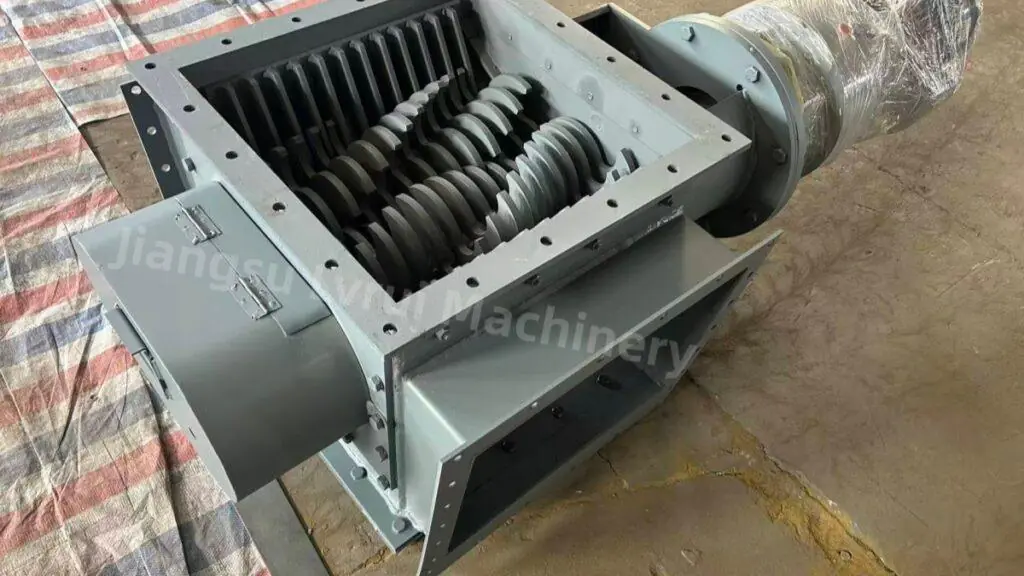
The Electric Air Duct Damper Valve shown here is a DN2000 multi-blade damper operated by an electric actuator. It is intended for large industrial duct systems where airflow needs to be regulated or a duct section needs to be isolated.
The specified air leakage rate is below 3%. The applicable test method, pressure differential, and acceptance conditions should be confirmed for each project to ensure that the stated performance is evaluated consistently.
For large-diameter duct applications, the valve configuration, actuator arrangement, connection dimensions, and operating conditions should be reviewed together before equipment selection.
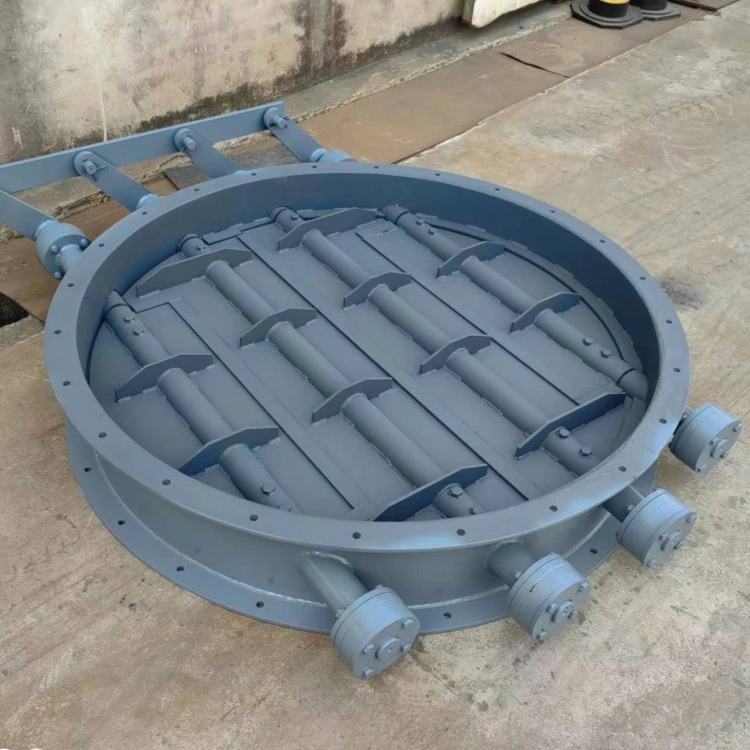
What Is a DN2000 Electric Air Duct Damper Valve?
A DN2000 Electric Air Duct Damper Valve uses multiple blades arranged across the duct opening. An electric actuator drives the blade mechanism to change the effective opening and control airflow through the duct.
Compared with a single-blade butterfly damper, the multi-blade structure distributes the opening and closing action across several blades. This makes the configuration suitable for applications where airflow needs to be adjusted across a large duct section.
The actual control capability depends on the selected actuator and control arrangement. Open-close operation and continuous positioning are different requirements and should be specified before ordering.
For a broader explanation of electric actuator control modes and PLC/DCS integration, see our Electric Louver Damper: Actuation and Control Guide.
Key Configuration and Technical Specifications
The following information is confirmed for the equipment shown.
| Specification | Confirmed information |
|---|---|
| Nominal size | DN2000 |
| Blade configuration | Multi-blade |
| Actuation | Electric actuator |
| Stated air leakage rate | Below 3%, subject to the applicable test and acceptance conditions |
Other technical details must be confirmed against the project requirements rather than assumed from the nominal size.
These include the duct cross-section, connection dimensions, body and blade materials, operating temperature, pressure conditions, airflow volume, actuator power supply, control mode, and required position feedback.
For customized equipment, the approved drawing should be used to confirm the actual opening dimensions and installation interfaces.
Understanding the Air Leakage Rate Below 3%
Air leakage is an important consideration when selecting an industrial air duct damper. Excessive leakage can affect airflow distribution and the performance of the connected ventilation system.
For this DN2000 multi-blade damper, the stated air leakage rate is below 3%. However, a meaningful performance comparison requires a clearly defined measurement method and operating condition.
Before finalizing the specification, confirm:
- The definition and calculation basis of the leakage rate.
- The pressure differential used during testing.
- The damper position during the test.
- Whether the specified value applies to blade leakage or the complete damper assembly.
- The applicable acceptance criteria.
For reference, ANSI/AMCA Standard 500-D describes standardized laboratory methods for evaluating damper performance, including air leakage and pressure drop.
The stated leakage rate should be evaluated against the agreed test conditions rather than interpreted as a universal guarantee under every operating condition.
Potential Applications in Cement Plant Duct Systems
A DN2000 electric multi-blade damper may be considered for large industrial duct applications where its dimensions, leakage performance, and control arrangement match the process requirements.
Potential applications include:
- Cement plant ventilation ducts: Regulating or isolating airflow in suitable process-air systems.
- Dust collection and exhaust ducts: Controlling airflow through large duct sections or branches.
- Industrial ventilation systems: Adjusting the effective duct opening according to the required operating conditions.
- Large process-air ducts: Supporting airflow regulation where a multi-blade configuration is appropriate.
Final suitability depends on the actual duct dimensions, airflow volume, pressure, temperature, dust characteristics, and required operating mode.
High-temperature service, corrosion resistance, and specific pressure ratings must be verified against the final equipment design. They should not be assumed solely from the DN2000 size or electric actuation.
What Information Is Needed Before Ordering?
To evaluate a DN2000 Electric Air Duct Damper Valve for a specific project, the following information should be provided.
1. Duct dimensions and connection
Provide the duct drawing, opening dimensions, flange or welded connection details, and available installation space.
2. Operating conditions
Specify the normal and maximum temperature, operating pressure, design pressure, airflow volume, and characteristics of the air or gas.
3. Leakage requirements
Confirm the required leakage rate, measurement basis, test conditions, and acceptance criteria.
4. Electric actuator and control
Specify the available power supply, required opening and closing mode, whether intermediate positioning is needed, and any required control signals or position feedback.
5. Maintenance and installation constraints
Identify access limitations, surrounding equipment, and any project-specific requirements that may affect the damper arrangement.
Providing these details allows the damper configuration and actuator requirements to be assessed before quotation. For general product configurations, see our Louver Damper Valve product page.
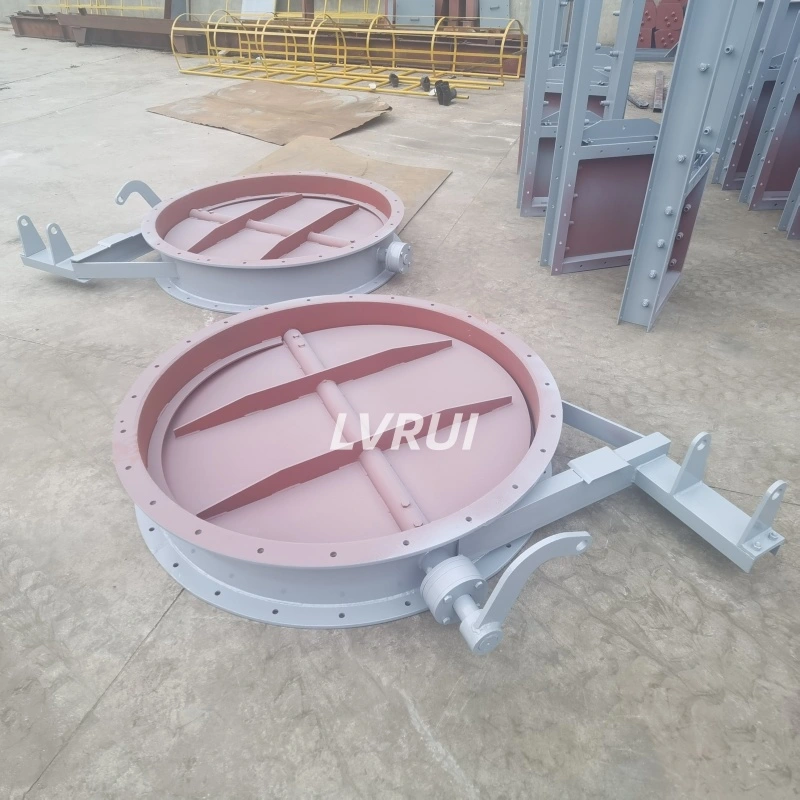
FAQs About Electric Air Duct Damper Valve
Does DN2000 define the exact installation dimensions?
DN2000 identifies the nominal size designation. The actual opening, flange dimensions, and connection arrangement should be confirmed against the approved equipment drawing.
Does an electric actuator automatically provide continuous airflow regulation?
No. An electric actuator may be configured for open-close operation or intermediate positioning, depending on the selected actuator and control system. The required operating mode must be confirmed before ordering.
How should the stated leakage rate below 3% be verified?
The applicable test method, pressure differential, damper position, and acceptance criteria should be agreed upon before testing. The stated value should be evaluated under those defined conditions.
Need a DN2000 Electric Air Duct Damper Valve for Your Project?
Send LVRUI your duct drawing, operating conditions, leakage requirements, and actuator control specifications. Our team can review the information and assess the appropriate equipment configuration for your application.
Providing complete technical information at the quotation stage helps clarify the connection dimensions, actuator requirements, and performance acceptance criteria before production.
Contact LVRUI for technical evaluation and a quotation.
Email: info@lvrui-conveyor.com
WhatsApp / WeChat: +86 182 6199 8937
Website: https://lvrui-conveyor.com/