Compare blade structure, airflow modulation, duct size, leakage requirements, actuation and typical applications to decide which damper is better suited to an industrial duct system.
Introduction
Butterfly Damper vs Louver Damper selection depends on the airflow-control objective, duct geometry and operating conditions.
Both are common industrial damper valve configurations used to regulate or isolate air, exhaust gas and dust-laden airflow in industrial duct systems, but they use different blade structures.
A butterfly damper uses one rotating blade. A louver damper uses several linked blades across the duct section.
This structural difference affects:
- airflow modulation;
- installation space;
- actuator arrangement;
- leakage characteristics;
- maintenance access;
- suitability for different duct sizes and process conditions.
Neither design is universally better. The correct choice depends on what the damper must actually do in the system.
Butterfly Damper and Louver Damper: Basic Structural Difference
Butterfly Damper
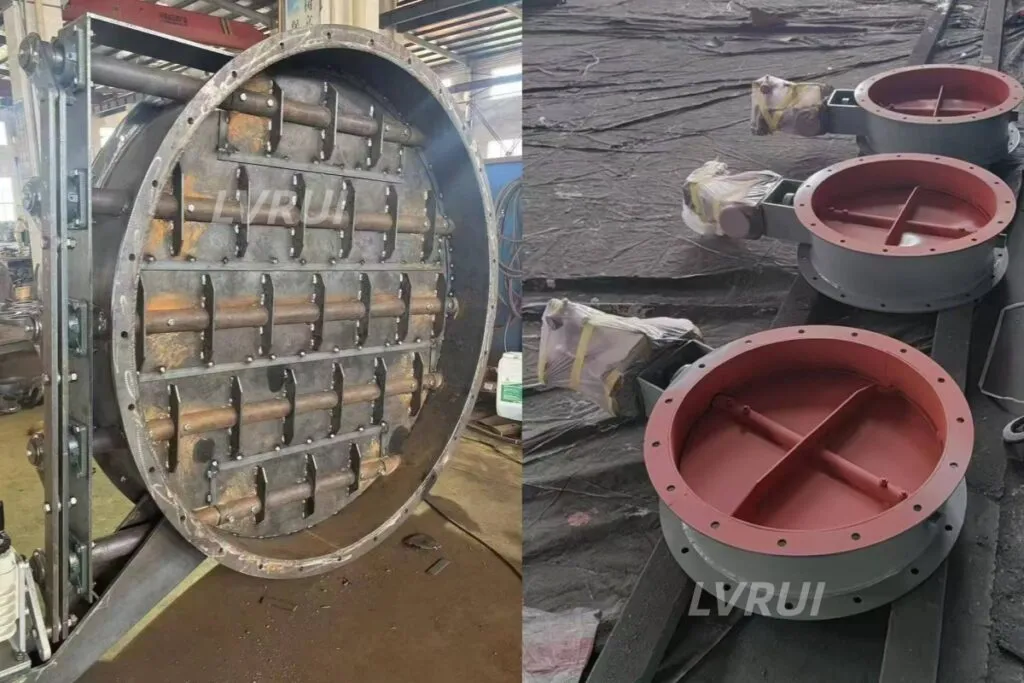
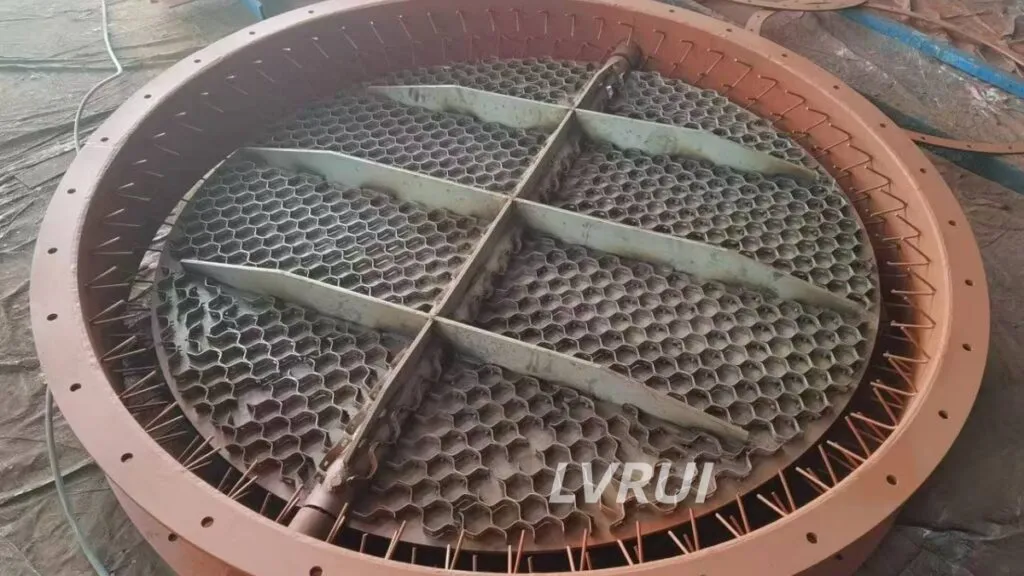
A butterfly damper uses a single blade mounted on a rotating shaft.
As the shaft rotates, the blade changes the effective duct opening and therefore changes airflow resistance.
Its compact structure makes it suitable where installation space is limited and a relatively simple airflow-control or isolation function is required.
For product specifications, actuator options and customized duct connections, see the Butterfly Damper Valve product page.
Louver Damper
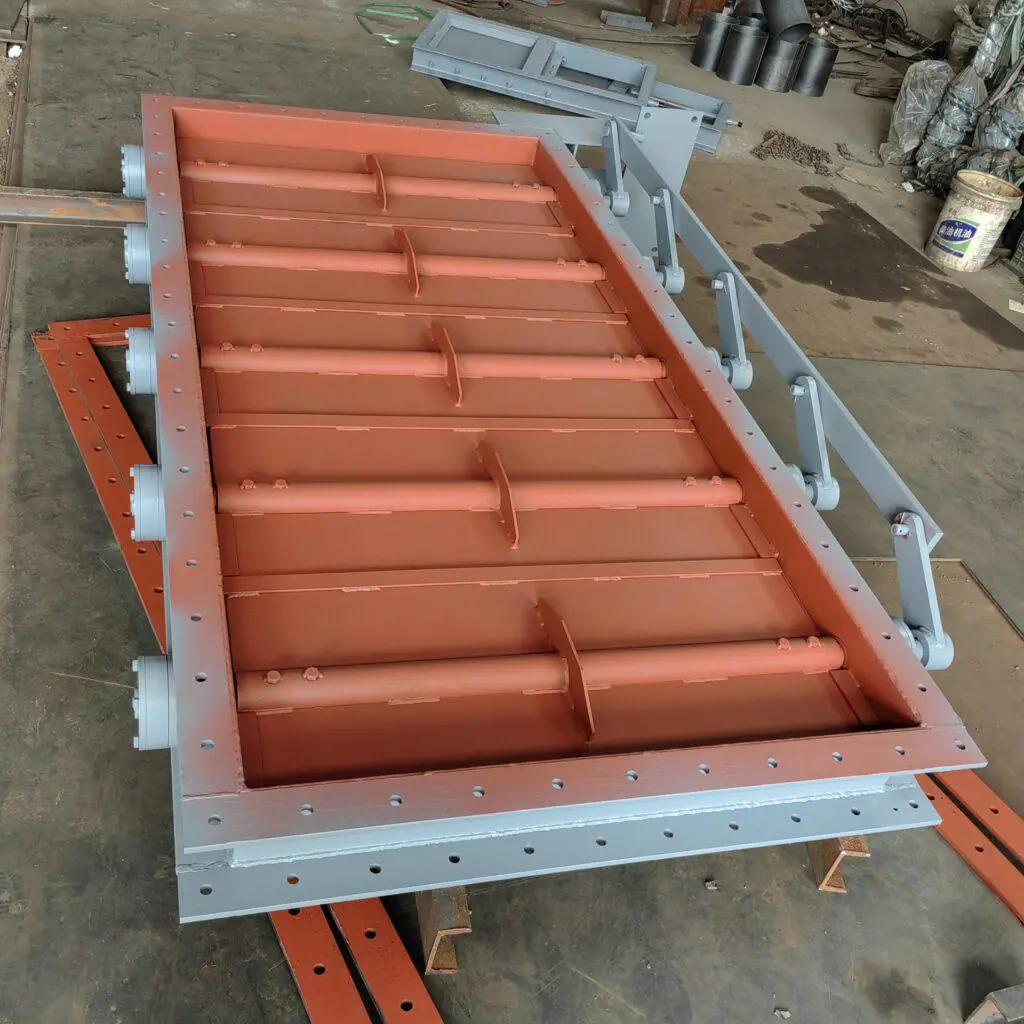
A louver damper uses multiple blades connected through a linkage system.
The blades move together to change the total flow area across the duct section.
This multi-blade structure is particularly useful in medium-to-large ducts where smoother airflow modulation or more uniform airflow distribution is required.
For LVRUI applications, parallel-blade louver dampers are the main standard direction, while opposed-blade arrangements can be customized when required by the project.
For blade configurations, actuator options and project-specific dimensions, see the Louver Damper Valve product page.
Butterfly Damper vs Louver Damper: Quick Comparison
The table below summarizes the main differences in Butterfly Damper vs Louver Damper selection.
| Selection Factor | Butterfly Damper | Louver Damper |
|---|---|---|
| Blade Structure | Single rotating blade | Multiple linked blades |
| Typical Duct Size | Common in compact-to-medium ducts; larger sizes possible with suitable structural design | Medium to large duct sections |
| Airflow Regulation | General regulation and isolation | Smoother multi-blade modulation |
| Installation Space | Compact body and simpler linkage | Requires blade linkage and actuator space |
| Leakage Performance | Depends on blade clearance and sealing design | Depends on blade seals, linkage and frame design |
| Actuation | Manual, electric or pneumatic | Manual, electric or pneumatic |
| Control Response | Relatively simple blade positioning | Multi-blade coordinated positioning |
| Maintenance Focus | Shaft, bearings, blade and actuator | Multiple blades, linkage, shafts and actuator |
| Typical Applications | Dust ducts, fan lines, cyclone outlets, ventilation | Baghouse ducts, kiln/preheater exhaust, large process-air ducts |
Blade Structure and Airflow Path
The most fundamental difference is the number of blades.
A butterfly damper uses one blade that spans most of the duct cross-section. Blade rotation changes the available airflow opening around the blade.
A louver damper divides the duct section across multiple blades. Because several blades move together, airflow is distributed through multiple smaller openings.
This difference influences how airflow changes as the damper moves from open toward closed.
The blade structure should therefore be selected according to the required airflow-control behavior rather than simply according to nominal duct size.
For a detailed explanation of how blade rotation changes the effective duct opening, see our Butterfly Damper Working Principle guide.
Airflow Regulation and Modulation
For general airflow adjustment, both damper types can be used.
A butterfly damper provides straightforward control by changing the position of a single blade.
A louver damper spreads the control action across several blades, which can provide smoother modulation across a large duct section.
However, damper position is not the same as measured airflow.
Actual airflow depends on:
- system resistance;
- fan operating point;
- duct geometry;
- air velocity;
- blade position;
- pressure conditions.
If precise process airflow is required, damper position should be coordinated with airflow or pressure measurement rather than treated as a direct flow measurement.
Isolation and Leakage Requirements
Neither a butterfly damper nor a louver damper should automatically be considered airtight.
Leakage depends on the actual mechanical design.
For a butterfly damper, important factors include:
- blade-to-body clearance;
- blade-edge sealing;
- shaft sealing;
- blade alignment.
For a louver damper, leakage is also affected by:
- blade-to-frame clearance;
- blade-to-blade sealing;
- linkage alignment;
- shaft sealing.
A butterfly damper may provide a relatively simple isolation arrangement because it uses one blade, but the actual leakage level must still be defined by the sealing design.
Louver dampers can also be designed for reduced leakage when suitable blade and frame sealing arrangements are used.
If a project has a specific allowable leakage requirement, that value should be confirmed before selecting either damper type. Standardized laboratory methods for evaluating damper performance, including air leakage, pressure drop and operational torque, are described in ANSI/AMCA Standard 500-D for damper performance testing.
Duct Size and Geometry
Butterfly dampers are often practical for round, square or rectangular ducts where a single blade can be supported reliably and sufficient actuator torque is available.
Louver dampers are particularly useful for large rectangular or process ducts because the airflow-control surface is divided across multiple blades.
However, duct size alone should not determine the selection.
Other factors include:
- duct shape;
- shaft span;
- blade stiffness;
- available actuator space;
- support structure;
- required modulation;
- maintenance access.
For very large duct sections, structural loading and blade deflection should be evaluated together with the airflow-control requirement.
Pressure Conditions
Operating pressure should not be used as a simple rule for choosing between butterfly and louver dampers.
The allowable pressure depends on:
- body construction;
- blade thickness and reinforcement;
- shaft design;
- bearing arrangement;
- duct dimensions;
- actuator torque;
- required leakage performance.
Both butterfly and louver dampers can be engineered for different pressure conditions.
The design pressure should therefore be confirmed as a project parameter rather than assumed from the damper type alone.
High-Temperature Service
Both damper structures can be used in elevated-temperature air or exhaust-gas systems when suitable materials and mechanical arrangements are selected.
High-temperature applications may require changes to:
- body and blade material;
- shaft material;
- bearing position;
- thermal clearance;
- sealing components;
- actuator location.
The allowable operating temperature depends on the final construction, not simply on whether the damper is butterfly or louver type.
Manual, Electric and Pneumatic Actuation
Both butterfly and louver dampers can use:
- manual operation;
- electric actuators;
- pneumatic actuators.
The difference lies mainly in the mechanical load that the actuator must move.
A butterfly damper actuator rotates one main shaft.
A louver damper actuator must move several blades through a linkage system.
For either design, actuator selection should consider:
- blade load;
- damper size;
- operating pressure;
- opening and closing frequency;
- required positioning speed;
- modulating or open/close control;
- available utilities.
Large louver dampers require particular attention to linkage alignment and synchronized blade movement.
Installation Space and Mechanical Arrangement
A butterfly damper normally has a relatively compact mechanical arrangement because it uses one main blade and shaft.
A louver damper requires additional space for:
- multiple shafts;
- blade linkages;
- connecting arms;
- actuator mounting.
For retrofit projects, available side clearance can become an important selection factor.
The duct drawing should therefore show not only the opening dimensions but also nearby steelwork, access platforms, piping and maintenance space.
Maintenance Differences
Maintenance requirements also differ because of the number of moving components.
For a butterfly damper, routine inspection normally focuses on:
- blade condition;
- shaft alignment;
- bearings;
- sealing surfaces;
- actuator connection.
For a louver damper, inspection should also include:
- multiple blade shafts;
- linkage arms;
- connecting pins;
- synchronized blade movement.
Dust buildup, high temperature and frequent cycling can increase maintenance requirements for either damper type.
Neither design should be described as maintenance-free.
Typical Applications: Which Damper Fits Better?
Dust Collection Ducts
A butterfly damper is often practical where compact airflow regulation or isolation is required in a branch duct, cyclone outlet or fan line.
A louver damper may be considered when the duct section is large and smoother airflow balancing is required.
Baghouse and Large Ventilation Ducts
Louver dampers are commonly suitable for larger duct sections where airflow must be distributed or modulated across a wide area.
Kiln and Preheater Exhaust
Either design may be used depending on duct size, gas temperature, pressure and control requirements.
Large exhaust ducts frequently favor louver arrangements, but the final selection should be based on actual operating conditions.
Fan Inlet and Exhaust Systems
Butterfly dampers can provide compact regulation or isolation.
Louver dampers can be considered where large duct dimensions or smoother modulation are important.
Cement Plant Process Air
Both designs can be used in cement plant process-air systems.
Selection should consider whether the priority is compact isolation, large-duct airflow balancing, temperature resistance or modulation performance.
How to Choose Between a Butterfly Damper and a Louver Damper
For Butterfly Damper vs Louver Damper selection, no single factor should determine the final choice.
Use a butterfly damper when the project mainly requires:
- compact installation;
- relatively simple mechanical construction;
- general airflow regulation;
- duct isolation;
- straightforward single-blade positioning;
- a single-blade arrangement suitable for the duct size.
Use a louver damper when the project mainly requires:
- medium-to-large duct control;
- smoother airflow modulation;
- airflow balancing across a large duct section;
- multi-blade control;
- a rectangular process-duct arrangement.
Do not make the final choice based on one factor alone.
Before selection, confirm:
- duct dimensions and shape;
- airflow volume;
- operating pressure;
- normal and peak temperature;
- dust or gas characteristics;
- allowable leakage;
- control purpose;
- actuator type;
- installation space;
- maintenance access.
Common Selection Mistakes
One common mistake is assuming that a butterfly damper always provides tight shut-off while a louver damper always leaks more.
Actual leakage depends on the sealing design of each damper.
Another mistake is selecting a louver damper simply because the duct is large. Duct size is important, but modulation, support structure, actuator arrangement and maintenance access also matter.
Pressure and temperature should also not be assigned automatically to one damper type.
Both designs can be engineered for different operating conditions when suitable materials and structures are used.
Finally, the damper should not be selected only by purchase price. The correct comparison should include operating function, actuator requirements, maintenance and integration with the complete duct system.
FAQs About Butterfly Damper vs Louver Damper
Can both butterfly and louver dampers be used in round and rectangular ducts?
Yes, depending on the damper design. Butterfly dampers are commonly used in round, square or rectangular ducts, while louver dampers are especially common in larger rectangular process ducts. The final structure should be selected according to duct dimensions, shaft span and available installation space.
Can either damper be designed for low-leakage service?
Yes. Leakage performance depends on blade clearance, sealing arrangement, shaft sealing and mechanical alignment rather than only on whether the damper is butterfly or louver type. The allowable leakage should be specified before design.
Which damper is easier to retrofit into an existing duct?
A butterfly damper often has a more compact mechanical arrangement, but retrofit suitability depends on the existing duct dimensions, actuator clearance, shaft orientation and nearby structures. A louver damper may require additional side space for blade linkages.
Which design requires more linkage maintenance?
A louver damper generally has more moving components because multiple blades are connected through a linkage system. Butterfly dampers use a simpler single-blade arrangement, although both types still require inspection of shafts, bearings, actuators and sealing areas.
Can butterfly and louver dampers use the same type of actuator?
Both can use manual, electric or pneumatic actuation. However, actuator torque and mounting arrangement must be selected according to the damper size, blade load, pressure condition, operating frequency and required control method.
Can an existing butterfly damper be replaced directly by a louver damper?
Not always. The replacement may require changes to duct dimensions, flange or welded connections, actuator space, support structure and control arrangement. The existing duct drawing and operating conditions should be reviewed before changing damper type.
Conclusion
In Butterfly Damper vs Louver Damper selection, the main structural difference is the blade arrangement and the way airflow is controlled across the duct.
A butterfly damper uses one rotating blade and offers a compact solution for general airflow regulation or isolation.
A louver damper uses multiple linked blades and is particularly useful where larger duct sections require smoother airflow modulation or balancing.
Neither type is automatically superior in sealing, pressure capability or temperature resistance.
The correct choice should be based on duct size, airflow, pressure, temperature, leakage requirement, actuator arrangement and the required control function.
Need Help Choosing Between a Butterfly and Louver Damper?
Send us your duct dimensions, airflow volume, operating temperature, pressure condition, dust or gas characteristics, allowable leakage and required control method.
LVRUI can review these parameters and help determine whether a butterfly or louver damper is more suitable for the application. We can also recommend the blade structure, actuator arrangement, materials and duct connection according to the project conditions.
Email: info@lvrui-conveyor.com
WhatsApp: +86-18261998937
WeChat: +86-18261998937