Engineering Causes of Cement Lump Formation in Storage Silos
Penyebab Teknik Terbentuknya Gumpalan Semen di Dalam Silo
What Causes Cement to Form Lumps in Silos?
Why cement forms lumps in silos is a common engineering problem caused by moisture exposure, storage pressure, and poor discharge conditions in cement plants.
Cement is a hygroscopic fine powder that naturally tends to agglomerate when exposed to environmental and mechanical influences during storage.
Understanding the root causes of lump formation is essential for designing reliable bulk material handling systems.
1. Moisture Absorption (Primary Cause)
The most common reason for cement lump formation is moisture exposure.
Cement reacts chemically with water through the hydration process, causing particles to bond together and harden.
Even small humidity fluctuations inside a silo can trigger this reaction.
Cement reacts with moisture through the hydration process, which explains why stored cement hardens over time, as detailed in authoritative resources on cement hydration reaction.
2. Long-Term Storage Pressure
Material at the bottom of a silo is subjected to high compressive loads from the weight of stored cement above.
Over time, this pressure compacts particles into dense agglomerates.
3. Temperature Variations and Condensation
Daily temperature changes cause internal condensation inside silos.
Moisture droplets accelerate cement hydration and lump formation.
4. Poor Silo Aeration
Inadequate air circulation leads to stagnant zones where material compacts and hardens.
Proper aeration systems are essential to prevent this.
5. Clinker Contamination
Uncrushed clinker fragments mixed with cement powder often act as “nucleation points” for lump formation.
6. Extended Storage Duration
The longer cement remains stored, the higher the probability of agglomeration.
7. Discharge System Design Issues
Poor outlet design can create dead zones where material stagnates and solidifies.
Material stagnation inside silos is closely related to poor powder flow behavior and outlet design limitations.
Engineering Impact of Cement Lump Formation
Lumps inside silos can cause severe operational problems:
- Discharge blockage
- Arching and bridging
- Conveyor damage
- Production downtime
- Increased maintenance costs
Severe lump formation can disrupt continuous production in modern bulk material handling systems used in cement plants.
How Lump Breakers Solve Cement Lump Problems
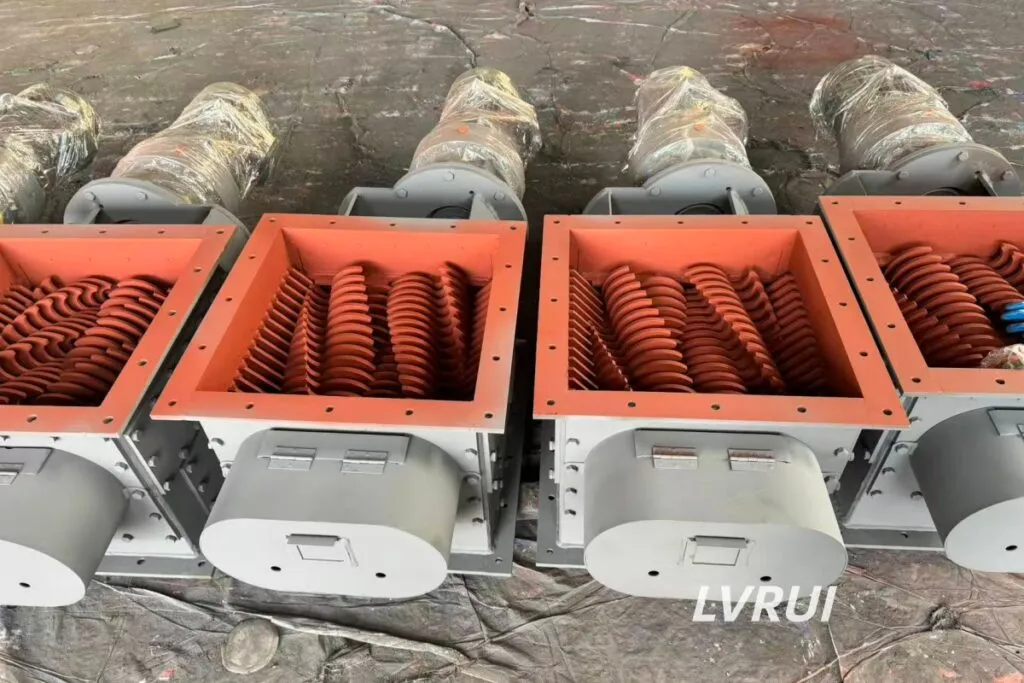
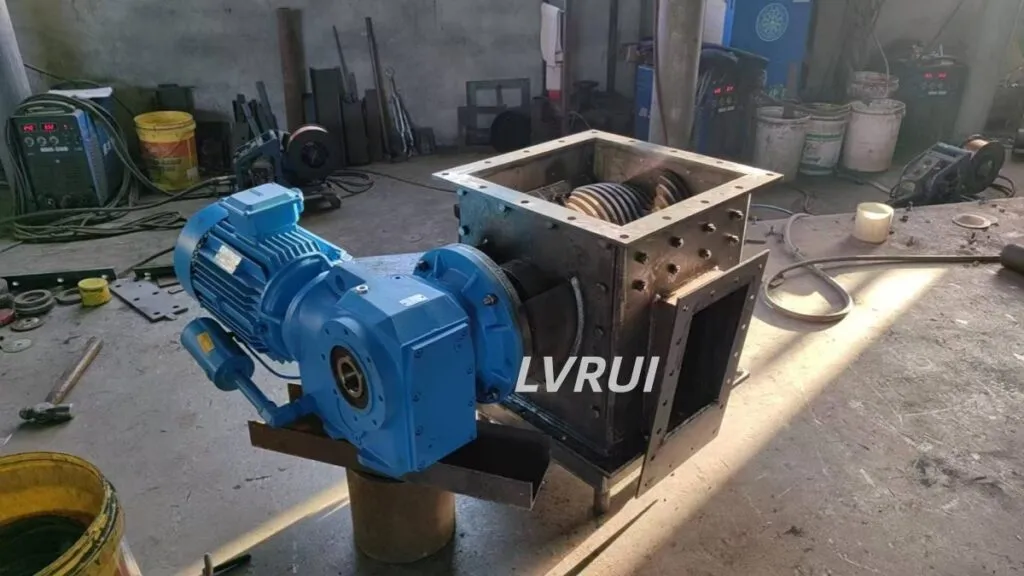
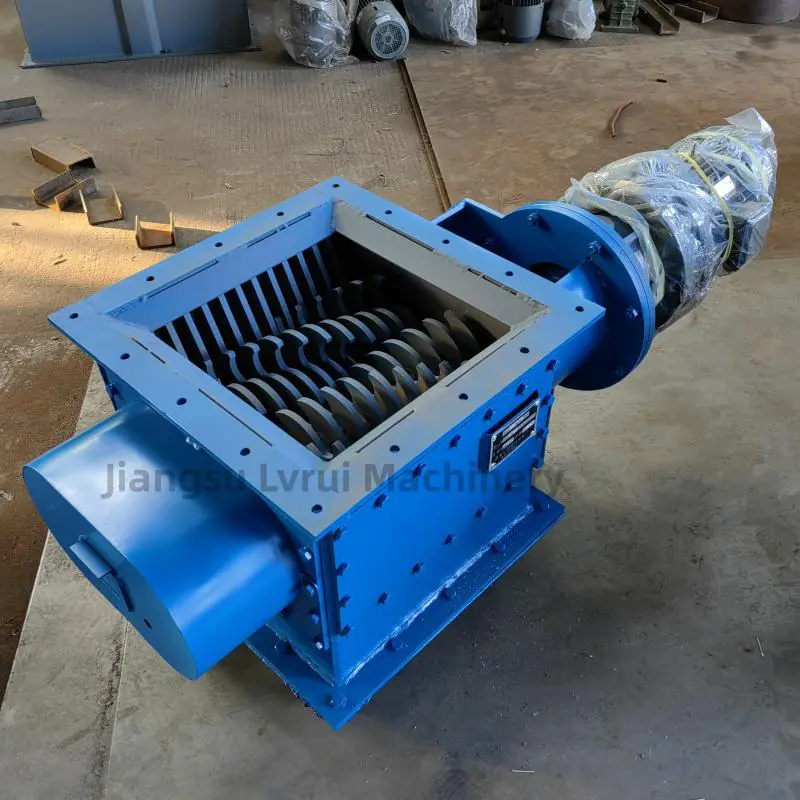
A lump breaker for cement silos eliminates hardened agglomerates by crushing them before discharge.
This ensures continuous and stable material flow.
Working Principle
Twin counter-rotating shafts apply shear force to break lumps into manageable particle sizes.
Twin-shaft lump breakers apply shear forces similar to those used in industrial comminution processes for bulk solids size reduction.
Key Benefits
• Prevents silo outlet blockage
• Protects downstream equipment
• Stabilizes flow rate
• Reduces plant downtime
Understanding why cement forms lumps in silos helps engineers design more reliable discharge systems.
Where Lump Breakers Should Be Installed
Lump breakers are typically installed:
- Directly below silo discharge gates
- Before conveyors or feeders
- At the first material transfer point
Proper placement maximizes crushing efficiency.
In cement plants, installing a lump breaker for cement silos is the most effective engineering solution to prevent blockage and ensure stable discharge flow.
Continuous cement production challenges related to storage and flow are frequently discussed in global cement industry technical reports.
Modern lump breakers are designed specifically to solve why cement forms lumps in silos and prevent blockage.
FAQs About Why cement forms lumps in silos
Why does cement harden in storage silos?
Cement hardens in storage silos due to moisture absorption, chemical hydration reactions, and storage pressure. Understanding why cement forms lumps in silos helps plant operators choose proper storage and prevent blockages. Proper silo ventilation and environmental control reduce the risk of cement lumps forming in silos.
How can lump formation be prevented?
Lump formation in cement silos can be prevented with proper aeration, environmental control, and installation of lump breakers. Knowing why cement forms lumps in silos allows engineers to implement effective solutions such as moisture monitoring, dry storage, and correct discharge equipment.
Are lump breakers necessary in all cement silos?
Yes, lump breakers are necessary in cement silos to prevent blockages and maintain continuous flow. Understanding why cement forms lumps in silos ensures operators can select the right type of lump breaker for each silo.
What are the key factors that cause cement to form lumps?
Key factors include moisture content, particle size, ambient humidity, silo design, and storage duration. By analyzing why cement forms lumps in silos, operators can adjust storage practices and reduce flow problems.
How do silo design and material handling affect lump formation?
Silo outlet design, geometry, and material handling systems directly influence why cement forms lumps in silos. Proper flow control, smooth discharge, and correct installation of actuators and lump breakers minimize cement blockages.
What maintenance practices help prevent cement lumps?
Regular inspection of actuators, liners, and seals is critical. Lubrication, cleaning, and correct operation of lump breakers are essential. These practices address why cement forms lumps in silos and ensure smooth, continuous material flow.
CAT
Need a reliable lump breaker for cement silos?
Contact LVRUI for heavy-duty solutions, fast delivery, and expert engineering support.
📧 info@lvrui-conveyor.com
🌐 lvrui-conveyor.com
Versi Bahasa Indonesia
Gumpalan semen dalam silo terjadi akibat kelembaban, tekanan penyimpanan, dan perubahan suhu. Gumpalan ini dapat menyebabkan penyumbatan aliran material dan gangguan produksi. Lump breaker berfungsi menghancurkan gumpalan sebelum material keluar dari silo, sehingga aliran tetap stabil dan sistem bekerja secara efisien.