How Actuation Speed, Power Supply, Control Method and Application Conditions Affect the Choice
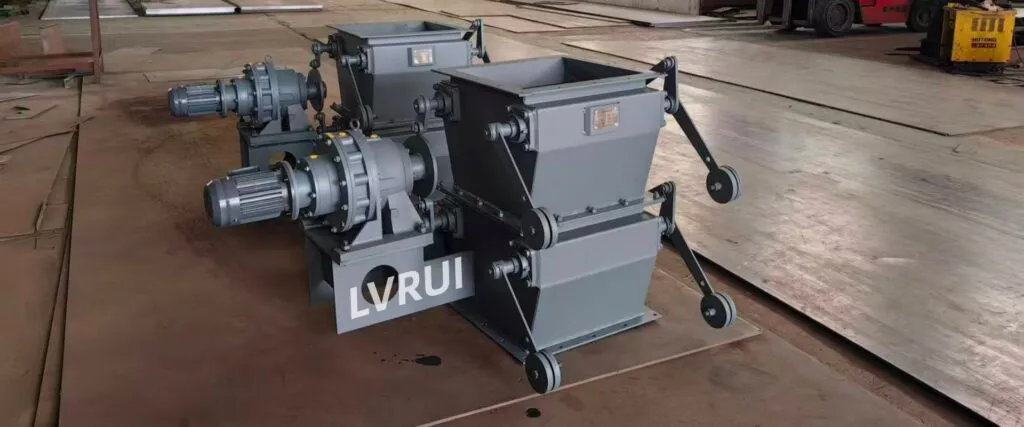
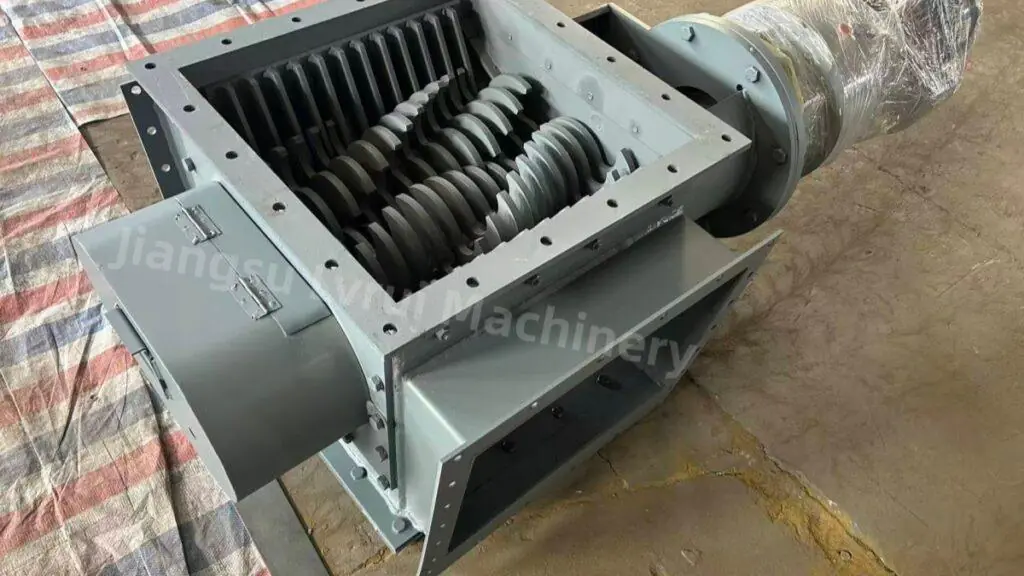
Pneumatic vs electric flow control gate valve selection is an important consideration in cement plants and dry bulk material handling systems because different actuator types affect response speed, installation requirements and control methods. a flow control gate valve is used to regulate material discharge rather than simply isolate the flow path.
When selecting an automatic flow control gate valve, engineers often need to decide between pneumatic and electric actuation.
The correct choice depends on plant utilities, required response speed, adjustment frequency and automation requirements.
This article compares pneumatic and electric flow control gate valves and explains their advantages, limitations and suitable applications in cement powder handling systems.
What Is a Flow Control Gate Valve?
A flow control gate valve is a type of bulk material handling valve designed to regulate the discharge rate of dry powder and granular materials by changing the gate opening position.
Typical applications include:
- Cement silo bottom discharge
- Clinker handling systems
- Powder feeding systems
- Air slide conveyor feeding points
- Hopper outlets
- Bulk material transfer systems
In cement plants, stable flow regulation is important because downstream equipment usually requires a consistent material feed rate.
For example:
Cement silo
↓
Flow control gate valve
↓
Air slide conveyor / conveying equipment
↓
Grinding or storage system
A properly selected flow control gate helps prevent sudden material discharge, unstable feeding, and overload of downstream equipment.
Why Do Cement Plants Need Flow Regulation?
Powder materials do not always discharge at a constant rate.
Several factors can affect material flow:
- Material level inside the silo
- Powder density
- Particle size distribution
- Moisture content
- Aeration conditions
- Downstream equipment demand
Without proper flow regulation, a silo outlet may experience:
- Excessive material discharge
- Unstable feeding rate
- Sudden loading of downstream equipment
- Difficult process control
Therefore, automatic flow control is often required instead of simply opening or closing a gate.
The actuator type determines how the flow control gate responds to the control signal.
Valve actuators are commonly available in pneumatic and electric designs. Pneumatic actuators use compressed air as the power source, while electric actuators use a motor to generate movement.
Pneumatic Flow Control Gate Valve
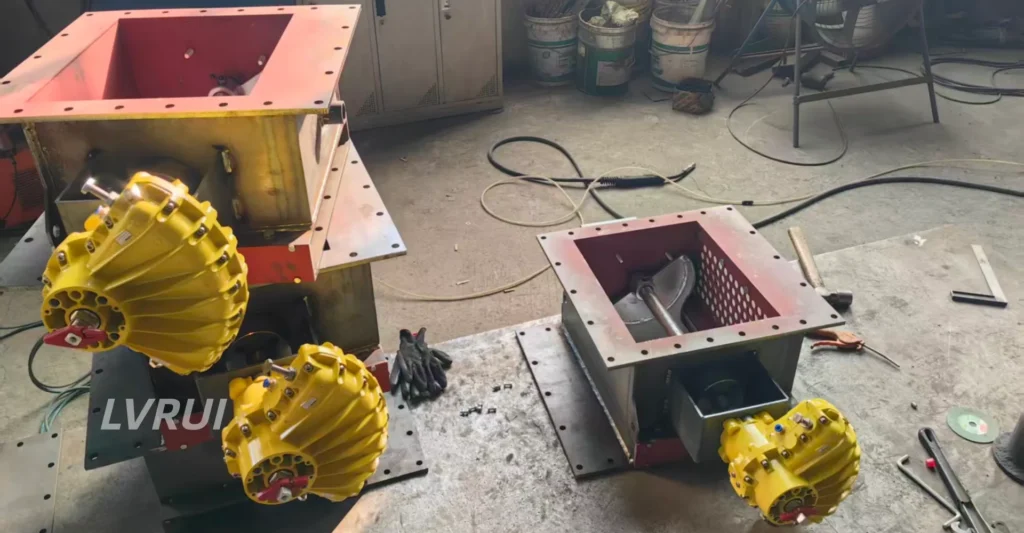
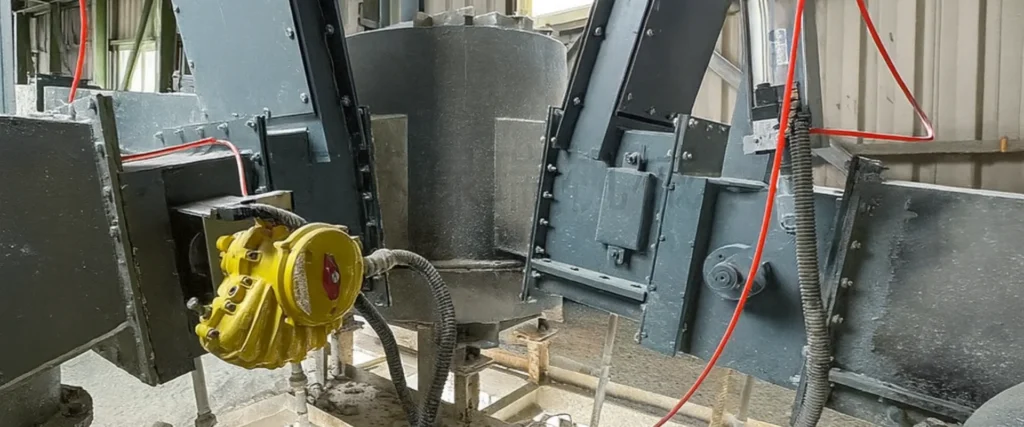
A pneumatic flow control gate valve uses compressed air to drive an actuator, which adjusts the gate opening position. For cement powder applications, pneumatic flow control gates are commonly equipped with rotary pneumatic actuators to control the valve position.
Advantages of Pneumatic Flow Control Gate Valves
Fast Response and Frequent Adjustment
One of the main advantages of pneumatic actuation is fast response speed.
This makes pneumatic flow control gate valves suitable for:
- Frequent material flow adjustment
- Automatic feeding systems
- PLC/DCS controlled applications
Suitable for Existing Compressed Air Systems
Most cement plants already have compressed air systems for:
- Pneumatic valves
- Dust collectors
- Instrumentation
- Automation equipment
When compressed air is already available, integrating a pneumatic flow control gate can be convenient.
Limitations of Pneumatic Flow Control Gate Valves
Although pneumatic operation has advantages, it also requires supporting equipment.
A pneumatic flow control gate usually requires:
- Compressed air supply
- Air preparation components
- Solenoid valve
- Positioner for precise modulation control
For accurate flow regulation, a positioner is commonly used to control the actuator opening position according to the input signal. In modulating valve applications, a valve positioner helps improve the accuracy of actuator positioning and control response. Positioners are commonly used with modulating control valves to achieve the required opening position.
Therefore, if a plant does not have a reliable compressed air system, installation requirements may increase.
Electric Flow Control Gate Valve
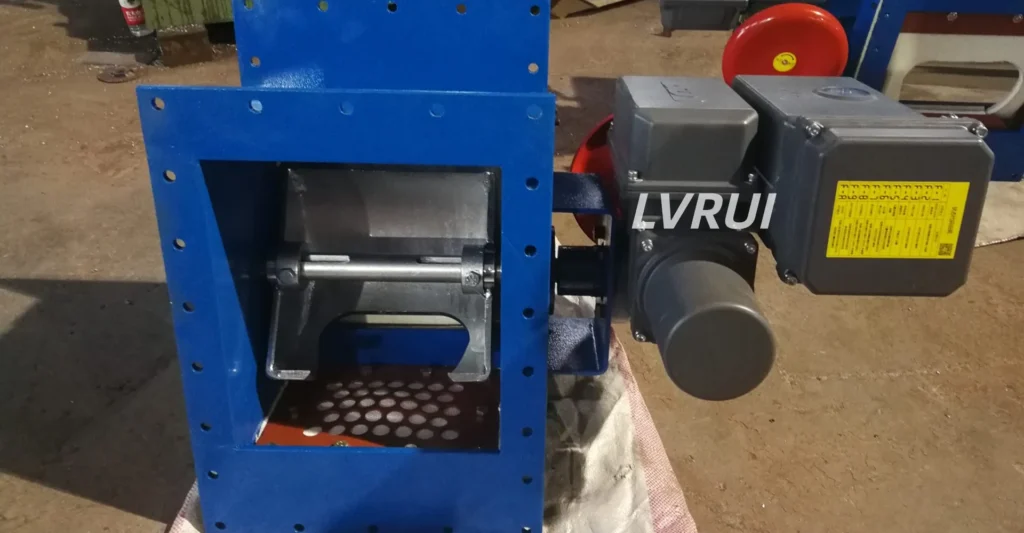
An electric flow control gate valve uses an electric actuator to adjust the gate opening position.
Instead of compressed air, it relies on electrical power and control signals.
Advantages of Electric Flow Control Gate Valves
No External Compressed Air Required
The biggest advantage of electric actuation is that it does not require a separate air supply.
This makes electric flow control gates suitable for:
- Plants without centralized compressed air
- Remote installation locations
- Projects where simplified utilities are preferred
Simpler Installation
Compared with a pneumatic actuator system, an electric actuator generally requires fewer auxiliary components.
The installation mainly involves:
- Electrical connection
- Control signal connection
- Mechanical mounting
This can reduce the complexity of the supporting system. Electric flow control gate valves are also suitable for applications where the valve mainly maintains a stable opening position instead of requiring rapid movement.
Limitations of Electric Flow Control Gate Valves
Electric actuators also have some limitations.
Slower Response Compared With Pneumatic Actuation
Because electric actuators rely on motor-driven mechanisms, their adjustment speed is generally slower than pneumatic actuators.
Therefore, they may not be the best choice for applications requiring very fast response.
Higher Initial Actuator Cost
In some applications, electric actuators may have a higher initial cost because they include:
- Motor system
- Gear mechanism
- Control electronics
- Position feedback components
However, the overall project cost should consider the availability of plant utilities and installation requirements.
Pneumatic vs Electric Flow Control Gate Valve: Comparison
| Item | Pneumatic Flow Control Gate Valve | Electric Flow Control Gate Valve |
|---|---|---|
| Power source | Compressed air | Electricity |
| Response speed | Faster | Slower |
| Installation requirement | Requires air supply system | Requires electrical connection |
| Position control | Requires positioner for precise modulation | Usually integrated actuator control |
| Frequent adjustment | Suitable | Depends on application |
| Utility requirement | Plant compressed air required | Electrical power required |
| Installation complexity | Higher due to air system components | Generally simpler |
| Typical advantage | Fast response and automation flexibility | Easy installation and no air supply requirement |
Should Electric Flow Control Gates Be Combined With Pneumatic Shut-Off Valves?
In many cement powder handling systems, using one valve for both isolation and flow regulation is not always the best solution.
A more practical arrangement can be:
Pneumatic Shut-Off Valve
Function:
- Fast opening and closing
- Emergency isolation
- Equipment protection
Electric Flow Control Gate Valve
Function:
- Flow adjustment
- Stable material feeding
- Continuous process control
This combination separates two different tasks:
Isolation requires fast action.
Flow regulation requires stable positioning.
For example:
Cement silo
↓
Pneumatic shut-off valve
↓
Electric flow control gate valve
↓
Air slide conveyor
This arrangement can provide both reliable isolation and accurate flow adjustment.
How to Choose Between Pneumatic and Electric Flow Control Gate Valves?
There is no universal answer because the correct choice depends on the application.
Choose Pneumatic Flow Control Gate Valves When:
- Compressed air is already available
- Fast response is required
- The valve position changes frequently
- The system requires rapid automation response
- Existing equipment uses pneumatic control
Choose Electric Flow Control Gate Valves When:
- No compressed air system is available
- Installation simplicity is important
- The valve mainly maintains a stable opening position
- Adjustment speed requirements are moderate
- Reducing auxiliary equipment is preferred
Key Factors Before Selection
Before choosing a flow control gate actuator type, consider several factors. For a broader discussion of valve sizing, material compatibility and installation considerations, refer to our flow control gate valve selection guide.
Existing Plant Utilities
Does the plant already have:
- Compressed air?
- Electrical control infrastructure?
Required Adjustment Speed
Ask:
- Does the valve need rapid movement?
- Is the adjustment continuous or occasional?
Control System Requirements
Consider:
- Local control
- Remote control
- PLC/DCS integration
- Position feedback requirements
Operating Environment
Evaluate:
- Dust conditions
- Installation location
- Maintenance accessibility
- Temperature conditions
Quick Selection Guide
For cement powder handling applications:
Choose a pneumatic flow control gate valve when:
- Fast response is required
- The plant already has compressed air
- Frequent adjustment is needed
Choose an electric flow control gate valve when:
- No compressed air system is available
- Simpler installation is preferred
- Stable flow adjustment is the main requirement
Conclusion
Both pneumatic and electric flow control gate valves can provide reliable material flow regulation in cement powder handling systems. Pneumatic flow control gate valves are often preferred when fast response, frequent adjustment, and existing compressed air infrastructure are available. Electric flow control gate valves can be a practical solution when simplified installation, reduced dependence on air supply, and stable flow adjustment are more important.
The best choice depends on the complete operating condition rather than the actuator type alone. In many cement plants, a combination of a fast pneumatic shut-off valve and an electric flow control gate valve can provide an effective balance between isolation safety and accurate material flow regulation.
FAQs About Pneumatic vs Electric Flow Control Gate Valves
What is the main difference between pneumatic and electric flow control gate valves?
The main difference is the actuator power source. Pneumatic valves use compressed air to drive the actuator, while electric valves use an electric motor. This affects response speed, installation requirements, and application suitability.
Which is faster, pneumatic or electric flow control gate valves?
Pneumatic flow control gate valves generally provide faster actuator response because compressed air can produce rapid movement. Electric actuators are usually slower but can provide convenient position control without requiring an air supply.
Does a pneumatic flow control gate valve need a positioner for flow adjustment?
Yes, a positioner is normally required when a pneumatic flow control gate valve needs accurate opening adjustment and continuous flow regulation.
A pneumatic actuator without position feedback is mainly suitable for open/close operation rather than precise flow control.
Are electric flow control gate valves suitable for cement plants?
Yes. Electric flow control gate valves can be suitable for cement plants, especially when compressed air is unavailable or when stable flow adjustment is required without additional pneumatic equipment.
Can a flow control gate valve also be used as a shut-off valve?
Some valves can provide both functions, but separating isolation and flow regulation is often more practical in continuous process systems. A dedicated shut-off valve combined with a flow control valve can improve system reliability.
How do I choose between pneumatic and electric flow control gate valves?
Consider compressed air availability, required response speed, adjustment frequency, automation requirements, installation conditions, and maintenance capability before selecting the actuator type.
Need Help Choosing a Flow Control Gate Valve?
Jiangsu Lvrui Machinery Co., Ltd. provides pneumatic and electric flow control gate valves for cement plants, silos and dry bulk material handling systems.
To recommend a suitable configuration, please provide:
- Material type
- Silo or hopper outlet size
- Required flow rate
- Valve operating frequency
- Existing compressed air availability
- Control requirements (local or remote)
- Installation drawings or photos
Our team can help evaluate whether a pneumatic or electric flow control gate valve is more suitable for your application based on your operating conditions.
Email: info@lvrui-conveyor.com
WhatsApp: +86 18261998937
WeChat: +86 18261998937