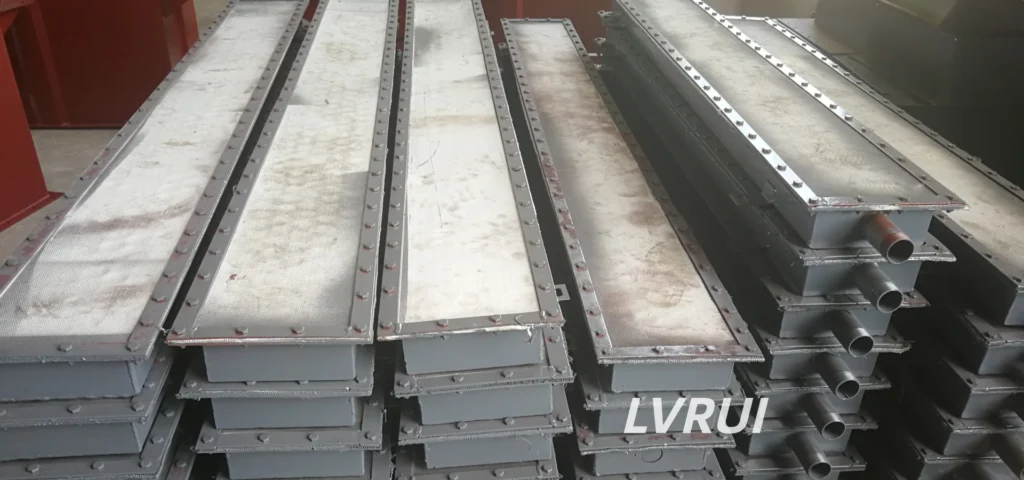
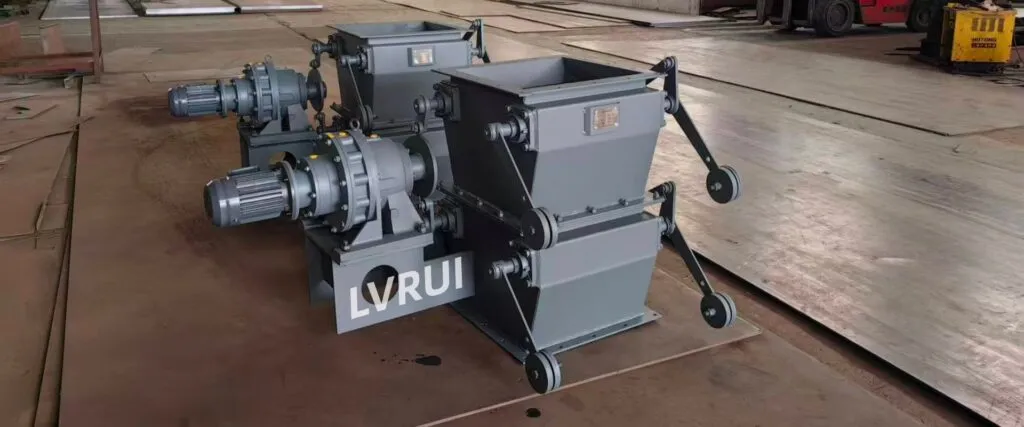
How pneumatic shut-off valves provide fast ON/OFF isolation between silos and air slide conveyors—and where flow control gates serve a different function
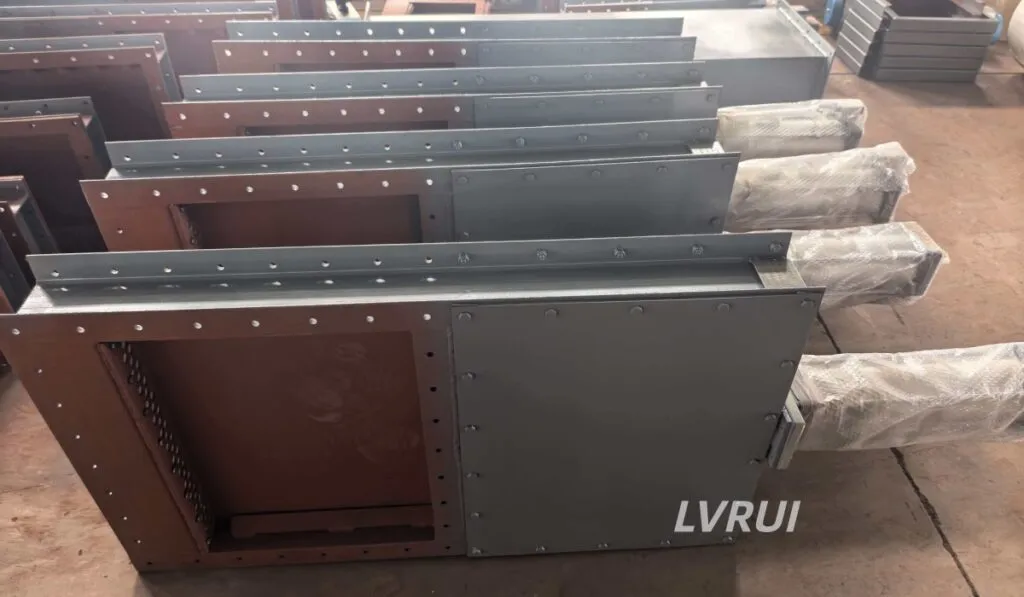
Introduction
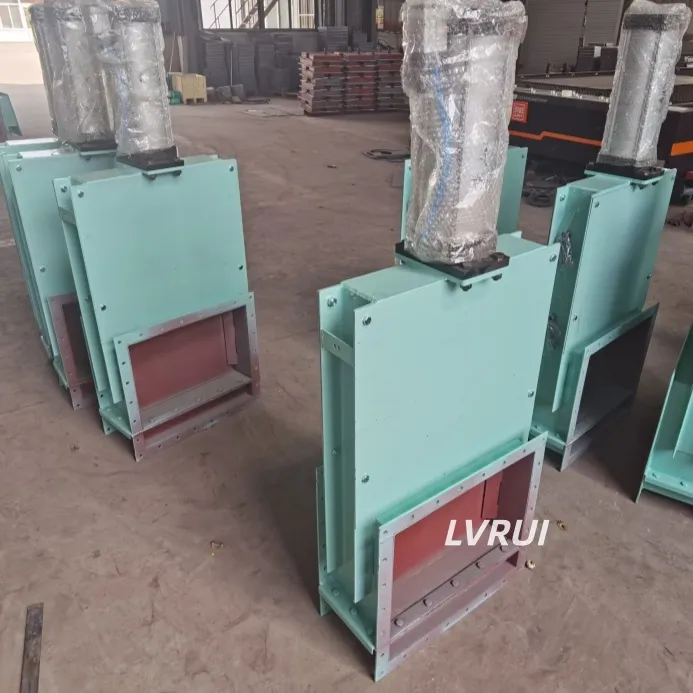
A pneumatic shut off valve for air slide conveyor systems is mainly used to start or stop powder discharge quickly between upstream storage equipment and the downstream conveying line.
In cement, fly ash, raw meal, lime powder, and similar dry powder systems, the valve may be installed below a silo or hopper and before an air slide conveyor. When opened, it provides a material passage into the downstream system. When closed, it isolates the discharge path for process shutdown, equipment switching, or maintenance according to the system arrangement.
Its function should not be confused with a flow control gate.
A pneumatic shut-off valve is primarily intended for fast ON/OFF operation, while a flow control gate changes the effective discharge opening when adjustable powder feeding is required.
Understanding this difference is important because isolation and discharge regulation are separate functions in a properly designed silo discharge system.
What Role Does a Pneumatic Shut-Off Valve Play Before an Air Slide Conveyor?
The pneumatic shut-off valve acts as an isolation device between the upstream material source and the downstream air slide conveyor.
A typical arrangement may be:
Cement silo → Pneumatic shut-off valve → Flow control gate → Air slide conveyor
The actual equipment sequence depends on the silo outlet design and process requirements. Some systems may also include aeration equipment, a manual isolation gate, or a lump breaker upstream.
The pneumatic shut-off valve performs one main task:
Open the material passage when discharge is permitted and close it quickly when material flow needs to stop.
It does not aerate the powder, break hardened lumps, measure mass flow, or automatically compensate for changes in material flowability.
Where adjustable feeding is required, a separate flow control gate or another suitable feeding device should be evaluated.
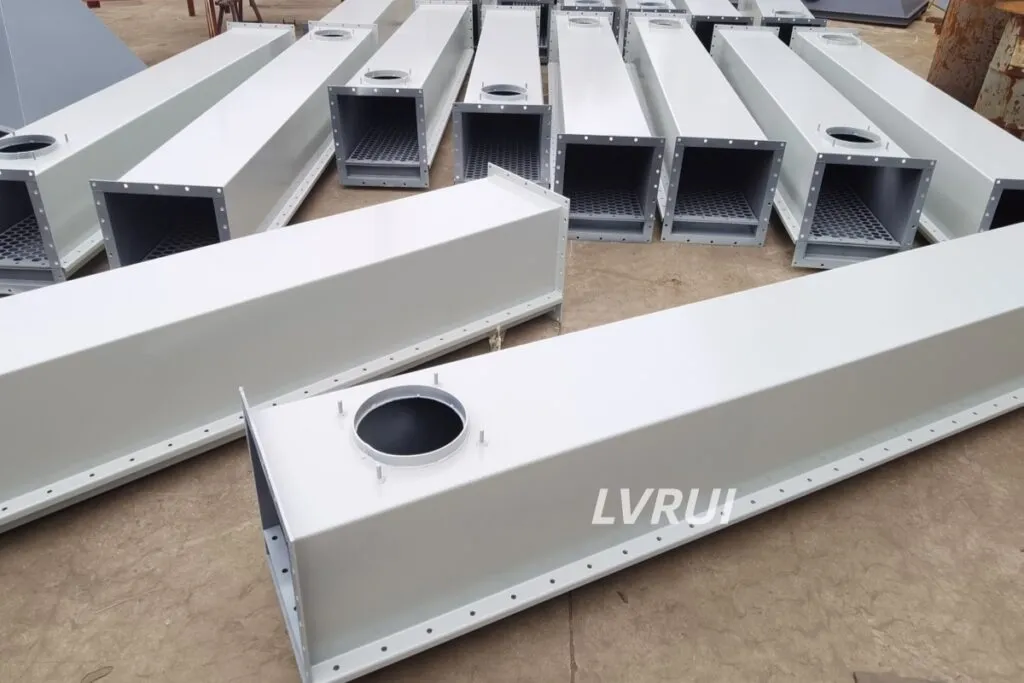
Pneumatic Shut-Off Valve vs Flow Control Gate
| Function | Pneumatic Shut-Off Valve | Flow Control Gate |
|---|---|---|
| Primary purpose | ON/OFF isolation | Adjustable discharge regulation |
| Normal operation | Fully open or fully closed | Variable opening positions |
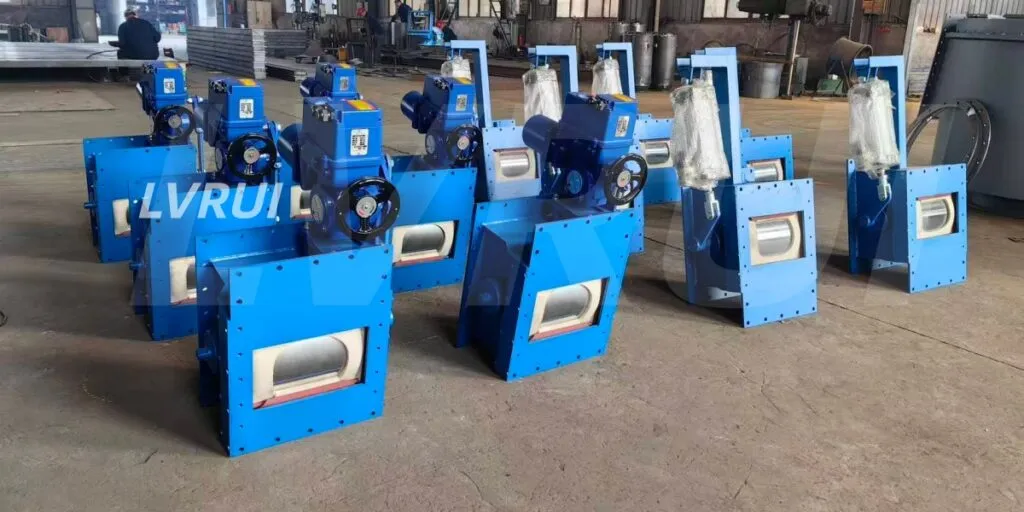
| Typical actuator | Pneumatic cylinder | Manual, pneumatic, or motorized |
| Fast shut-off | Yes | Possible depending on design, but not its primary function |
| Continuous flow adjustment | No | Yes |
| Mass-flow measurement | No | No |
| Typical air slide application | Isolates upstream discharge | Adjusts material entering downstream equipment |
Although both devices may be installed in the same silo discharge line, they should not automatically be treated as interchangeable.
A shut-off valve is selected when the process requires fast and repeatable opening or closing. A flow control gate is selected when the discharge opening needs to be adjusted according to downstream operating requirements.
Where actual dosing accuracy is required, weighing or metering equipment must be considered separately. For more detail on adjustable powder regulation before an air slide, see our flow control gate for air slide conveyor guide.
How Does a Pneumatic Shut-Off Valve Work?
A pneumatic shut-off valve uses compressed air to operate a cylinder connected to the gate mechanism.
When an OPEN command is received, the actuator retracts or extends according to the valve configuration and moves the gate away from the material passage. Powder can then discharge into the air slide conveyor or intermediate equipment.
When a CLOSE command is received, the actuator moves the gate back across the opening and stops material discharge.
Limit switches or proximity sensors can be added when the control system needs confirmation of the fully open or fully closed position. For general industry guidance on pneumatic valve actuators and actuator accessories, refer to the ISA-96 valve actuator standards.
The valve may be interlocked with the upstream silo discharge sequence and downstream conveyor controls so that material is released only when the receiving equipment is ready.
Actual sealing performance depends on the valve structure, material characteristics, wear condition, pressure conditions, and required leakage class. A standard bulk-material shut-off gate should therefore not automatically be treated as a zero-leakage pressure-isolation valve.
Where Is the Shut-Off Valve Installed in an Air Slide System?
The most common installation position is between the silo or hopper outlet and the downstream air slide conveyor.
For example:
Silo / Hopper (with aeration or discharge assistance where required)
↓
Pneumatic shut-off valve
↓
Flow control gate, where adjustable feeding is required
↓
Air slide conveyor
The shut-off valve should be positioned where it can isolate material discharge without creating an unnecessarily restricted transition into the air slide inlet.
Installation design should consider flange dimensions, available actuator clearance, maintenance access, gate movement direction, material accumulation zones, and the relationship between the silo outlet and air slide inlet.
If hardened lumps may reach the valve, a lump breaker may be required upstream rather than expecting the shut-off valve to handle the blockage. The exact sequence depends on the complete cement silo discharge system and process requirements.
Why Use a Pneumatic Shut-Off Valve with an Air Slide Conveyor?
A pneumatic shut-off valve is useful when the system requires frequent remote ON/OFF operation.
Compared with a manually operated isolation gate, pneumatic actuation allows the valve to be integrated into PLC or DCS operating sequences and makes repeated opening and closing more practical.
Typical benefits include fast actuator response, remote operation, open/close position feedback when sensors are fitted, compact integration below silos or hoppers, and easier interlocking with downstream conveying equipment.
However, the valve should still be selected according to the material properties and operating conditions. Fine abrasive powder, material buildup, misalignment, insufficient actuator force, or unsuitable sealing design can affect long-term operation.
Typical Applications
Pneumatic shut-off valves associated with air slide conveyor systems are commonly used at cement and fly ash silo outlets, raw meal discharge points, powder transfer lines, grinding and storage systems, and other dry powder applications requiring automated ON/OFF isolation.
They are particularly useful where the plant control system needs to stop material discharge independently from the downstream flow-regulation equipment.
For coarse, oversized, sticky, or strongly abrasive material, valve type and construction should be evaluated separately rather than assuming the same configuration used for cement powder will be suitable.
What Should Be Confirmed Before Selecting the Valve?
Before selecting a pneumatic shut-off valve for an air slide conveyor system, the supplier should confirm the material, bulk density, particle size, moisture, temperature, silo or hopper outlet dimensions, air slide inlet dimensions, installation position, required operating frequency, available compressed-air supply, required open/close feedback, flange arrangement, and required sealing performance.
The actuator must provide sufficient force to move the gate under the expected operating condition. The valve body and gate materials should also be selected according to abrasion, corrosion, temperature, and expected service conditions.
For retrofit projects, dimensional drawings and photographs of the existing silo outlet and air slide inlet are particularly useful because available installation space may determine actuator orientation and flange design.
Common Integration Mistakes
One common mistake is using the pneumatic shut-off valve as though it were a continuously modulating flow control gate. Repeatedly trying to regulate throughput by partially opening a simple ON/OFF gate may produce unstable discharge and may not provide repeatable control.
Another mistake is assuming that the valve can solve upstream silo-flow problems. Bridging, rat-holing, compacted powder, poor aeration, or hardened lumps require separate diagnosis.
The third mistake is ignoring downstream air slide capacity. Opening the shut-off valve releases material, but the downstream air slide must still have sufficient conveying capacity and proper aeration conditions.
The complete discharge system should therefore be considered rather than selecting the shut-off valve in isolation.
FAQs About Pneumatic Shut Off Valve for Air Slide Conveyor
What is the main function of a pneumatic shut-off valve before an air slide conveyor?
Its primary function is fast full-open or full-close isolation of material discharge. It allows the control system to start or stop powder entering the downstream conveying system.
Is a pneumatic shut-off valve the same as a pneumatic flow control gate?
No. A pneumatic shut-off valve is primarily designed for ON/OFF isolation. A pneumatic flow control gate can use controlled intermediate positions to adjust the discharge opening.
Can a pneumatic shut-off valve regulate the air slide feed rate?
A standard ON/OFF shut-off valve should not be treated as the main flow-regulation device. If adjustable feeding is required, a flow control gate or another suitable feeding device should be evaluated separately.
Can the valve be connected to a PLC or DCS?
Yes. The pneumatic actuator can be controlled through a solenoid valve, and open/close position feedback can be provided by limit switches or proximity sensors when required.
Where should the valve be installed?
It is commonly installed below a silo or hopper and upstream of an air slide conveyor. The exact position depends on the complete discharge arrangement, including isolation gates, aeration equipment, lump breakers, and flow control gates.
What information is required for valve selection?
Provide the handled material, temperature, bulk density, outlet size, connection dimensions, installation position, operating frequency, compressed-air conditions, control requirements, downstream equipment, and required sealing performance.
Conclusion
A pneumatic shut-off valve for an air slide conveyor should primarily be treated as an ON/OFF isolation device rather than a precision flow-regulation valve.
Its role is to start or stop powder discharge quickly and allow the valve to be integrated with the plant control sequence. When adjustable material feeding is required, a separate flow control gate may be installed according to the system design.
Reliable operation depends on more than the valve itself. Silo discharge conditions, material properties, upstream aeration, possible lump formation, actuator sizing, installation geometry, and downstream air slide capacity should all be considered together.
Need a Pneumatic Shut-Off Valve for Your Air Slide System?
If you are selecting or replacing a pneumatic shut-off valve, send LVRUI the operating information so we can review the valve configuration and connection dimensions.
Please provide the handled material, silo or hopper outlet size, air slide inlet dimensions, material temperature, available compressed-air supply, required operating frequency, control requirements, and site drawing or installation photos.
✅ Pneumatic ON/OFF shut-off valves for dry powder systems
✅ Customized flange and connection dimensions
✅ Optional limit switches and PLC/DCS interface
✅ Technical drawings and remote engineering support
Email: info@lvrui-conveyor.com
WhatsApp / WeChat: +86-18261998937