How to Estimate Airflow, System Pressure and Blower Power for Powder Fluidization
Introduction
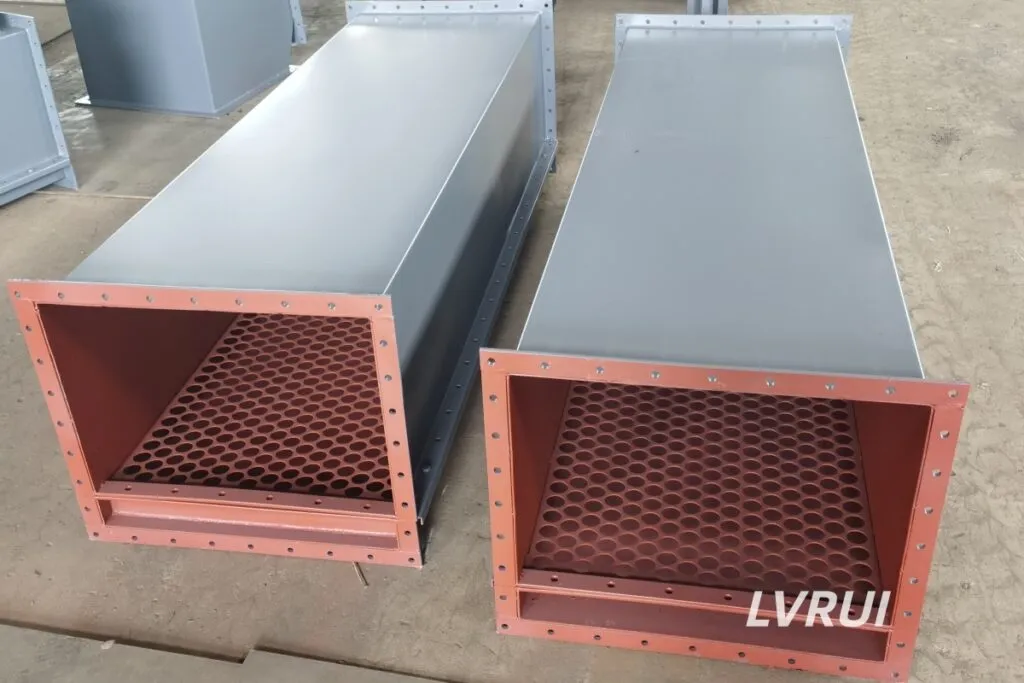
Air slide conveyor power calculation mainly concerns the blower or fan that supplies low-pressure fluidizing air beneath the air slide fabric. The conveying chamber itself has no moving conveying element, but the air-supply system requires electrical power to maintain the airflow and pressure needed for stable powder fluidization.
Blower power cannot be selected from conveyor length or conveying capacity alone. It depends on the required airflow, total system pressure, blower efficiency and operating point. Fabric condition, powder-bed resistance, air-distribution piping and leakage can all affect the final duty point.
The calculation described below should therefore be used as a preliminary engineering estimate. Final blower and motor selection should be checked against the selected manufacturer’s performance curve at the actual project operating conditions.
Required conveying capacity should be confirmed separately before the fluidizing-air and blower duty are finalized. See the Air Slide Conveyor Capacity Calculation guide for the basic throughput calculation method.
Quick Answer: How Is Air Slide Conveyor Blower Power Calculated?
For a preliminary estimate, blower power is determined from the required airflow and total pressure rise:
Air Power (kW) = Q × ΔP / 1000
where:
- Q = airflow, m³/s
- ΔP = required pressure rise, Pa
To estimate electrical input power:
Electrical Power (kW) ≈ Q × ΔP / (1000 × ηtotal)
where ηtotal represents the relevant combined efficiency between electrical input and useful air power.
The calculated value is not by itself the final motor rating. Actual blower and motor selection should be checked against the manufacturer’s airflow-pressure-power curve.
Understand Air Power, Blower Shaft Power and Electrical Input
1. Air Power
The useful power transferred to the airflow:
Pair = Q × ΔP
2. Blower Shaft Power
Air power divided by blower aerodynamic efficiency.
3. Electrical Input Power
Electrical input also reflects motor and drive efficiency where applicable.
For preliminary calculations, a combined total efficiency can be used if its definition is clearly stated. For final equipment selection, however, use the blower manufacturer’s published power requirement at the required airflow and pressure.
Step-by-Step Power Calculation Method
A practical air slide conveyor power calculation should establish the required airflow and system pressure before blower and motor power are evaluated.
Step 1: Determine the Required Fluidizing Airflow
Fluidizing-air demand should be established from the air requirement per unit active fabric area or from validated project/manufacturer data for the conveyed powder and selected fabric.
A useful preliminary relationship is:
Q = q × Af
Where:
- Q = total fluidizing airflow, m³/s
- q = required airflow per unit active fabric area, m³/(s·m²)
- Af = active air slide fabric area, m²
If airflow data are provided in other units, convert them consistently before applying the equation.
Then explain:
The required specific airflow is not a universal constant. It depends on powder fluidization behavior, fabric permeability, material-bed condition and operating requirements.
Where possible, use:
✓ Project-specific test data
✓ Proven operating data for the same material
✓ Validated equipment or fabric supplier data
✓ A documented preliminary engineering assumption
Do not determine total airflow from conveyor length alone without considering conveyor width and active fabric area.
How Air Slide Fabric Affects Airflow
Air slide fabric provides resistance between the lower air chamber and the powder bed. Its permeability therefore affects the relationship between airflow and pressure, but higher permeability is not automatically better.
The selected fabric must provide sufficiently uniform air passage while remaining suitable for:
- Powder characteristics
- Operating temperature
- Mechanical installation
- Required fluidization condition
Step 2: Estimate the Required System Pressure
The blower must provide enough pressure to overcome the resistance between its outlet and the fluidizing surface.
For a preliminary pressure balance:
ΔPtotal = ΔPpiping + ΔPlocal + ΔPfabric + ΔPpowder bed
Where applicable, consider:
✓ Air piping friction
✓ Branches, valves and fittings
✓ Air slide fabric resistance
✓ Powder-bed resistance
✓ Distribution losses between blower and individual air chambers
Air leakage should normally be considered when establishing required airflow and system condition rather than simply added as a fixed pressure-loss value.
Air slide conveyors normally use low-pressure fluidizing air, but the required pressure should be determined from the actual resistance of the selected fabric, powder bed and air-distribution system. A universal operating-pressure range should not replace project-specific pressure calculations or blower performance data.
Powder-Bed Resistance Matters
The blower does not only push air through the fabric.
Air must pass through:
Lower air chamber → air slide fabric → powder bed
The powder bed therefore contributes to the required pressure.
Its resistance may change with:
- Bed depth
- Material condition
- Compaction
- Moisture
- Fluidization state
Step 3: Calculate Preliminary Blower Power
P = (Q × ΔP) / (1000 × ηtotal)
Where:
- P = estimated electrical input power, kW
- Q = airflow, m³/s
- ΔP = total pressure rise, Pa
- ηtotal = total efficiency used in the preliminary estimate
Important:
Q must be entered in m³/s and ΔP in Pa for this form of the equation.
If blower efficiency, motor efficiency and drive efficiency are available separately, they should be treated consistently rather than combined into an arbitrary assumed value.
Use the efficiency corresponding to the expected blower operating point whenever manufacturer data are available. For an early estimate without a selected blower, any assumed efficiency should be clearly identified as a preliminary design assumption and sensitivity-checked rather than presented as a universal value.
Example: Preliminary Air Slide Blower Power Calculation
The following air slide conveyor power calculation example demonstrates the method only. It is not a universal blower-sizing recommendation.
Assume the project has already established:
- Required airflow: 0.45 m³/s
- Required total pressure: 6,000 Pa
- Preliminary total efficiency: 0.60
Then:
P = (0.45 × 6,000) / (1,000 × 0.60)
P = 4.5 kW
The 4.5 kW result is a preliminary estimated input-power requirement under the assumed conditions. It does not mean that a 4.5 kW or any specific standard motor should automatically be selected.
Final selection should verify that the chosen blower can deliver the required 0.45 m³/s at 6,000 Pa on its actual performance curve and that the associated motor has adequate rated power for the selected operating point.
Step 4: Verify the Blower Operating Point
A blower should not be selected from motor kW alone.
The required duty point is defined by:
Required Airflow + Required Pressure
On the manufacturer’s performance curve, confirm:
✓ Required airflow can be delivered
✓ Required pressure can be maintained
✓ Required shaft or motor power is acceptable
✓ Operation is within the manufacturer’s recommended range
✓ Efficiency at the operating point is reasonable
✓ Motor rating is adequate across the expected operating range
Two blowers with the same motor power can provide very different airflow-pressure characteristics.
Industrial fan system performance should be evaluated from the required airflow, pressure and operating point rather than motor power alone, as also emphasized in U.S. Department of Energy guidance.
Step 5: Confirm Motor Power With Manufacturer Data
After the blower model is selected, use the manufacturer’s required shaft power or input-power data to determine the appropriate motor rating.
Motor selection should consider:
✓ Required blower duty point
✓ Manufacturer power curve
✓ Expected operating range
✓ Motor efficiency
✓ Starting method and electrical supply
✓ Applicable project/service requirements
Do not apply a universal percentage margin to every air slide blower. The final motor rating should be based on the selected blower’s power demand and the manufacturer’s recommendations.
What Happens if the Blower Is Undersized or Oversized?
Undersized
Possible consequences include:
✓ Insufficient airflow at required pressure
✓ Incomplete or uneven fluidization
✓ Reduced conveying stability
✓ Greater sensitivity to changes in material or operating condition
Oversized
Possible consequences include:
✓ Operation away from an efficient duty point
✓ Unnecessary electrical consumption
✓ Excessive airflow if not properly controlled
✓ Increased air and dust leakage risk
✓ Difficult airflow balancing in multi-section systems
Then:
The objective is not to select the largest available blower, but to match the blower operating range to the actual system requirement.
How Does a Long Air Slide Route Affect Blower Sizing?
Longer conveying routes may increase the total active fabric area and may require multiple air-supply branches or independently regulated sections. However, total blower requirement should not be calculated by conveyor length alone.
For long routes, check:
✓ Total active fabric area
✓ Number of supplied sections
✓ Air distribution between branches
✓ Pressure losses in the air piping
✓ Leakage
✓ Whether one blower or multiple air-supply zones are more practical
For the broader effects of conveying distance, elevation loss, section continuity and long-route air distribution, see the Long-Distance Air Slide Conveyor guide.
Can One Blower Supply Multiple Air Slide Sections?
Yes, one blower can supply multiple sections or branches when the system is designed for the combined airflow requirement and the required pressure can be maintained at each branch.
However, the design should consider:
✓ Simultaneous operating demand
✓ Branch resistance
✓ Balancing or regulating valves
✓ Isolation requirements
✓ Pressure measurement points
✓ What happens when one branch is opened or closed
A common header does not guarantee equal airflow through every air slide section.
When one blower supplies multiple conveyor sections or branches, the complete air-distribution arrangement should be coordinated at system level. See Air Slide Conveyor System Design for air-distribution architecture and interface planning.
Common Air Slide Conveyor Power Calculation Mistakes
✓ Calculating airflow from conveyor length alone
Active fabric area and powder requirements must also be considered.
✓ Using a universal pressure value
Required pressure depends on actual system resistance.
✓ Treating leakage as a fixed pressure-loss allowance
Leakage primarily changes required airflow and system operating condition.
✓ Using one generic efficiency for every blower
Efficiency changes with blower type and operating point.
✓ Selecting motor kW directly from the theoretical formula
Final selection must be checked against the blower performance curve.
✓ Oversizing the blower to compensate for poor air distribution
A larger blower does not automatically correct branch imbalance, leakage or fabric problems.
✓ Ignoring simultaneous demand in shared-blower systems
All expected operating branches must be considered.
When Should Blower Power Be Recalculated?
Recheck the blower duty when:
✓ Conveyor width or active fabric area changes
✓ Additional air slide sections are connected
✓ Conveying route is extended
✓ Air slide fabric specification changes significantly
✓ Air-distribution piping is modified
✓ Material or operating condition changes significantly
✓ One blower begins supplying additional branches
✓ Required conveying capacity is increased
Air Slide Conveyor Power Calculation FAQs
What is the basic formula for air slide conveyor blower power?
A preliminary power estimate is based on airflow, total pressure rise and efficiency. Final blower and motor selection should then be verified using the manufacturer’s performance data.
Can blower airflow be calculated from air slide length alone?
No. Conveyor width, active fabric area, material fluidization requirements and air-distribution arrangement also affect airflow demand.
What pressure should be used for an air slide conveyor?
Use the pressure required to overcome the actual resistance of the piping, fittings, air slide fabric and powder bed. A single universal pressure value should not be applied to every system.
Should leakage be included in the pressure calculation?
Leakage should be considered in the overall system design, particularly when determining required airflow. It should not simply be treated as a fixed additional pressure drop.
Can one blower supply several air slide conveyors?
Yes, provided the blower can satisfy the combined operating demand and the air-distribution system can maintain adequate airflow and pressure at each active branch.
How is the final motor size selected?
Use the selected blower’s manufacturer power curve at the required airflow-pressure operating point, then choose a motor rating suitable for that blower and the project operating requirements.
Conclusion
Air slide conveyor power calculation begins with two engineering requirements: the airflow needed for stable fluidization and the pressure needed to overcome resistance through the air-distribution system, fabric and powder bed. These values define the blower duty point, while efficiency determines the corresponding power requirement.
The basic power formula is useful for preliminary engineering, but final blower and motor selection should be based on the selected manufacturer’s airflow-pressure-power curve. Fixed values for airflow per meter, system pressure, blower efficiency or motor margin should not replace project-specific operating data.
Need Help Checking Air Slide Blower Requirements?
Send LVRUI the conveyed material, air slide width and length, number of conveyor sections, required capacity, air slide fabric information if available, air-piping arrangement and any existing blower data.
Based on these conditions, LVRUI can help review the required airflow, pressure duty and preliminary blower power before the final blower model is confirmed.
Email: info@lvrui-conveyor.com
WhatsApp: +86-18261998937
WeChat: +86-18261998937