A practical guide to diagnosing filter bag abrasion, heat damage, moisture hardening, cage wear, seam failure, and dust leakage in cement dust collectors
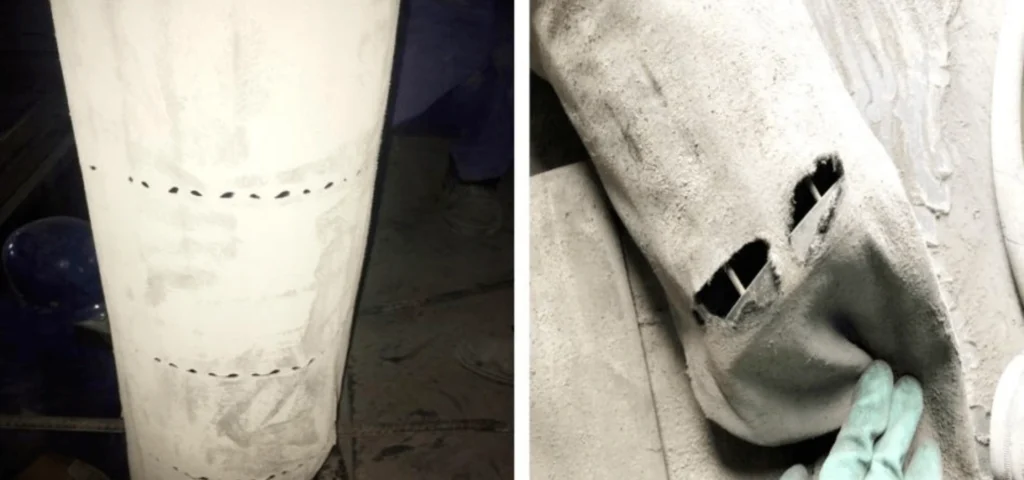
Cement filter bag damage patterns provide useful evidence about conditions inside a bag filter. The location, shape, color, and texture of the damage can often indicate whether the root cause is abrasive cement dust, a damaged filter cage, moisture, excessive temperature, uneven airflow, or incorrect pulse-jet cleaning.
Replacing a damaged filter bag without identifying the failure pattern may solve dust leakage temporarily, but the same problem can return after only a short operating period. For reliable filter bag failure diagnosis, the damaged bag should be inspected together with its cage, installation position, pulse pipe, inlet airflow, differential pressure, hopper condition, and operating temperature.
This guide focuses on physical damage diagnosis rather than general bag filter maintenance. It is suitable for cement plants, grinding stations, fly ash handling systems, lime plants, dry mortar lines, and other facilities using fabric filters for fine powder collection.
When replacement is necessary, the correct industrial filter bags for cement dust collectors should be selected according to temperature, dust characteristics, cleaning method, and filter cage structure.
Why Cement Filter Bag Damage Patterns Matter
A hole in a cement filter bag is usually the final result of another problem. The actual cause may be a sharp cage wire, high dust velocity, moisture, excessive pulse pressure, incorrect installation, or unsuitable filter media.
Different cement filter bag damage patterns point toward different causes:
| Damage pattern | Likely cause |
|---|---|
| Small holes following cage wires | Sharp welds, broken wires, cage corrosion |
| Long vertical wear lines | Repeated bag-to-cage rubbing |
| Lower-section abrasion | Hopper dust buildup or damaged cage bottom |
| Burn marks or shrinkage | Excessive temperature or hot particles |
| Hardened filter bag fabric | Moisture, condensation, oil, or cement caking |
| Inlet-side wear | High dust velocity or poor airflow distribution |
| Open seams | Thread failure, heat, or installation stress |
| Clean-side dust tracks | Cuff leakage, pinholes, or poor tube-sheet sealing |
The damage pattern should therefore be treated as inspection evidence. Simply replacing the filter bag may not correct the underlying problem.
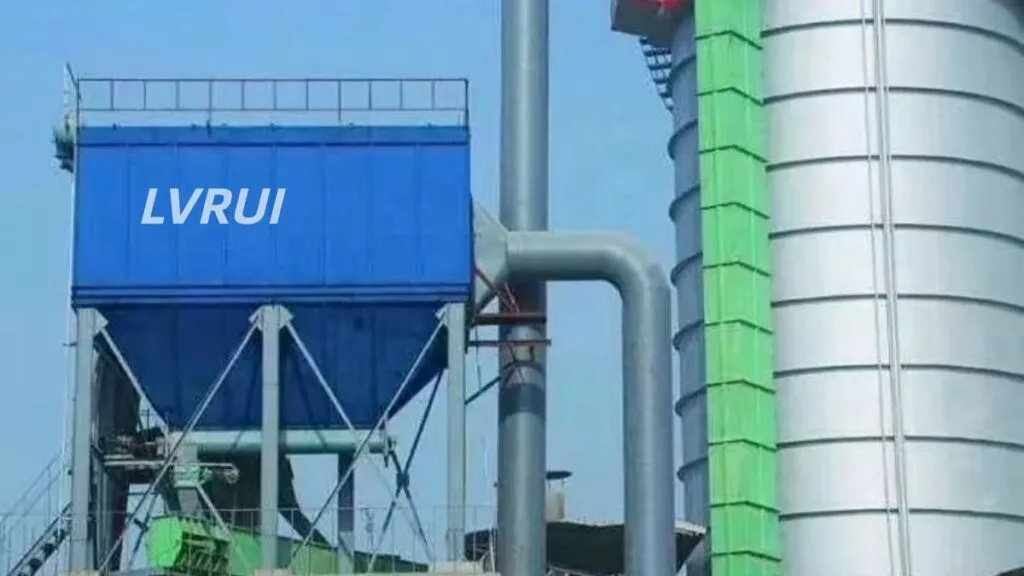
The bags, cages, pulse-cleaning system, fan, hopper, and dust discharge equipment should be reviewed as part of the complete bag filter for cement dust collection.
How to Read Cement Filter Bag Damage Patterns
Correctly interpreting cement filter bag damage patterns requires checking the damage location, fabric appearance, cage condition, and operating data together. Before removing the damaged filter bag, record where it was installed. Position is often as important as the damage itself.
Check whether the bag was:
√ Close to the dusty-air inlet
√ Near the hopper wall
√ Directly below a pulse valve
√ Installed in the first or last row
√ Surrounded by other damaged bags
√ Located beside a previously replaced bag
Photograph the bag before cleaning it. Dust deposits, discoloration, clean-side powder tracks, and hardened areas may disappear after cleaning.
A practical filter bag failure diagnosis should include:
- Record the bag location.
- Inspect the full bag from cuff to bottom.
- Compare the dirty side and clean side.
- Check the cage for bent wires, burrs, and corrosion.
- Compare the damage with nearby bags.
- Review temperature, pressure drop, airflow, and pulse-cleaning records.
If one bag is damaged, the cause may be local. If many bags show the same cement filter bag damage pattern in the same position, the cause is more likely related to system design or operation.
Plant engineers may also review fabric filter monitoring guidance when evaluating differential pressure, airflow, cleaning performance, and possible filter bag failure.
1. Mechanical Holes and Filter Cage Abrasion
Small holes, pinholes, and vertical wear lines are among the most common forms of cement filter bag damage.
Possible causes include:
√ Sharp cage wires
√ Rough welding points
√ Broken horizontal cage rings
√ Cage corrosion
√ Incorrect cage diameter
√ Loose filter bag installation
√ Excessive bag movement
√ Abrasive cement dust
√ Damaged venturi edges
Hold the filter bag against a strong light source to locate small holes. Then check whether the holes follow the vertical or circular cage wire pattern.
If filter bag holes and wear follow the cage structure, the cage should be repaired or replaced before a new bag is installed. Installing a new filter bag over the same damaged cage will usually cause repeated failure.
Long vertical filter bag abrasion patterns generally indicate continuous rubbing between the bag and cage. The fabric may first appear polished or thinner before holes become visible.
Check the cage for:
√ Bent vertical wires
√ Sharp welding points
√ Broken rings
√ Incorrect length
√ Rough or corroded surfaces
√ Damaged bottom cap
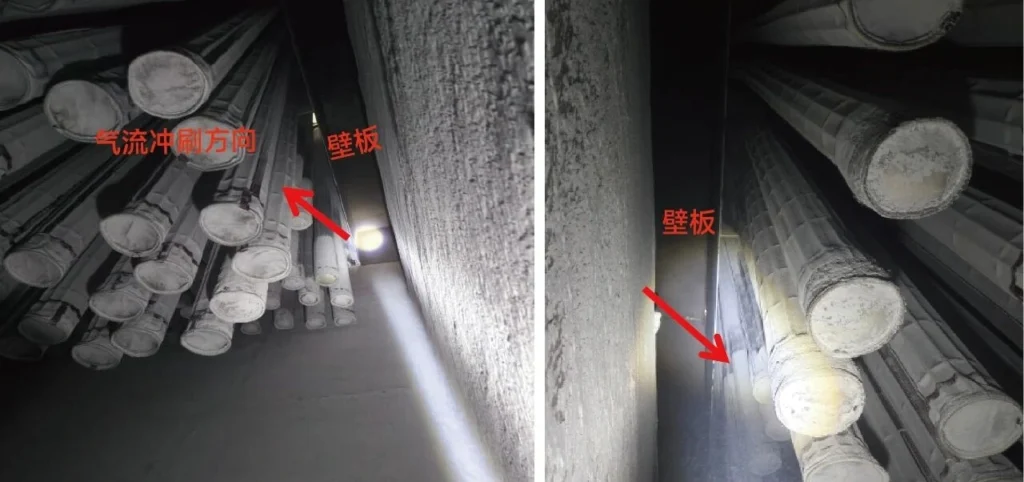
If the damage appears only on the side facing the dusty-air inlet, high-speed cement dust may also be contributing to the wear.
When cement filter bag damage patterns follow the vertical or circular cage wires, the cage condition should be checked before a new bag is installed.
2. Top, Bottom, and Seam Damage
Damage around the top cuff, lower section, bottom cap, or vertical seam often points to installation, dimensional, or support problems.
Top cuff damage
Common signs include:
√ Torn snap band
√ Fabric cracking near the tube sheet
√ Dust tracks around the mounting edge
√ Wear near the venturi
√ Loose stitching
Possible causes include an incorrect snap-band diameter, sharp tube-sheet edges, poor installation, cage misalignment, or an unsuitable cuff design.
The cuff must seal the dirty-air chamber from the clean-air chamber. A poor cuff seal can allow cement dust to bypass the filter media even when the main fabric remains undamaged.
Lower filter bag damage
Filter bag bottom wear may result from:
√ Broken cage bottom
√ Filter bag longer than the cage
√ Hopper dust level rising too high
√ Dust discharge equipment failure
√ Material contacting the bag bottom
√ High-velocity dust circulation
If many filter bags show lower-section abrasion, inspect the hopper, rotary valve, screw conveyor, or dust return pipe. Cement dust buildup in the hopper can reach the lower bag area and cause abrasion or hardened deposits.
Seam failure
Filter bag seam failure may appear as an open vertical line, broken thread, or fabric separation.
Possible causes include:
√ Incorrect sewing thread
√ Excessive operating temperature
√ Poor sewing quality
√ Bag twisting during installation
√ Repeated cage contact
√ Chemical or moisture damage
If the filter media remains strong but the thread has failed, the seam construction may not match the actual temperature or operating condition.
3. Burned Filter Bags and Fabric Aging
Burned filter bags can appear dark, brittle, melted, curled, or visibly shrunken. The exact appearance depends on the filter media.
Possible causes include:
√ Gas temperature above the media limit
√ Sudden temperature spikes
√ Hot clinker particles
√ Sparks entering the dust collector
√ Smoldering dust inside the housing
√ Incorrect filter media selection
√ Long-term thermal aging
Localized holes with dark or smooth edges usually suggest heat or sparks rather than mechanical abrasion. Large areas of shrinkage or brittle fabric may indicate that the complete filter bag was exposed to excessive temperature.
Abrasion normally produces thin fabric and rough edges. Burned filter bags may show melted fibers, darkened surfaces, hardened edges, or permanent distortion.
When heat damage appears, check:
√ Normal and maximum inlet temperature
√ Process temperature records
√ Spark or hot-particle entry points
√ Whether damaged bags are concentrated near the inlet
√ Whether the existing filter material is suitable
Some filter bags may show widespread weakness without visible burn marks. If the fabric tears easily during removal, long-term thermal aging, oxidation, hydrolysis, or chemical degradation may have reduced the fabric strength.
4. Hardened Filter Bag Fabric Caused by Moisture
Hardened filter bag fabric is particularly common in cement dust collection systems when fine cement powder contacts moisture. These cement filter bag damage patterns are especially common when moisture turns fine cement dust into a hard and poorly permeable surface layer.
The fabric may become:
√ Stiff and heavy
√ Difficult to bend
√ Covered by a hard cement layer
√ Less permeable
√ Difficult to clean with pulse air
√ Associated with high differential pressure
Possible causes include:
√ Condensation during startup or shutdown
√ Rainwater entering the housing
√ Wet process gas
√ Humid compressed air
√ Oil or water from the air compressor
√ Gas temperature falling below the dew point
√ Cement dust remaining on the bag during long shutdowns
When cement dust absorbs moisture, it can form a hard layer that pulse cleaning cannot remove effectively. This condition is often described as filter bag blinding or cement caking.
Inspect whether the hardening is uniform or concentrated in one area. Localized hardened filter bag fabric may indicate water leakage. Uniform hardening across many rows may indicate condensation or compressed-air contamination.
Before replacing the bags, check:
√ Housing sealing
√ Roof and access-door leakage
√ Compressed-air dryer
√ Air receiver drainage
√ Startup and shutdown temperature
√ Hopper condition
√ Differential pressure trend
For wider system checks involving weak suction, high pressure drop, and pulse-cleaning problems, refer to an industrial bag filter troubleshooting guide.
5. Inlet-Side Abrasion and Uneven Airflow
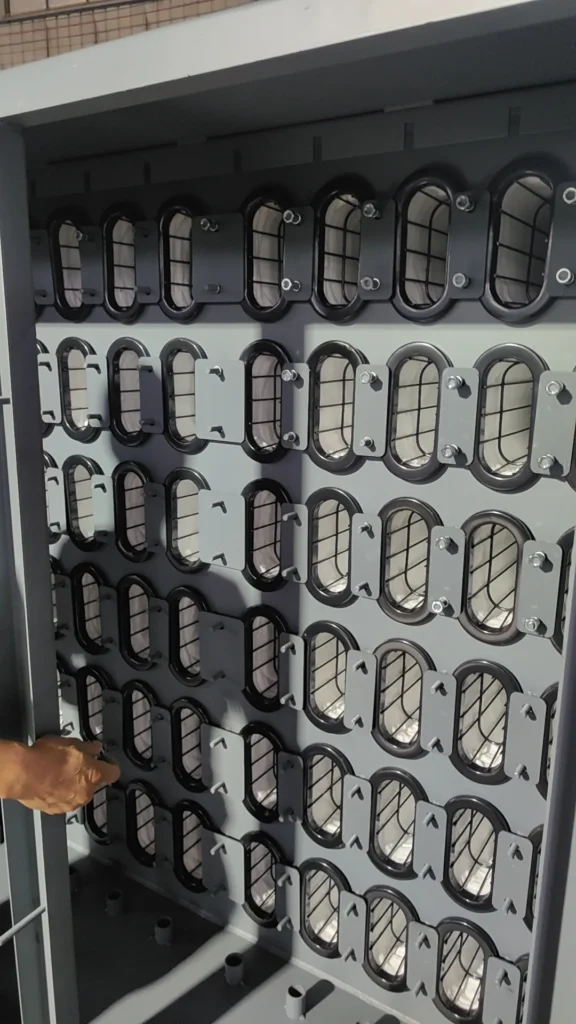
When bags near the dusty-air inlet fail first, the cause may be high local velocity rather than poor filter bag quality.
Typical signs include:
√ One-sided fabric thinning
√ First-row bags failing repeatedly
√ Holes appearing at the same height
√ Heavy wear on the inlet-facing surface
√ Cement dust impact marks
Possible causes include:
√ Missing or damaged inlet baffle
√ Poor airflow distribution
√ Excessive system airflow
√ Filter area too small
√ Dust-laden gas directly striking the bags
√ Incorrect duct connection angle
This cement dust collector filter bag damage pattern indicates a system-level airflow problem. Replacing only the damaged bags will not prevent repeated failure.
Possible corrective actions include:
√ Repairing the inlet baffle
√ Installing a dust deflector
√ Redistributing the inlet airflow
√ Reducing local velocity
√ Checking whether the filter is undersized
√ Reviewing fan operation and damper position
If the same inlet-side filter bag wear returns after replacement, the inlet structure should be inspected before more bags are installed. Repeated inlet-side cement filter bag damage patterns normally indicate uneven airflow or excessive dust velocity rather than defective filter media.
6. Clean-Side Dust Tracks and Seal Leakage
Visible cement dust on the clean-air side is an important diagnostic clue.
Clean-side dust leakage may come from:
√ Small fabric holes
√ Open seams
√ Damaged snap bands
√ Poor cuff sealing
√ Cracks around tube-sheet holes
√ Incorrectly installed bags
√ Missing filter bags
√ Damaged venturi connections
The shape of the dust track can help locate the source.
A circular dust mark around the tube-sheet opening may indicate cuff leakage. A straight powder line may follow an open seam. Localized dust below one position may point to a pinhole or cage-related abrasion.
Do not assume that all filter bags must be replaced simply because dust appears in the clean-air chamber. First trace the powder track to the exact bag, cuff, seam, or tube-sheet connection.
Filter inspection and leakage repair should form part of wider industrial dust exposure control principles, including source containment, engineering controls, ventilation, and regular equipment maintenance.
Filter Bag Replacement or System Repair?
A damaged bag may be replaced individually when:
√ Damage is isolated
√ The cage is smooth and correctly aligned
√ Nearby bags are in good condition
√ Operating temperature is normal
√ No repeated damage pattern exists
√ The failure occurred during installation or maintenance
The complete system should be inspected when:
√ Many bags fail in the same location
√ Replacement bags fail quickly
√ Holes follow cage wires
√ Inlet rows fail before other rows
√ Many bags are hardened
√ Several bags show burn damage
√ Differential pressure remains high after replacement
√ Clean-side dust leakage continues
Routine industrial bag filter maintenance should include filter bag inspection, cage alignment, pulse-valve checks, differential-pressure monitoring, and hopper dust discharge.
Information Needed Before Ordering Replacement Filter Bags
Buyers should provide more than only filter bag diameter and length.
Recommended information includes:
√ Filter bag diameter and length
√ Top and bottom construction
√ Existing filter media
√ Operating and maximum temperature
√ Dust type and moisture condition
√ Pulse-jet or reverse-air cleaning
√ Filter cage diameter and length
√ Photos showing the damage location
Clear photos of cement filter bag damage patterns can help determine whether the problem is related to fabric material, cage condition, heat, moisture, airflow, or installation.
FAQs About Cement Filter Bag Damage Patterns
What are cement filter bag damage patterns?
Cement filter bag damage patterns are the visible shapes, locations, colors, and textures of filter bag failure. Common examples include pinholes, vertical wear lines, burned fabric, hardened surfaces, seam openings, lower-section abrasion, and clean-side dust tracks.
What causes holes and vertical wear lines in cement filter bags?
Filter bag holes and vertical wear lines are commonly caused by sharp cage wires, welding burrs, broken cage rings, cage corrosion, incorrect cage size, or repeated rubbing between the bag and cage. Abrasive cement dust can make this damage develop faster.
Why is the lower part of a filter bag damaged?
Lower filter bag damage may be caused by a broken cage bottom, incorrect bag length, high hopper dust level, blocked dust discharge equipment, or material contacting the lower part of the bag.
What causes burned filter bags in cement dust collectors?
Burned filter bags may result from excessive inlet temperature, hot particles, sparks, sudden temperature spikes, or filter media that is not suitable for the actual operating temperature.
Why does cement filter bag fabric become hard?
Hardened filter bag fabric usually develops when cement dust contacts moisture, condensation, oil, or humid compressed air. The resulting cement layer causes filter bag caking or blinding, blocks the fabric pores, increases differential pressure, and reduces pulse-cleaning efficiency.
Why do filter bags near the inlet fail first?
Bags near the inlet may fail first because they receive higher dust velocity and direct particle impact. Missing inlet baffles, poor airflow distribution, or an undersized bag filter can increase inlet-side filter bag abrasion.
Should all filter bags be replaced when one bag fails?
Not always. If the failure is isolated and the cage, temperature, airflow, and nearby bags are normal, only the damaged bag may need replacement. Repeated cement filter bag damage patterns require wider system inspection.
What information is needed before ordering replacement cement filter bags?
Provide filter bag dimensions, top and bottom design, filter media, operating temperature, dust type, moisture condition, cleaning method, cage dimensions, and clear photos of the damaged areas.
How should cement filter bag damage patterns be recorded during inspection?
Maintenance teams should record the bag location, damage position, hole shape, fabric color, surface hardness, cage condition, inlet direction, and nearby bag condition. Photos should be taken before cleaning the bag because dust tracks, deposits, and discoloration may help identify abrasion, heat damage, moisture, or sealing failure.
Conclusion
Cement filter bag damage patterns can reveal much more than the fact that a filter bag has failed. Mechanical holes, cage abrasion, bottom wear, burned fabric, hardened surfaces, seam openings, and clean-side dust tracks each point toward different possible causes. Documenting cement filter bag damage patterns during each inspection also helps plants identify repeated failures and compare the service life of different filter media.
A correct filter bag failure diagnosis should combine physical inspection with cage condition, bag position, airflow direction, temperature, differential pressure, pulse-cleaning performance, and hopper operation.
When repeated damage is caused by cage defects, moisture, heat, or poor airflow, replacing filter bags alone will not provide a lasting solution. Identifying and correcting the root cause helps reduce dust leakage, prevent repeated replacement, and extend the service life of the complete bag filter system.
Contact Jiangsu Lvrui Machinery Co., Ltd.
Jiangsu Lvrui Machinery Co., Ltd. provides industrial filter bags, filter cages, bag filters, dust collection systems, loading spouts, air slide conveyors, and dry bulk material handling equipment for cement plants, grinding stations, fly ash terminals, lime plants, and mineral powder industries.
If you need replacement filter bags or help diagnosing cement filter bag damage patterns, please send us the filter bag dimensions, filter material, operating temperature, cleaning method, dust type, cage size, and clear photos of the damaged areas. Our team can help review the likely failure cause and recommend a suitable filter bag material and structure.
WhatsApp: +86-18261998937
WeChat: +86-18261998937
Email: info@lvrui-conveyor.com
Website: lvrui-conveyor.com
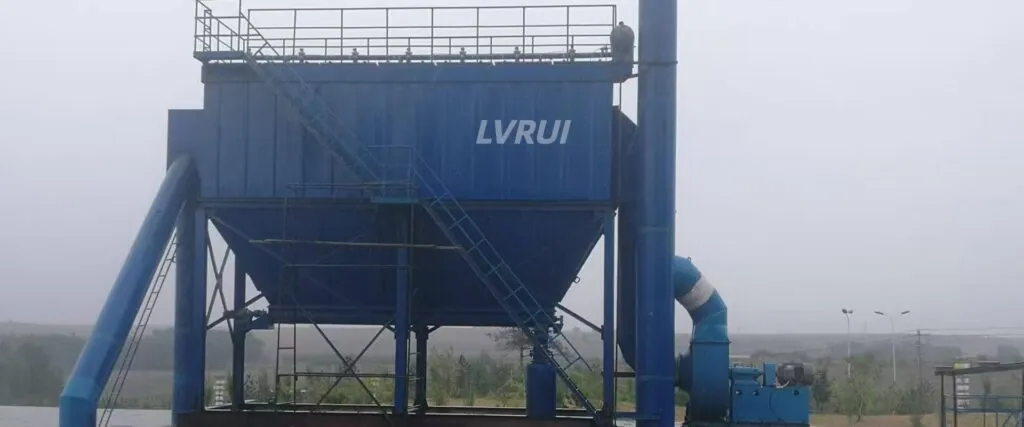
LVRUI also provides dust collection systems for cement plants, including bag filters, filter bags, cages, fans, and related dust-control equipment.