Field Guide for Stable Cement Powder Feeding, Airlock Control, and Dry Bulk Material Handling
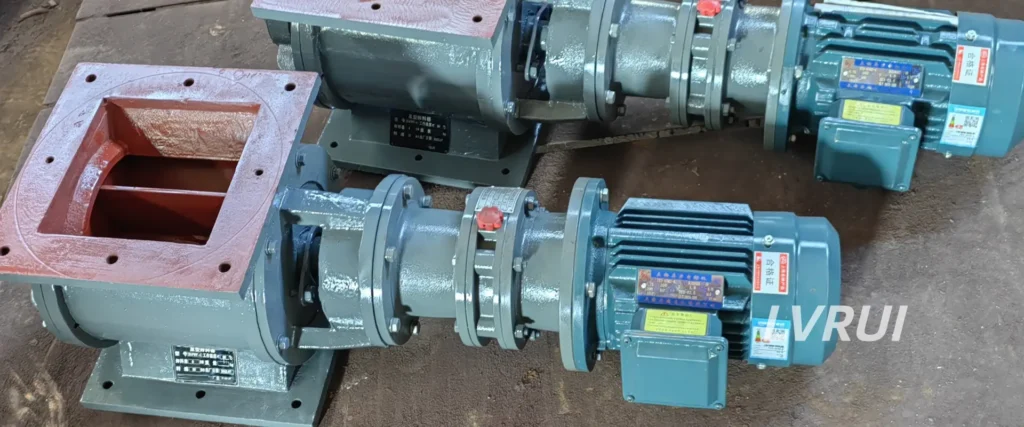
Cement Powder Rotary Valve in Dry Bulk Handling Systems
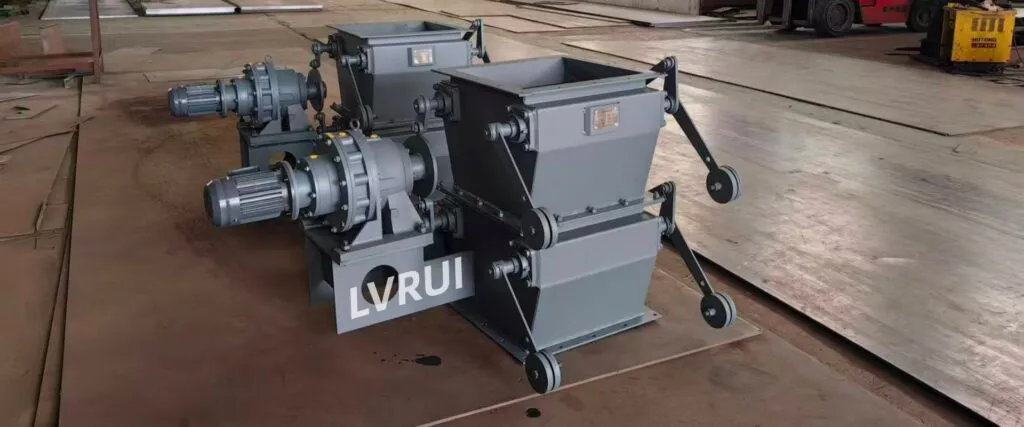
A cement powder rotary valve is widely used in cement plants, fly ash terminals, grinding stations, powder storage silos, dust collection systems, and pneumatic conveying lines. Its main function is to feed dry powder continuously while helping control air leakage between two different pressure areas.
In many cement powder handling systems, stable feeding is just as important as the valve itself. If the rotary valve feeds too much material, the downstream conveyor may become overloaded. If it feeds too little, the production line may suffer from unstable discharge, poor dosing accuracy, or low conveying efficiency.
A rotary valve is commonly used under:
✔ Cement silos
✔ Fly ash silos
✔ Bag filters and dust collectors
✔ Cyclone discharge points
✔ Pneumatic conveying systems
✔ Screw conveyor feeding points
✔ Air slide conveyor transfer points
✔ Powder batching and dosing systems
For cement, fly ash, lime powder, limestone powder, and slag powder, the valve should not only discharge material. It should also help maintain feeding stability, reduce air leakage, and protect the downstream conveying process.
What Is a Cement Powder Rotary Valve?
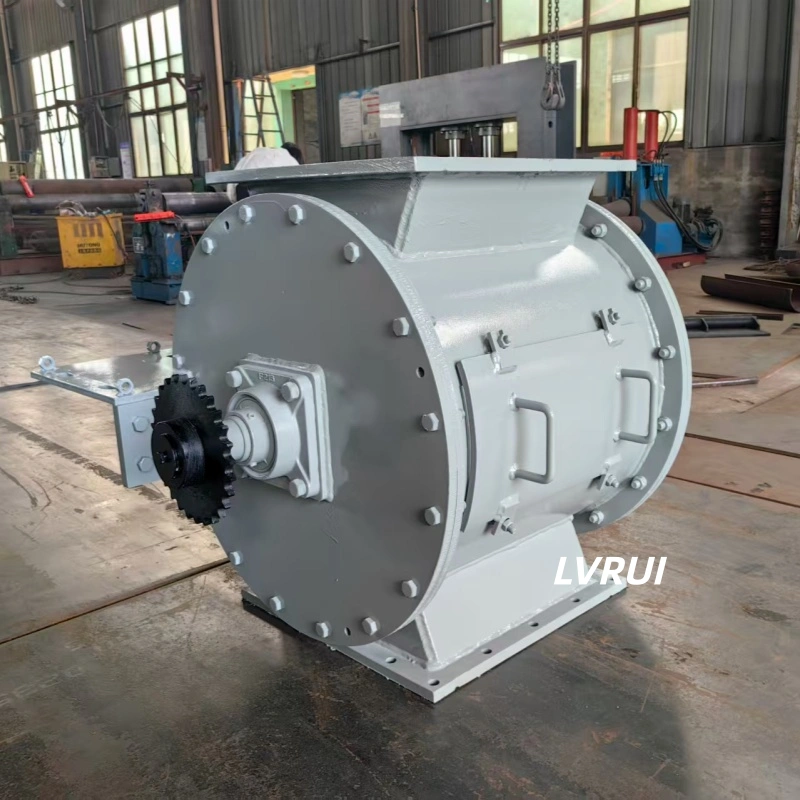
A cement powder rotary valve is a rotating discharge device with a rotor and multiple pockets inside the valve body. As the rotor turns, powder enters the rotor pockets from the inlet, moves with the rotor, and discharges from the outlet.
This working method allows the valve to provide continuous feeding instead of sudden dumping. At the same time, the rotor helps reduce direct air passage between the inlet and outlet. That is why rotary valves are also commonly called rotary airlock valves.
In dry bulk material handling, rotary valves are used for material feeding, metering, discharge, and airlock control. LVRUI’s rotary valve product page also describes rotary airlock valves as equipment for continuous powder and granule discharge while maintaining an air seal in cement plants, fly ash terminals, chemical powder systems, and grain handling facilities.
A cement powder rotary valve is commonly selected when the project needs:
✔ Continuous powder feeding
✔ Stable discharge from silo or hopper
✔ Controlled feeding into conveyor or pneumatic line
✔ Air leakage reduction
✔ Dust-controlled operation
✔ Compact installation under equipment
Why Feeding Stability Matters in Cement Powder Handling
Cement powder is fine, abrasive, and sensitive to moisture and airflow changes. If feeding is unstable, the whole system may be affected.
Unstable rotary valve feeding may cause:
✔ Conveyor overload
✔ Pneumatic conveying pressure fluctuation
✔ Poor dosing accuracy
✔ Material accumulation in the hopper
✔ Dust leakage around transfer points
✔ Bag filter discharge problems
✔ Increased motor load
✔ More wear on the rotor and housing
In a cement plant, the rotary valve often works with other equipment, such as a bag filter, screw conveyor, air slide conveyor, silo discharge valve, or flow control gate. If the feeding rate is not stable, the downstream system may not operate smoothly.
For this reason, the rotary valve should be selected according to the whole process, not only according to inlet and outlet size.
How Rotary Valves Help Maintain Airlock Performance
Airlock performance is one of the main reasons rotary valves are used in cement and powder systems. A rotary valve helps separate two areas with different pressure conditions while allowing powder to pass through.
For example, under a bag filter or dust collector, the rotary valve discharges collected powder while reducing air leakage into or out of the filter system. In a pneumatic conveying line, the rotary airlock valve helps feed powder into the line while limiting pressure loss.
A good airlock effect depends on:
✔ Rotor-to-housing clearance
✔ Rotor speed
✔ Material particle size
✔ Powder abrasiveness
✔ Pressure difference
✔ Valve body sealing
✔ Rotor pocket design
✔ Maintenance condition
If the clearance becomes too large because of wear, air leakage increases. Once air leakage becomes serious, feeding stability and conveying performance may decline.
Rotary valve manufacturers and bulk handling suppliers commonly describe rotary valves as equipment used to control material flow, maintain system pressure, and support consistent feeding in dry bulk handling systems.
Common Applications of Cement Powder Rotary Valves
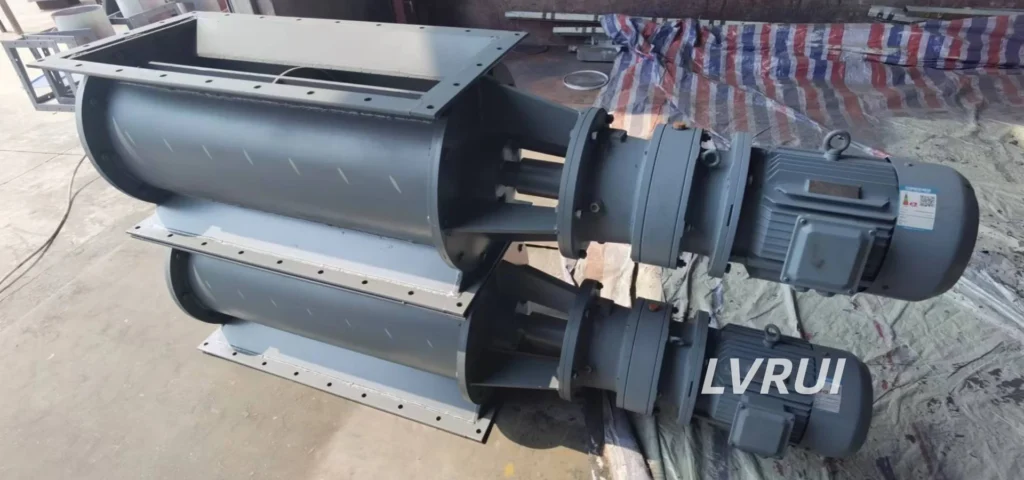
A cement powder rotary valve can be used in different parts of a cement or dry powder handling plant.
Under Cement Silos
Installed under a cement silo, the rotary valve can provide continuous discharge into a screw conveyor, pneumatic conveying line, or batching system. It is suitable when the process needs controlled powder feeding rather than simple open-close discharge.
Under Bag Filters
A rotary valve is often installed under a bag filter or dust collector to discharge collected dust while helping maintain the pressure balance of the dust collection system. LVRUI’s star discharge valve page also explains that this type of valve can function as a rotary airlock valve under dust collectors andbag filters.
In Fly Ash Handling Systems
Fly ash is very fine and easily airborne. A rotary valve for fly ash should provide stable feeding, good sealing, and dust-controlled discharge. It is often used under fly ash silos, dust collectors, and pneumatic conveying systems.
In Pneumatic Conveying Systems
A rotary airlock valve can feed powder into pneumatic conveying lines while helping reduce pressure loss. This application requires careful selection because air leakage, rotor clearance, and wear resistance directly affect performance.
In Powder Batching Systems
For cement, lime powder, mineral powder, and other dry materials, rotary valves can support controlled feeding into weighing or batching systems.
Key Factors That Affect Rotary Valve Feeding Stability
A rotary valve may look simple, but feeding stability depends on several engineering details.
Rotor Speed
Higher rotor speed can increase capacity, but it may also reduce filling efficiency and increase wear. For fine powder such as cement or fly ash, the correct speed should balance capacity and stable discharge.
Rotor Pocket Volume
Larger pockets can move more material per revolution, but the actual output depends on material flowability, filling rate, and pressure conditions.
Material Flowability
Cement powder, fly ash, lime powder, and slag powder behave differently. Moisture, particle size, and storage time can affect how well the powder fills the rotor pockets.
Clearance Between Rotor and Housing
Small clearance helps improve airlock performance, but it must also allow safe operation. If the clearance is too large because of wear, air leakage increases and feeding becomes less stable.
Inlet Design
If the inlet does not allow powder to fill the rotor pockets evenly, the discharge rate may fluctuate. Poor inlet design can also cause bridging or material starvation.
Downstream Equipment Capacity
The rotary valve should match the downstream screw conveyor, air slide conveyor, pneumatic line, or batching system. If the downstream equipment cannot handle the feeding rate, blockage or overload may occur.
Common Problems in Cement Powder Rotary Valve Operation
A cement powder rotary valve may face several problems during long-term operation.
Air Leakage
Air leakage is one of the most common issues. It may happen because of rotor wear, large clearance, poor sealing, pressure difference, or wrong valve selection.
When air leakage increases, the system may suffer from pressure loss, unstable feeding, and dust escape.
Rotor Wear
Cement, fly ash, slag powder, and limestone powder can be abrasive. Long-term operation may wear the rotor tips, side plates, and valve body. Once wear becomes serious, airlock performance drops.
Material Build-Up
If the powder contains moisture or is stored for a long time, it may stick inside the valve. Material build-up can reduce pocket volume, increase motor load, and cause uneven discharge.
Valve Jamming
Hard lumps, foreign objects, or compacted powder may jam the rotor. This can damage the drive system or stop production.
Poor Feeding Accuracy
If material does not fill the rotor pockets evenly, the discharge rate becomes unstable. This may affect batching, conveying, and downstream process control.
Motor Overload
Motor overload may be caused by material build-up, rotor jamming, bearing problems, wrong speed selection, or downstream blockage.
How to Improve Airlock Performance in Cement Powder Systems
To improve airlock performance, the rotary valve should be selected and maintained according to real working conditions.
Practical methods include:
✔ Select proper rotor clearance for powder and pressure conditions
✔ Use wear-resistant materials for abrasive cement powder
✔ Keep the inlet flow stable
✔ Avoid oversized lumps entering the valve
✔ Match rotor speed with required feeding capacity
✔ Maintain seals, bearings, and drive components
✔ Check pressure difference across the valve
✔ Clean material build-up before it causes jamming
✔ Use a suitable valve type for pneumatic conveying applications
For cement powder rotary valve applications, airlock performance should not be judged only by whether the valve rotates. The more important question is whether it can maintain stable feeding while reducing unnecessary air leakage.
Cement Powder Rotary Valve vs Double Flap Valve
In cement powder handling, both rotary valves and double flap valves can be used for discharge and airlock applications. The best choice depends on material characteristics, pressure condition, feeding requirement, and maintenance preference.
Cement Powder Rotary Valve
A cement powder rotary valve is better when continuous feeding is required. It is suitable for controlled discharge, metering, and stable feeding into conveyors or pneumatic lines.
Typical advantages:
✔ Continuous feeding
✔ Compact structure
✔ Suitable for dosing and metering
✔ Good for controlled discharge
✔ Works well with conveyors and pneumatic systems
Possible limitations:
✔ Rotor and housing wear over time
✔ Clearance affects airlock performance
✔ Lumps or foreign objects may cause jamming
✔ More sensitive to abrasive materials
Double Flap Valve
A double flap valve is often used where stronger airlock sealing and lower air leakage are needed, especially for fine powders under some pressure conditions. Your existing article about double flap valves and rotary valves already covers this comparison angle, so this blog should only include a brief comparison and not repeat the full topic.
Typical advantages:
✔ Better sealing in some fine powder applications
✔ Lower continuous air leakage
✔ Suitable under certain dust collectors and hoppers
✔ Less rotor wear because there is no rotating pocket structure
Possible limitations:
✔ Intermittent discharge
✔ Larger installation height may be required
✔ Not ideal for all metering applications
Simple conclusion: choose a rotary valve when continuous feeding and controlled discharge are the priority. Consider a double flap valve when stronger airlock sealing and lower air leakage are more important than continuous feeding.
How to Select a Cement Powder Rotary Valve
When selecting a cement powder rotary valve, buyers should provide more than just the inlet size. A proper selection should consider the whole system.
Key questions include:
✔ What material will be handled: cement, fly ash, lime powder, slag powder, or limestone powder?
✔ What is the required feeding capacity?
✔ Is the valve installed under a silo, hopper, bag filter, or pneumatic line?
✔ Is the system positive pressure, negative pressure, or gravity discharge?
✔ What is the pressure difference across the valve?
✔ Is the powder abrasive or easy to cake?
✔ Is continuous feeding required?
✔ Is accurate dosing required?
✔ What is the downstream equipment?
✔ Is dust-tight operation required?
✔ What installation height is available?
For cement powder and fly ash, wear resistance and sealing performance are especially important. If the valve will be used in a pneumatic conveying system, the airlock requirement should be checked carefully before choosing the valve type.
Maintenance Tips for Rotary Valves in Cement Plants
Regular maintenance helps keep the rotary valve stable and extends service life.
Recommended checks include:
✔ Inspect rotor and housing wear
✔ Check rotor clearance
✔ Clean material build-up inside the valve
✔ Check bearing condition
✔ Inspect shaft seals
✔ Monitor motor current
✔ Check reducer and drive chain condition
✔ Listen for abnormal noise
✔ Confirm that the valve rotates smoothly
✔ Check whether discharge capacity has changed
If the rotary valve is installed under a bag filter, also check whether the dust collector is operating normally. A blocked filter or poor venting condition may increase pressure imbalance and affect valve performance.
For cement plants, maintenance should focus on early signs of wear and leakage. Once the rotor clearance becomes too large, airlock performance may drop quickly.
For industrial dust safety awareness, OSHA provides official information about combustible dust hazards and related standards.
System Design: Rotary Valve with Silo, Bag Filter, and Conveyor
A cement powder rotary valve usually works as part of a complete powder handling system. It should be matched with upstream and downstream equipment.
A typical system may include:
✔ Cement silo or fly ash silo
✔ Silo aeration system
✔ Flow control gate valve
✔ Rotary valve
✔ Bag filter or dust collector
✔ Screw conveyor or air slide conveyor
✔ Pneumatic conveying line
✔Loading spout or packing machine
For stable operation, each part should match the required capacity. For example, if the rotary valve feeds too fast into a screw conveyor, the conveyor may become overloaded. If the rotary valve feeds too slowly into a pneumatic line, conveying efficiency may drop.
A system-based design is more reliable than buying each component separately.
Conclusion
A cement powder rotary valve is an important component for stable feeding, airlock performance, and dry bulk material handling in cement plants, fly ash terminals, grinding stations, and powder conveying systems.
The valve helps provide continuous discharge, reduce air leakage, and support stable material flow. However, its performance depends on correct selection, proper rotor clearance, wear resistance, sealing condition, feeding speed, and system matching.
For cement powder, fly ash, lime powder, slag powder, and other dry bulk materials, a rotary valve should be selected as part of the whole handling process. When the valve, silo, bag filter, conveyor, and control system are properly matched, the plant can achieve more stable feeding, better airlock control, and lower maintenance risk.
FAQs About Cement Powder Rotary Valve
What is a cement powder rotary valve used for?
A cement powder rotary valve is used to feed cement powder continuously while helping maintain airlock performance between different pressure areas. It is commonly installed under cement silos, bag filters, dust collectors, hoppers, and pneumatic conveying systems.
How does a rotary valve improve feeding stability?
A rotary valve improves feeding stability by using rotating pockets to move powder in a controlled and continuous way. This reduces sudden material surges and helps downstream conveyors, pneumatic lines, or batching systems receive a more stable material flow.
Why is airlock performance important in a cement powder rotary valve?
Airlock performance is important because it reduces air leakage between the inlet and outlet of the valve. In cement powder systems, poor airlock performance can cause pressure loss, unstable conveying, dust leakage, and lower feeding efficiency.
What causes rotary valve air leakage in cement plants?
Rotary valve air leakage is usually caused by worn rotor tips, large rotor-to-housing clearance, abrasive cement powder, high pressure difference, poor sealing, or wrong valve selection. Regular inspection is needed to keep airlock performance stable.
Can a cement powder rotary valve be used for fly ash?
Yes. A cement powder rotary valve can also be used for fly ash, lime powder, limestone powder, slag powder, and other dry bulk materials. For fly ash, sealing performance and dust control are especially important because the material is very fine and easily airborne.
What is the difference between a rotary valve and a rotary airlock valve?
In many dry bulk material handling systems, rotary valve and rotary airlock valve refer to similar equipment. The term rotary airlock valve emphasizes its function of feeding material while helping reduce air leakage between different pressure zones.
Is a rotary valve suitable for pneumatic conveying systems?
Yes, a rotary valve can be used in pneumatic conveying systems, but the selection must consider pressure difference, air leakage, rotor clearance, material abrasiveness, and required feeding capacity. Not every standard rotary valve is suitable for pneumatic conveying.
Why does a rotary valve jam when handling cement powder?
A rotary valve may jam when cement powder contains lumps, moisture, foreign objects, or compacted material. Jamming can also happen if the rotor clearance is too small, material builds up inside the valve, or downstream equipment is blocked.
How do you reduce wear in a cement powder rotary valve?
Wear can be reduced by selecting suitable wear-resistant materials, controlling rotor speed, avoiding oversized lumps, keeping the inlet flow stable, and inspecting rotor clearance regularly. For abrasive cement and slag powder, wear resistance should be considered during valve selection.
Which is better for cement powder: rotary valve or double flap valve?
A rotary valve is usually better for continuous feeding and controlled discharge. A double flap valve may be better when stronger airlock sealing and lower continuous air leakage are required. The final choice depends on material type, pressure condition, feeding capacity, and system layout.
Need a reliable Cement Powder Rotary Valve for your cement or powder handling system?
Contact LVRUI today for fast delivery and expert technical support.
Email: info@lvrui-conveyor.com
Website: https://lvrui-conveyor.com
✅ Get expert quotation and customized solution within 12 hours
✅ Factory direct supply with strict quality control
✅ Professional engineering support from experienced team
✅ Stable delivery for overseas industrial projects