A Practical Comparison Guide for Bulk Material Handling, Cement Plants, and Powder Conveying Systems
Introduction
Butterfly Damper Valve vs Slide Gate Valve is a common selection question in cement plants, dust collection systems, silo discharge systems, pneumatic conveying lines, and other dry bulk material handling projects.
The main difference is the controlled medium. A butterfly damper valve is primarily used to regulate or isolate air, gas, and dust-laden airflow inside ducts. A slide gate valve is primarily used to shut off or isolate dry bulk solids below silos, hoppers, chutes, bins, and conveying equipment.
These two devices should not be selected only by valve name. The correct choice depends on the medium, installation position, required function, sealing requirements, abrasion, temperature, and actuation method.
Where continuous or adjustable dry bulk material flow regulation is required, a dedicated flow control gate valve may be more suitable than a standard slide gate.
Quick Answer: Which Valve Should You Choose?
| System Requirement | Recommended Valve | Main Reason |
|---|---|---|
| Airflow control in ducts | Butterfly Damper Valve | Designed for air, gas, and dust-laden airflow |
| Dust collector airflow balancing | Butterfly Damper Valve | Adjusts suction or exhaust airflow |
| Cement silo material shut-off | Slide Gate Valve | Provides dry bulk material isolation |
| Fly ash hopper isolation | Slide Gate Valve | Opens or closes the material passage |
| Pneumatic conveying air-duct isolation | Butterfly Damper Valve | Suitable for airflow isolation |
| Isolation before a screw conveyor | Slide Gate Valve | Stops material before downstream equipment |
| Shut-off before a bulk loading system | Slide Gate Valve | Isolates material before loading equipment |
| Ventilation branch adjustment | Butterfly Damper Valve | Suitable for general duct airflow balancing |
In simple terms, use a butterfly damper valve when the system mainly controls airflow. Use a slide gate valve when the main requirement is dry bulk material shut-off or isolation. If the primary requirement is adjustable powder-flow regulation, evaluate a dedicated flow control gate.
Slide Gate Valve Here Means a Dry Bulk Material Gate
In this comparison, “slide gate valve” refers to a dry bulk material slide gate installed below silos, hoppers, bins, chutes, or conveying equipment.
It is different from a conventional pipeline gate valve commonly used for liquids or pressurized piping.
This article therefore compares two different industrial functions: airflow control with a butterfly damper and dry bulk material shut-off or isolation with a slide gate.
What Is a Butterfly Damper Valve?
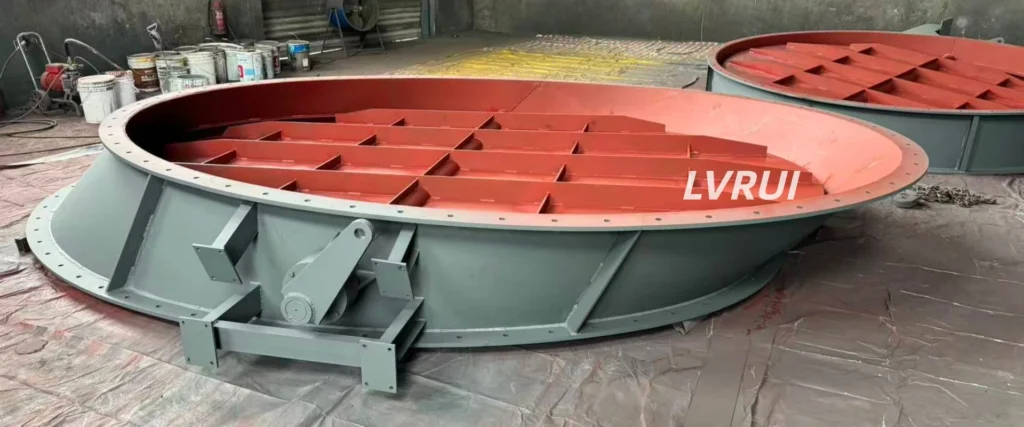
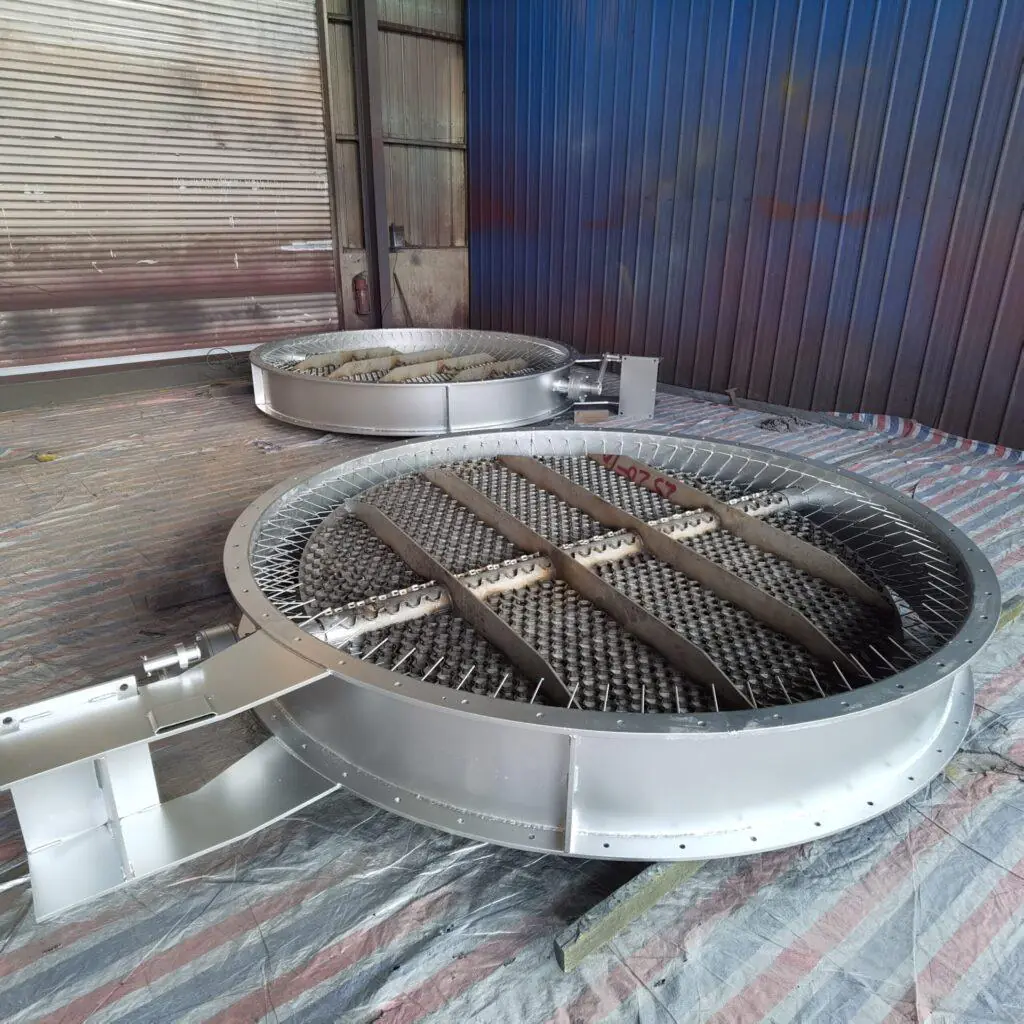
A butterfly damper valve is an industrial airflow control device that uses a rotating disc or blade to regulate, isolate, or shut off air and gas flow inside ducts. It is widely used in dust collection systems, ventilation ducts, cyclone outlets, pneumatic conveying air ducts, fan systems, bag filter branches, and cement plant process air lines.
Unlike valves used for liquid or heavy bulk solids, a butterfly damper is mainly designed for airflow control, not for full material shut-off under silos or hoppers. In the Butterfly Damper Valve vs Slide Gate Valve comparison, this is the first difference buyers should understand.
Typical applications include:
✅ Dust collector inlet and outlet ducts
✅ Cyclone separator outlets
✅ Bag filter branch ducts
✅ Cement plant ventilation lines
✅ Pneumatic conveying air ducts
✅ Fan inlet and outlet ducts
✅ Kiln exhaust or process air ducts
✅ Material transfer dust extraction points
A butterfly damper valve is typically selected where the main requirement is compact duct installation, airflow regulation, balancing, or isolation rather than direct dry bulk material shut-off. Damper airflow performance can be evaluated using standardized test methods such as ANSI/AMCA Standard 500-D, which covers characteristics including pressure drop, air leakage, operational torque, and related damper performance.
What Is a Slide Gate Valve?
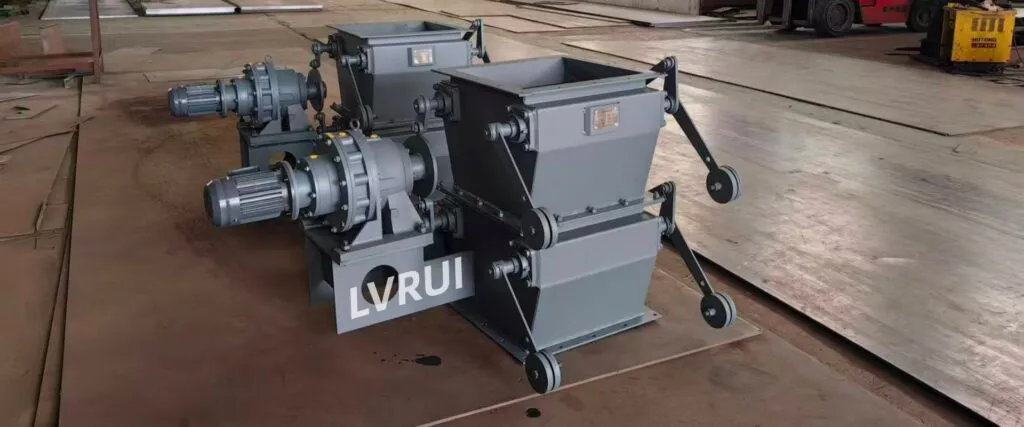
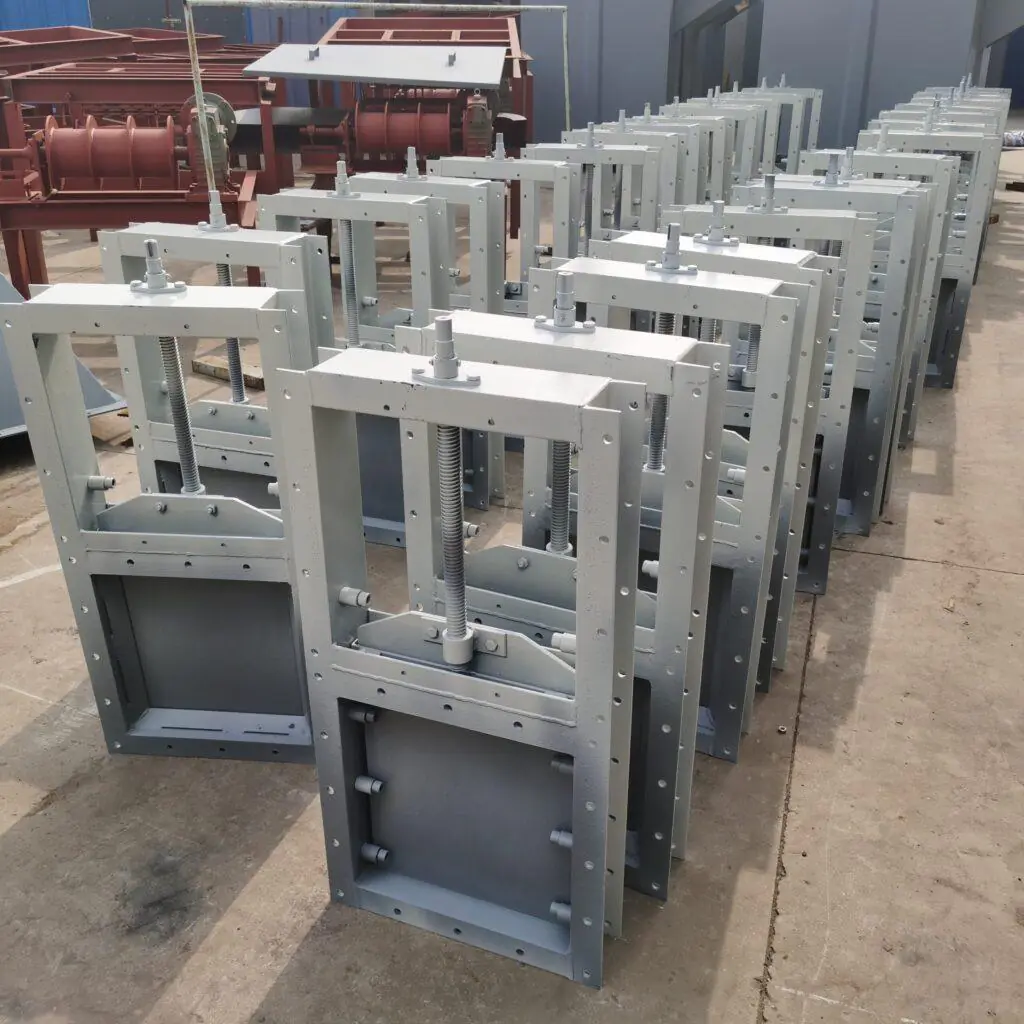
A slide gate valve is a linear shut-off device that uses a sliding plate to open or close the passage of dry bulk solids.
In cement plants and powder handling systems, it is commonly installed below silos, hoppers, bins, chutes, screw conveyor inlets, bucket elevator feed points, and bulk loading systems.
Typical materials include cement, fly ash, lime powder, limestone powder, mineral powder, clinker, fertilizer, grain, and other dry bulk solids.
A slide gate may operate at intermediate positions in some systems, but it should not automatically be treated as a precision flow-regulating device. Where continuous or adjustable powder-flow regulation is the main requirement, a dedicated flow control gate is generally more suitable.
Typical functions include:
✓ Silo and hopper material shut-off
✓ Maintenance isolation
✓ Isolation before conveyors
✓ Isolation before loading equipment
✓ Dry bulk material passage opening and closing
A slide gate valve is normally selected when the main requirement is reliable dry bulk material shut-off, isolation, and leakage control at a material discharge point.
Butterfly Damper Valve vs Slide Gate Valve: Key Differences
| Comparison Item | Butterfly Damper Valve | Slide Gate Valve |
|---|---|---|
| Main Function | Regulates or isolates air and gas flow | Opens or closes dry bulk material passage |
| Movement Type | Rotary disc or blade | Linear sliding plate |
| Main Medium | Air, gas, dust-laden airflow | Cement, fly ash, powder, granules and other dry bulk solids |
| Typical Installation | Ducts, fan lines, dust collection branches, ventilation systems | Silo outlets, hopper outlets, bins, chutes and conveyor inlets |
| Regulation Function | Suitable for general airflow adjustment | Intermediate positioning may be possible, but not intended as precision bulk-flow control |
| Isolation Function | Duct isolation where required leakage level permits | Dry bulk material shut-off and maintenance isolation |
| Abrasion Consideration | Mainly affected by dust-laden airflow conditions | Plate, frame and seals may require wear-resistant design for abrasive solids |
| Best Use Case | Ventilation and process-air control | Silo, hopper and conveying-system material isolation |
The key selection factor is not simply the valve name. First identify whether the equipment is controlling airflow or directly handling dry bulk solids.
When to Use a Butterfly Damper Valve
A butterfly damper valve is the right choice when the system mainly handles airflow, gas flow, dust-laden air, or light air-material mixtures rather than heavy bulk solids.
In the Butterfly Damper Valve vs Slide Gate Valve comparison, the butterfly damper valve can be a suitable option when compact duct installation, airflow adjustment, or duct isolation is required.
Use it when:
✅ The valve is installed in a duct, ventilation line, or dust extraction branch.
✅ The system requires airflow adjustment or duct isolation.
✅ The main purpose is air volume regulation instead of material shut-off.
✅ Installation space is limited.
✅ A compact rotary structure is suitable for the duct arrangement.
✅ The valve works with dust collectors, cyclones, fans, or pneumatic conveying air lines.
Typical applications include:
✅ Cement plant ventilation ducts
✅ Dust collector inlet and outlet ducts
✅ Cyclone separator outlets
✅ Pneumatic conveying air lines
✅ Kiln exhaust and process air ducts
✅ Bag filter branch ducts
When to Use a Slide Gate Valve
A slide gate valve is appropriate when the equipment directly handles dry bulk solids and the primary requirement is opening, closing, or isolating the material passage.
Use it when:
✓ The valve is installed below a silo, hopper, bin, or chute
✓ Dry bulk solids pass directly through the valve
✓ Material shut-off is required before downstream equipment
✓ Maintenance isolation is required
✓ Abrasive material requires reinforced contact surfaces
✓ Material leakage around the shut-off point must be controlled
Typical installation positions include cement silo outlets, fly ash hopper outlets, screw conveyor inlets, bucket elevator feed points, bulk loading system inlets, and dry bulk transfer lines.
If the project requires continuous or adjustable powder-flow regulation rather than simple shut-off, evaluate a dedicated flow control gate instead.
Common Selection Mistakes and Correct Solutions
| Common Mistake | Why It Causes Problems | Correct Solution |
|---|---|---|
| Using a butterfly damper valve under a cement silo | The disc structure is not designed for heavy dry bulk material shut-off. | Use a slide gate for material isolation, or a flow control gate where adjustable powder-flow regulation is required. |
| Expecting airtight bulk material sealing from a damper | Dampers are mainly used for airflow regulation, not full powder isolation. | Select a sealed slide gate valve for material shut-off. |
| Installing a slide gate valve in a high-speed airflow duct | A sliding plate may create unnecessary resistance and is not the best duct airflow regulator. | Use a butterfly damper for duct airflow control. |
| Ignoring material abrasiveness | Abrasive powder can quickly wear unsuitable contact parts. | Choose reinforced or wear-resistant slide gate design. |
| Ignoring actuator selection | Wrong actuator may cause slow response, unstable control, or difficult automation. | Select the actuator according to valve size, operating frequency, required travel or torque, available utilities, and control logic. |
| Choosing by valve name only | The same “valve” term may refer to different functions in air and material systems. | Select by medium, installation position, sealing requirement, and control purpose. |
Many selection problems happen because buyers treat Butterfly Damper Valve vs Slide Gate Valve as a simple valve name comparison instead of checking medium, sealing, abrasion, and installation position.
How to Choose Between a Butterfly Damper Valve and a Slide Gate Valve
| Selection Factor | Choose Butterfly Damper Valve When… | Choose Slide Gate Valve When… |
|---|---|---|
| Medium | The system handles air, gas, or dust-laden airflow. | The system handles dry bulk solids or powder. |
| Installation Position | The valve is installed in a duct, fan line, cyclone outlet, or dust extraction branch. | The valve is installed under a silo, hopper, chute, or conveyor inlet. |
| Main Purpose | The purpose is airflow regulation, balancing, or duct isolation. | The purpose is material shut-off or isolation. |
| Sealing Requirement | Airflow regulation or duct isolation is required, with leakage limits defined by the application. | Dry bulk material shut-off or isolation is required, with sealing performance selected for the material and process conditions. |
| Material Abrasion | Abrasion is low or the medium is mainly air. | Material is abrasive, heavy, or granular. |
| Automation Need | Fast duct airflow control is required. | Automated material shut-off or interlocked isolation is required. |
| Maintenance Concern | Simple duct access and compact design are preferred. | Wear resistance and material leakage control are more important. |
The easiest way to choose between the two valves is to check the medium first: use a butterfly damper valve for airflow control and a slide gate valve for dry bulk material control.
A correct Butterfly Damper Valve vs Slide Gate Valve selection can reduce leakage, improve airflow control, stabilize powder discharge, and avoid premature valve wear in cement plants and bulk material handling systems.
Application Examples in Cement Plants
| Plant Area | Recommended Valve | Main Function |
|---|---|---|
| Cement silo outlet | Slide Gate Valve | Material shut-off and isolation |
| Fly ash hopper outlet | Slide Gate Valve | Material isolation before downstream equipment |
| Dust collector branch duct | Butterfly Damper Valve | Airflow adjustment and balancing |
| Cyclone exhaust duct | Butterfly Damper Valve | Airflow control |
| Pneumatic conveying air line | Butterfly Damper Valve | Airflow isolation or adjustment |
| Screw conveyor inlet | Slide Gate Valve | Material shut-off before the conveyor |
| Bulk loading system inlet | Slide Gate Valve | Material isolation before loading equipment |
| Bag filter inlet or outlet duct | Butterfly Damper Valve | Airflow control |
Where adjustable cement or powder discharge is required rather than simple isolation, a flow control gate can be evaluated separately from the slide gate.
For a broader view of how isolation and flow-control equipment is arranged below cement silos, see our Cement Silo Discharge System guide.
Actuation Options
Both butterfly dampers and slide gates can be manually, pneumatically, or electrically operated depending on valve size, operating frequency, required response, available utilities, and automation requirements.
For a butterfly damper, the actuator rotates the shaft and blade to adjust or isolate airflow. For a slide gate, the actuator moves the plate linearly to open or close the dry bulk material passage.
Actuator selection should therefore consider the different mechanical movement, required torque or thrust, operating frequency, and control logic of each valve type.
FAQs About Butterfly Damper Valve vs Slide Gate Valve
What is the main difference between a butterfly damper valve and a slide gate valve?
A butterfly damper valve controls or isolates air and gas flow inside ducts. A slide gate valve opens or closes the passage of dry bulk solids below silos, hoppers, bins, chutes, or conveying equipment.
Is a slide gate valve the same as a conventional pipeline gate valve?
No. In this article, slide gate valve refers to a dry bulk material gate using a sliding plate. A conventional pipeline gate valve is generally designed for fluids in piping systems and has a different construction and application.
Can a butterfly damper valve be installed under a cement silo?
Normally no. A butterfly damper is primarily designed for airflow rather than direct cement or powder shut-off. A slide gate is generally more suitable for material isolation, while a flow control gate may be used where adjustable powder-flow regulation is required.
Can a slide gate valve precisely regulate powder flow?
A standard slide gate is mainly used for opening, closing, and isolating dry bulk material. Intermediate positioning may be possible, but where controlled or adjustable powder-flow regulation is required, a dedicated flow control gate is generally more appropriate.
Which valve is used in a dust collection system?
A butterfly damper is commonly used in dust collection ducts to adjust or isolate airflow. A slide gate may be used below a dust hopper where collected material must be isolated before downstream discharge equipment.
What information is needed before selecting either valve?
Confirm the controlled medium, installation position, duct or outlet size, temperature, pressure or material head, abrasion, required function, leakage requirement, operating frequency, and preferred actuation method.
Conclusion
Butterfly damper valves and slide gate valves perform different functions in cement plants and dry bulk material handling systems.
A butterfly damper valve is primarily used for airflow regulation, balancing, or duct isolation in ventilation, dust collection, fan, and process-air systems. A slide gate valve is primarily used to open, close, or isolate dry bulk material below silos, hoppers, chutes, and conveying equipment.
The selection should therefore begin with the controlled medium and installation position rather than the valve name alone. If the system controls air or gas, evaluate a butterfly damper. If the requirement is dry bulk material shut-off or isolation, evaluate a slide gate. If adjustable powder-flow regulation is required, a dedicated flow control gate may be the more suitable option.
Need Help Choosing the Right Valve for Your System?
If you are comparing a butterfly damper, slide gate, or flow control gate, send us the basic operating information:
- Controlled medium: air, gas, powder, or granular material
- Installation position
- Duct or outlet size
- Operating temperature
- Pressure or material head
- Required function: airflow regulation, material shut-off, or flow regulation
- Material abrasiveness
- Preferred actuation method
LVRUI can review the operating conditions and help determine which valve type and configuration best matches the required system function.
Email: info@lvrui-conveyor.com
WhatsApp: +86-18261998937
WeChat: +86-18261998937