How material form, particle size, flow behavior, abrasion and dust generation affect bulk loader configuration for cement and limestone.
Introduction
Cement vs limestone bulk loader selection depends on the actual material condition, particle size, flow behavior, abrasion and dust-control requirements.
Cement and limestone are both common bulk materials in cement plants, terminals and mineral processing facilities, but they do not always require the same loading arrangement.
The main difference is not simply “cement versus limestone.” The actual equipment configuration depends on material form, particle size, flowability, abrasiveness, dust generation, required loading capacity and the receiving vehicle.
Cement is normally handled as a fine powder and therefore requires controlled feeding, effective sealing and dust extraction during truck or tanker loading. Limestone can be handled as fine powder, granular material or crushed stone. Fine limestone powder may use a loading system similar to cement, while coarse crushed limestone usually requires a larger material passage and greater wear protection.
This article explains how these material differences affect bulk loader design and selection.
How Cement and Limestone Differ During Bulk Loading
The bulk loader should be selected according to the physical condition of the material being loaded.
Cement
Cement is normally a fine, dry powder with a strong tendency to generate airborne dust during free fall and tanker loading. A typical cement loading arrangement therefore focuses on:
- controlled material feeding;
- enclosed or telescopic loading;
- dust extraction or return-air management;
- reliable sealing at the loading point;
- full-level detection and automatic shut-off;
- stable coordination between the silo outlet, flow control device and loading spout.
Limestone
Limestone requires a more careful definition because it may be supplied in very different forms.
Fine limestone powder can behave similarly to cement and may require an enclosed loading spout, dust extraction and controlled feeding.
Granular or crushed limestone normally requires more attention to:
- particle size;
- impact at the discharge point;
- abrasion of internal surfaces;
- material passage size;
- chute geometry;
- loading capacity.
For this reason, specifying only “limestone” is not enough for equipment selection. Particle size distribution and bulk density should also be confirmed.
Cement vs Limestone Bulk Loader: Key Design Differences
The following cement vs limestone bulk loader comparison shows how material properties affect the main equipment configuration.
| Selection Factor | Cement | Limestone |
|---|---|---|
| Typical material form | Fine dry powder | Fine powder, granular or crushed material |
| Dust generation | Usually high during free fall and tanker loading | Depends strongly on fines content and material form |
| Main loading concern | Dust containment and controlled feeding | Dust control, abrasion or impact depending on particle size |
| Material passage | Selected for required powder capacity | May require a larger passage for coarse material |
| Wear protection | Depends on duty and material characteristics | Often more important for coarse or abrasive limestone |
| Flow control | Controlled upstream feed is usually important | Depends on whether material is powder or coarse bulk solid |
| Loading interface | Commonly truck/tanker loading through a telescopic spout | Telescopic spout or loading chute depending on material form |
| Dust extraction | Often required | Required when significant fines or dust are generated |
The table is a general engineering comparison. Final equipment selection should be based on actual material data and the required loading arrangement rather than the material name alone.
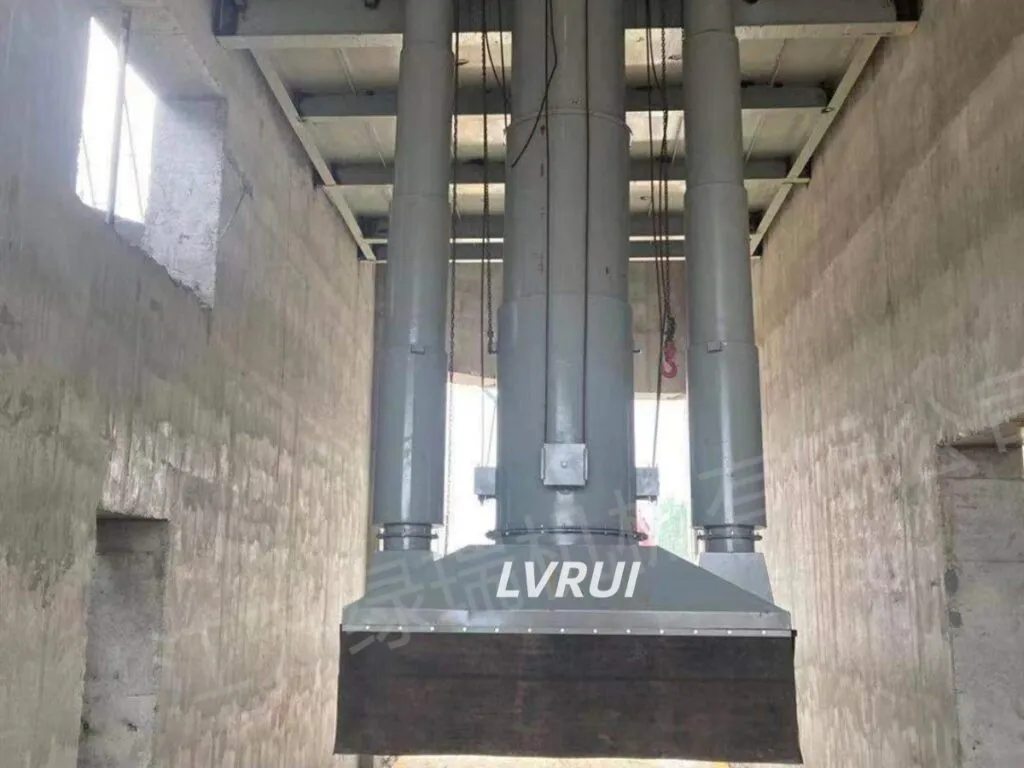
How Upstream Flow Control Affects Bulk Loader Performance
A bulk loader does not operate independently from the silo discharge system. Stable loading depends on how material is released and controlled upstream.
For fine powders such as cement or limestone powder, a flow control gate can regulate the feed rate entering the loading spout and help coordinate material flow with the required loading capacity.
However, a flow control gate should not be described as a device that prevents silo bridging. Bridging, ratholing and poor silo discharge are separate bulk-solids flow problems and may require changes to hopper geometry, aeration or other discharge-assistance measures.
For coarse limestone, the upstream gate or feeder must also provide sufficient opening area for the required particle size and capacity.
The correct flow-control device therefore depends on:
- material form;
- maximum particle size;
- required capacity;
- silo or hopper outlet size;
- installation interface;
- required operating and control method.
How to Select a Bulk Loader for Cement or Limestone
Instead of selecting equipment only by material name, evaluate the following parameters.
1. Material Form
First determine whether the material is:
- fine powder;
- coarse powder;
- granules;
- crushed material.
This is especially important for limestone because different particle forms can require very different loading arrangements.
2. Maximum Particle Size
Particle size influences the required internal passage, outlet dimensions and risk of blockage.
Fine cement powder normally does not create the same passage-size requirement as coarse crushed limestone.
3. Bulk Density and Required Capacity
Required loading capacity should be evaluated together with bulk density and upstream feed conditions.
A larger loading chute does not automatically mean higher effective capacity if the silo discharge system cannot provide a stable material supply.
4. Dust Generation
Fine cement and limestone powder can generate significant dust during loading.
In these applications, the loading system may require:
- telescopic loading spout;
- sealing skirt or loading head;
- dust extraction connection;
- return-air path;
- level detection and automatic stop logic.
For industrial mineral handling, NIOSH also recommends minimizing free-fall distance and using effective dust-control measures during bulk loading.
5. Abrasion and Impact
Coarse limestone can create greater impact and abrasion than fine cement powder.
The need for wear liners or other wear protection should therefore be determined from actual particle size, hardness and loading duty.
6. Loading Destination
The receiving point also affects equipment selection.
Typical destinations include:
- bulk tanker trucks;
- open trucks;
- storage bins;
- stockpiles;
- transfer points.
A tanker-loading system for fine powder and an open-truck loading chute for crushed limestone should not be treated as the same configuration.
7. Upstream and Downstream Interfaces
Before finalizing the loader, confirm:
- silo or hopper outlet dimensions;
- upstream gate or feeder;
- available installation height;
- required telescopic travel;
- dust extraction interface;
- electrical control requirements;
- level detection method.
When the loader must be coordinated with silo discharge, flow control, dust extraction, level detection and automatic control, the complete bulk loading system should be evaluated rather than the loading chute alone.
When Can Cement and Limestone Use a Similar Bulk Loading System?
Cement and limestone do not always require completely different loaders.
When limestone is processed into a fine powder with similar flow and dust characteristics to cement, both materials may use a similar enclosed telescopic loading arrangement.
The main configuration may include:
- controlled silo discharge;
- telescopic loading spout;
- dust extraction connection;
- level detection;
- automatic lifting and stopping control.
The final differences are then determined by material properties, required capacity and wear conditions rather than by the material name itself.
When Does Limestone Require a Different Loading Arrangement?
A different arrangement is usually required when limestone is handled as coarse or crushed material.
Compared with fine powder loading, the system may require:
- a larger material passage;
- greater clearance for maximum lump size;
- stronger impact resistance;
- wear-resistant contact surfaces;
- different chute geometry;
- loading into open trucks or stockpiles rather than closed tankers.
In these cases, an aggregate-type loading chute may be more suitable than a powder-loading spout designed primarily for cement.
Typical Loading Configurations
Cement Powder to Bulk Tanker
A typical cement bulk loader configuration includes controlled feeding, a telescopic loading spout, dust extraction, level detection and coordinated shut-off.
Limestone Powder to Bulk Tanker
The configuration may be similar to cement loading when the limestone is finely ground and generates airborne dust.
Crushed Limestone to Open Truck
This application normally places greater emphasis on material passage size, wear resistance, impact control and chute geometry.
Limestone to Stockpile or Receiving Hopper
The equipment may require an open or telescopic chute rather than a sealed powder-loading spout.
Information Required Before Selecting a Bulk Loader
For a preliminary equipment evaluation, provide:
- material name;
- powder, granular or crushed material;
- bulk density;
- maximum particle size;
- required loading capacity;
- silo or hopper outlet size;
- loading destination;
- available installation height;
- required telescopic travel;
- dust extraction conditions;
- power supply and control requirements.
For limestone applications, particle size and material form are particularly important because “limestone” alone does not define the required loading equipment.
FAQs About Cement vs Limestone Bulk Loaders
What is the main difference between a cement and limestone bulk loader?
The difference depends mainly on material form. Cement is normally a fine powder requiring controlled feeding and dust containment. Limestone may be fine powder or coarse crushed material, so the required loader can range from a powder-loading spout to a larger wear-resistant loading chute.
Can limestone powder use the same type of loader as cement?
In many cases, yes. Fine limestone powder may use a similar enclosed telescopic loading spout when dust extraction, controlled feeding and tanker loading are required. Final configuration should still be based on capacity, bulk density and material behavior.
Does crushed limestone require a different loading chute?
Usually, coarse or crushed limestone requires more attention to particle clearance, impact and abrasion. A larger and more wear-resistant loading chute may therefore be more appropriate than a loading spout designed for fine powder.
Which material requires more dust control?
Fine cement normally generates significant airborne dust during loading, but fine limestone powder can also require strong dust control. Dust requirements should be determined by particle size, fines content, free-fall distance and the loading interface.
Does a flow control gate prevent material bridging?
No. A flow control gate regulates the material discharge rate. Bridging or ratholing inside a silo is a separate material-flow problem that may require changes to hopper design, aeration or other discharge-assistance measures.
Does limestone always require more wear protection than cement?
Not always. Coarse and abrasive limestone generally creates greater wear than fine cement powder, but actual wear depends on particle size, hardness, velocity, throughput and equipment duty.
What information is required to select the correct bulk loader?
Important data include material form, bulk density, maximum particle size, required capacity, silo outlet size, loading destination, installation height, telescopic travel and dust-control requirements.
Can one bulk loader handle both cement and limestone?
Yes, in some applications. If both materials are handled as fine powders and the required capacity, bulk density, dust-control conditions and loading interface are similar, one bulk loading system may be configured to handle both materials. However, coarse or crushed limestone may require a larger material passage, different chute geometry and additional wear protection. The final configuration should therefore be verified against the actual operating conditions.
Conclusion
A cement vs limestone bulk loader comparison should therefore start with the actual material condition rather than the material name alone.
Cement is normally handled as a fine powder, so the loading system typically focuses on controlled feeding, sealing and dust extraction. Limestone can range from fine powder to coarse crushed material, making particle size, abrasion, impact and material passage equally important selection factors.
Fine limestone powder may use a loading arrangement similar to cement, while coarse limestone often requires a different chute configuration with greater clearance and wear protection.
For reliable selection, define the actual material condition, capacity and loading interface before determining the final bulk loader configuration.
Need Help Selecting a Bulk Loader for Cement or Limestone?
Send us your material form, bulk density, maximum particle size, required loading capacity, silo outlet size and loading destination.
LVRUI can review these parameters and help determine whether your application is better suited to a powder-loading spout, a wear-resistant loading chute, or another bulk loading configuration. We can then provide a recommended equipment arrangement, drawing and quotation based on your project conditions.
Email: info@lvrui-conveyor.com
WhatsApp: +86-18261998937
WeChat: +86-18261998937