A practical guide to diagnosing metal bellows cracking, leakage, deformation, corrosion, and premature failure in cement plant ducts and pipelines
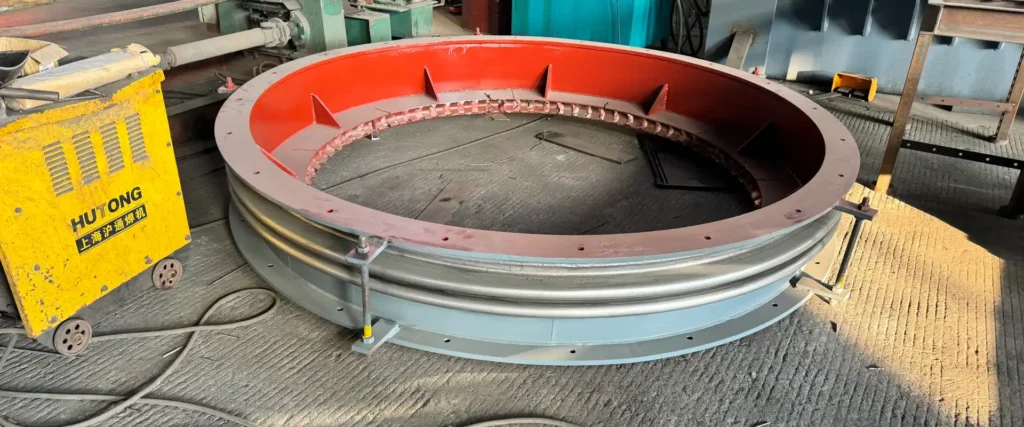
Metal expansion joints are commonly installed in cement plant ducts, pipelines, dust collection systems, fans, mills, kilns, and powder handling equipment. They absorb thermal expansion, limited mechanical movement, and vibration that would otherwise place excessive stress on connected equipment.
However, a metal expansion joint is not a universal solution for every alignment or movement problem. When the actual displacement exceeds the design range, pipe supports are missing, installation dimensions are incorrect, or the bellows material does not match the operating conditions, premature metal expansion joint failure can occur.
Visible leakage is often the final stage of the problem. Earlier warning signs may include bellows distortion, uneven convolution spacing, flange movement, unusual vibration, corrosion marks, damaged liners, or cracks near the bellows welds.
When replacement is necessary, the correct metal expansion joint for cement plant ducts should be selected according to movement direction, temperature, pressure, medium, connection dimensions, and installation conditions.
What Does Metal Expansion Joint Failure Look Like?
Metal expansion joint failure does not always begin with a large visible crack. Many failures develop gradually and can be detected during routine inspection.
Common warning signs include:
✓ Fine cracks on the bellows convolutions
✓ Pinholes or powder leakage
✓ Distorted or flattened convolutions
✓ Bellows stretched beyond the normal length
✓ Uneven compression on one side
✓ Corrosion spots or thinning metal
✓ Damaged internal liner
✓ Loose flange bolts or gasket leakage
✓ Bent tie rods or control rods
✓ Abnormal vibration during operation
✓ Repeated failure at the same installation point
The position and shape of the damage can help identify the root cause. A circumferential crack may indicate repeated axial cycling, while damage concentrated on one side may suggest lateral misalignment or uneven loading.
1. Thermal Movement Exceeds the Design Range
Every metal expansion joint has a limited movement capacity. Depending on the design, it may absorb axial compression, axial extension, lateral movement, angular movement, or a controlled combination of these movements.
Metal expansion joint failure can occur when the actual thermal movement is greater than the allowable movement specified in the design.
This may happen when:
✓ The operating temperature is higher than expected
✓ The duct or pipe length was calculated incorrectly
✓ Expansion from connected equipment was ignored
✓ Several movement sources act on one expansion joint
✓ The joint was selected only by diameter
✓ Startup and shutdown temperature changes are frequent
✓ The bellows is already partially compressed before operation
Overextension can stretch the bellows and increase stress at the convolution roots. Excessive compression can cause the convolutions to touch, buckle, or deform.
Before selecting a replacement, calculate the actual hot and cold positions of the pipeline or duct. The required movement should include normal operation, startup, shutdown, and possible abnormal temperature conditions.
2. Incorrect Installation Length or Cold Setting
A metal expansion joint must be installed at the correct face-to-face length. If it is installed too long, too short, twisted, or incorrectly pre-compressed, part of its movement capacity is consumed before operation begins.
Common installation problems include:
✓ Pulling the joint into position with flange bolts
✓ Compressing the bellows to compensate for a short pipe section
✓ Stretching the joint to close an installation gap
✓ Removing shipping bars before the joint is secured
✓ Incorrect cold setting
✓ Welding nearby without protecting the bellows
✓ Allowing weld spatter to contact the thin metal surface
A metal expansion joint should not be used to correct construction errors. Forcing the joint into alignment creates permanent stress and can lead to early metal bellows fatigue failure.
Before installation, measure:
✓ Free length of the expansion joint
✓ Distance between mating flanges
✓ Flange parallelism
✓ Centerline alignment
✓ Required cold setting
✓ Direction of expected movement
Shipping bars or temporary restraints should only be removed according to the installation procedure and after the connected duct or pipeline is properly supported.
3. Pipeline or Flange Misalignment
Expansion joint flange misalignment is a common cause of uneven bellows deformation. It may be axial, lateral, angular, or rotational.
Typical signs include:
✓ One side of the bellows is compressed
✓ The opposite side is stretched
✓ Convolution spacing is uneven
✓ Cracks appear on only one side
✓ Flange bolts loosen repeatedly
✓ Gaskets leak after startup
✓ The joint appears twisted
Rotational torsion is particularly dangerous because thin metal bellows are generally not designed to absorb twisting. Even small rotational misalignment can create high local stress and shorten service life.
Before installing a replacement metal expansion joint, confirm that the mating flanges are:
✓ Parallel
✓ Concentric
✓ Properly supported
✓ Free from excessive angular error
✓ Not dependent on the joint for alignment
If the surrounding ductwork moves after bolts are loosened, the problem may be pipe stress or poor support rather than the expansion joint itself.
4. Missing Anchors, Guides, or Pipe Supports
A metal expansion joint can only function correctly when the surrounding pipeline or duct system controls the direction of movement.
Anchors resist pressure thrust and define fixed points. Guides keep the pipe moving in the intended direction. Supports carry the weight of the pipe, duct, insulation, and collected material.
Without proper anchors and guides, the expansion joint may experience movement it was not designed to absorb.
Possible results include:
✓ Excessive axial extension
✓ Lateral buckling
✓ Bellows squirm
✓ Flange displacement
✓ Tie-rod bending
✓ Vibration amplification
✓ Repeated gasket leakage
✓ Damage to connected fans or equipment
In large cement plant ducts, accumulated dust can also increase the effective weight of the system. If supports are weak or poorly positioned, this additional load may be transferred to the expansion joint.
When metal expansion joint failure occurs repeatedly at the same location, inspect the complete support arrangement instead of replacing the joint with an identical unit immediately.
For the selection and application of metallic bellows, engineers may refer to the EJMA standards for metallic bellows expansion joints when reviewing movement, pressure thrust, anchors, guides, and installation requirements.
5. Excessive Vibration or Pressure Pulsation
Metal expansion joints can absorb limited vibration, but they should not be expected to correct severe mechanical vibration from fans, blowers, mills, crushers, or poorly balanced rotating equipment.
Excessive vibration can cause:
✓ High-cycle fatigue cracking
✓ Cracks near convolution roots
✓ Weld failure
✓ Tie-rod loosening
✓ Flange bolt loosening
✓ Liner movement
✓ Noise and visible bellows shaking
Pressure pulsation can create similar cyclic stress. This may occur near fans, pneumatic conveying lines, compressors, pulse-cleaning systems, or process equipment with unstable airflow.
A repeated small movement can be more damaging than one large movement because it produces a high number of fatigue cycles.
When vibration-related metal expansion joint failure is suspected, check:
✓ Fan and motor balance
✓ Bearing condition
✓ Foundation bolts
✓ Flexible connector location
✓ Vibration frequency
✓ Pressure fluctuations
✓ Distance from rotating equipment
✓ Whether the joint has a flow liner or external cover
The vibration source should be corrected. Increasing bellows thickness alone may not solve the problem and can reduce flexibility.
6. Metal Bellows Fatigue Cracking
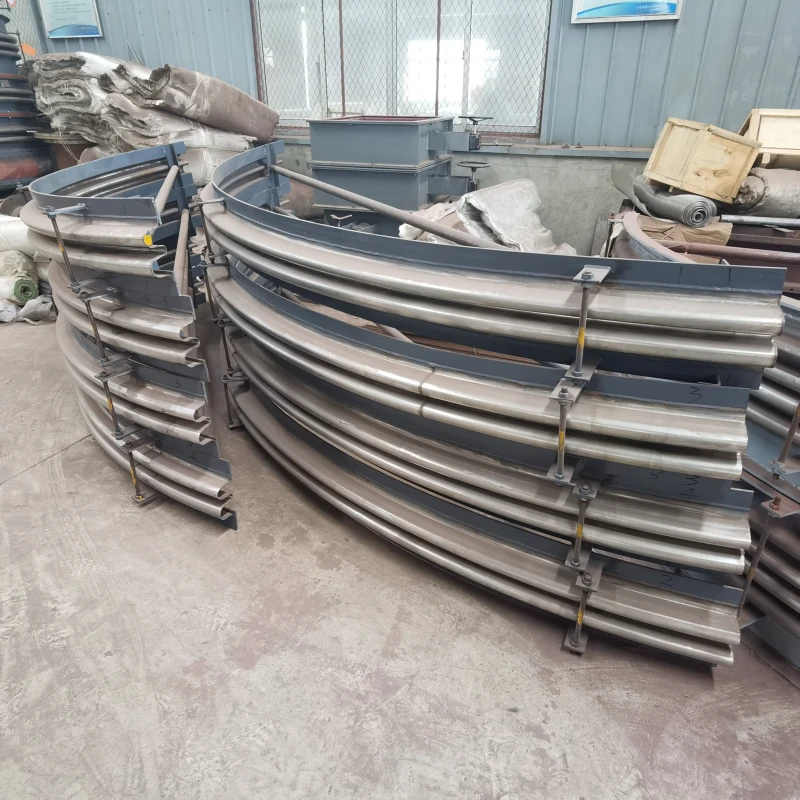
Metal bellows fatigue failure occurs when the bellows completes more movement cycles than its design can withstand, or when each cycle produces excessive stress.
Fatigue cracks often develop near:
✓ Convolution roots
✓ Bellows-to-end welds
✓ Areas of uneven deformation
✓ Locations affected by vibration
✓ Previously repaired sections
✓ Corroded or thinned metal
The cracks may begin as very fine lines and grow gradually. Powder leakage, air leakage, or discoloration may be the first visible sign.
Factors that accelerate fatigue include:
✓ Excessive movement per cycle
✓ Frequent startup and shutdown
✓ Vibration combined with thermal movement
✓ Incorrect installation length
✓ Material thinning
✓ Poor weld quality
✓ Uneven pressure loading
✓ Torsional stress
Fatigue is not always caused by poor product quality. A correctly manufactured expansion joint can still fail early if the actual movement or number of cycles exceeds the original design basis.
7. Corrosion, Abrasion, and Cement Dust Buildup
Metal expansion joints in cement plants may be exposed to hot gas, cement dust, fly ash, moisture, chemical compounds, and abrasive particles.
Corrosion can thin the bellows until it develops pinholes or cracks. Abrasion can wear the surface, especially when high-velocity dust directly strikes the bellows.
Common causes include:
✓ Condensation inside the duct
✓ Incorrect stainless-steel grade
✓ Acidic gas or chemical exposure
✓ Outdoor rainwater entry
✓ Wet cement dust deposits
✓ High dust velocity
✓ Damaged internal liner
✓ Cement buildup between convolutions
Dust buildup between the bellows convolutions can restrict movement. When the joint tries to compress, hardened material may prevent the convolutions from moving freely, creating local stress and deformation.
An internal flow liner can reduce direct particle impact, but the liner must be correctly designed. A loose, damaged, or incorrectly oriented liner may rub against the bellows or interfere with movement.
In industrial ventilation and dust collection systems for cement plants, expansion joints should be matched with the actual gas temperature, dust velocity, duct movement, and corrosion conditions.
How to Identify the Cause from the Damage Pattern
The following inspection table can help narrow down the likely cause of metal expansion joint failure.
| Damage pattern | Likely cause |
|---|---|
| Circumferential crack around a convolution | Repeated axial fatigue |
| Cracking on one side only | Lateral or angular misalignment |
| Bellows stretched and narrow | Axial overextension |
| Convolutions touching or flattened | Excessive compression |
| Twisted bellows | Rotational misalignment |
| Fine pinholes with surface thinning | Corrosion |
| Local polished or worn area | Abrasion or liner contact |
| Cracks near end welds | High local stress or weld fatigue |
| Bent tie rods | Excessive pressure thrust or uncontrolled movement |
| Dust packed between convolutions | Cement buildup restricting movement |
| Repeated flange gasket leakage | Pipe stress, movement, or poor alignment |
| Visible vibration during operation | Rotating equipment or pressure pulsation |
A single damage pattern may have more than one cause. The failed expansion joint should therefore be inspected together with the connected ducts, anchors, guides, supports, fan, and operating records.
Metal Expansion Joint Inspection Checklist
Regular inspection can identify early signs of metal expansion joint failure before cracks, leakage, or permanent bellows deformation become serious.
Before inspection, isolate the equipment, remove pressure, stop connected machinery, and follow the plant’s lockout procedures.
Visual inspection
Check:
✓ Bellows cracks and pinholes
✓ Convolution deformation
✓ Uneven spacing
✓ Corrosion or discoloration
✓ Dust buildup
✓ Weld condition
✓ Flange leakage
✓ Tie rods and control rods
✓ Internal and external covers
✓ Shipping bars left in place
✓ Signs of twisting or lateral offset
Dimensional inspection
Measure:
✓ Current face-to-face length
✓ Design installation length
✓ Axial compression or extension
✓ Lateral offset
✓ Flange parallelism
✓ Pipe centerline alignment
✓ Clearance around the bellows
System inspection
Review:
✓ Operating temperature
✓ Maximum temperature
✓ Internal pressure or vacuum
✓ Startup and shutdown frequency
✓ Fan vibration
✓ Pipe anchors and guides
✓ Support condition
✓ Dust accumulation
✓ Recent process changes
✓ Previous expansion joint service life
Photographs should be taken before cleaning the joint because dust patterns, leakage marks, and corrosion deposits may help identify the failure source.
Repair or Replace: How to Decide
Minor flange leakage may sometimes be corrected by replacing the gasket, checking flange alignment, and tightening bolts according to the correct sequence.
However, the metal expansion joint should normally be replaced when:
✓ The bellows has a crack or pinhole
✓ The metal surface is severely corroded
✓ Convolutions are permanently deformed
✓ The joint has been overextended
✓ Welds are cracked
✓ Tie rods or structural parts are damaged
✓ The bellows has lost flexibility
✓ Previous repairs have failed
✓ Leakage affects plant safety or production
Welding directly onto a thin bellows surface is generally not a reliable long-term repair. Local welding can introduce additional heat-affected zones and residual stress.
Before installing a replacement, correct the original cause. Otherwise, the new expansion joint may fail in the same way.
Information Required Before Ordering a Replacement
To select a suitable replacement metal expansion joint, provide:
✓ Internal diameter or duct dimensions
✓ Face-to-face length
✓ Flange size and drilling pattern
✓ Required axial movement
✓ Required lateral movement
✓ Required angular movement
✓ Operating and maximum temperature
✓ Operating pressure or vacuum
✓ Medium and dust characteristics
✓ Bellows and flange material
✓ Internal liner requirement
✓ Tie-rod or control-unit requirement
✓ Installation orientation
✓ Photos of the damaged joint
✓ Drawings of the connected duct or pipeline
Do not order only by nominal diameter. Two expansion joints with the same diameter may have completely different movement capacity, materials, pressure ratings, and structural requirements.
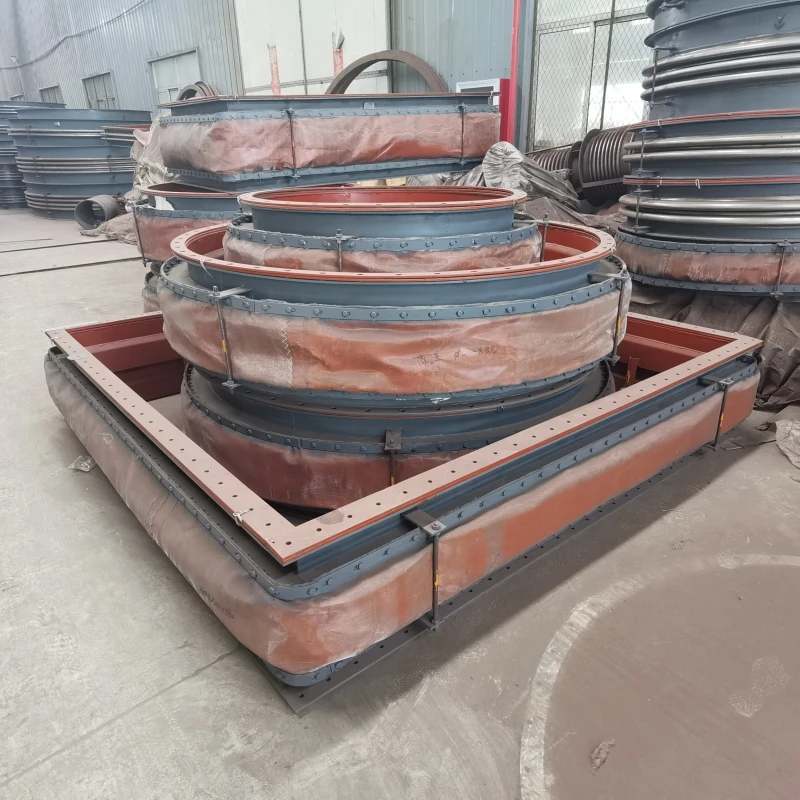
Metal bellows, filter bags, canvas shrouds, and other cement plant spare parts should be selected according to the original equipment dimensions and actual operating conditions.
FAQ About Metal Expansion Joint Failure
What are the most common metal expansion joint failure causes?
The most common causes are excessive thermal movement, incorrect installation length, flange misalignment, missing anchors or guides, vibration, fatigue cracking, corrosion, and abrasive dust exposure.
Why does a metal bellows crack near the convolution root?
Cracks near the convolution root usually indicate cyclic fatigue. The joint may be experiencing excessive axial movement, repeated vibration, frequent temperature cycling, or uneven deformation.
Can a metal expansion joint correct pipeline misalignment?
No. A metal expansion joint should not be stretched, compressed, or twisted to correct pipe or flange misalignment. The connected system should be aligned before the joint is installed.
What causes one side of an expansion joint to fail first?
One-sided damage usually indicates lateral offset, angular misalignment, poor pipe support, torsional stress, or abrasive dust impact concentrated on one side. The connected flanges, guides, anchors, and support structure should be checked before replacing the joint.
Can cement dust cause metal expansion joint failure?
Yes. Cement dust can abrade the bellows, accumulate between convolutions, restrict movement, retain moisture, and accelerate corrosion. A correctly designed internal liner may reduce direct dust impact.
How can vibration damage a metal expansion joint?
Continuous vibration creates a large number of small movement cycles. These cycles can cause high-cycle fatigue cracking, weld damage, tie-rod loosening, and premature bellows failure.
Should a cracked metal expansion joint be repaired or replaced?
A cracked metal bellows should normally be replaced because local welding may not restore its original flexibility, corrosion resistance, or fatigue life. Before installing the replacement, check the movement range, flange alignment, anchors, guides, supports, and vibration source to prevent repeated failure.
What information is needed to order a replacement expansion joint?
Provide the dimensions, flange details, movement requirements, temperature, pressure, medium, material, liner requirements, installation orientation, drawings, and photos of the damaged joint.
How often should metal expansion joints be inspected?
Inspection frequency depends on operating temperature, movement cycles, vibration, corrosion risk, and equipment importance. Critical joints should be visually checked during routine maintenance and inspected closely during planned shutdowns. An immediate inspection is also recommended after abnormal vibration, temperature excursions, visible leakage, or pipeline movement.
Conclusion
Metal expansion joint failure usually results from a mismatch between the joint design and the actual operating or installation conditions. Excessive movement, incorrect cold setting, misalignment, poor support, vibration, fatigue, corrosion, and cement dust buildup are the most common causes.
The damage pattern can provide valuable diagnostic information. Circumferential cracks may indicate axial fatigue, one-sided damage may suggest misalignment, and stretched or compressed convolutions may show movement beyond the design limit.
Before replacing a failed expansion joint, inspect the connected ductwork, flanges, anchors, guides, supports, vibration sources, and operating conditions. Correcting the root cause is the most effective way to prevent repeated failure and extend the service life of the replacement joint.
Contact Jiangsu Lvrui Machinery Co., Ltd.
Jiangsu Lvrui Machinery Co., Ltd. provides metal expansion joints, canvas shrouds, industrial filter bags, bag filters, air slide conveyors, loading spouts, and dry bulk material handling equipment for cement plants, grinding stations, fly ash terminals, lime plants, and mineral powder industries.
For replacement selection or metal expansion joint failure analysis, please send us the joint dimensions, flange details, operating temperature, pressure, movement requirement, medium, installation position, drawings, and clear photos of the damaged area.
WhatsApp: +86-18261998937
WeChat: +86-18261998937
Email: info@lvrui-conveyor.com
Website: lvrui-conveyor.com
Indonesian Short Version
Metal expansion joint failure dapat disebabkan oleh pergerakan termal yang melebihi desain, panjang pemasangan yang salah, flange misalignment, support yang tidak memadai, getaran, fatigue cracking, korosi, dan penumpukan debu semen.
Kerusakan dapat terlihat sebagai retak pada bellows, pinhole, deformasi convolution, kebocoran flange, tie rod bengkok, atau abrasi pada satu sisi. Expansion joint tidak boleh digunakan untuk memperbaiki kesalahan alignment pada duct atau pipeline.
Sebelum mengganti expansion joint, periksa anchor, guide, support, getaran fan, temperatur, tekanan, dan arah pergerakan. Jiangsu Lvrui Machinery Co., Ltd. menyediakan metal expansion joints dan spare parts untuk sistem ducting dan material handling di pabrik semen.