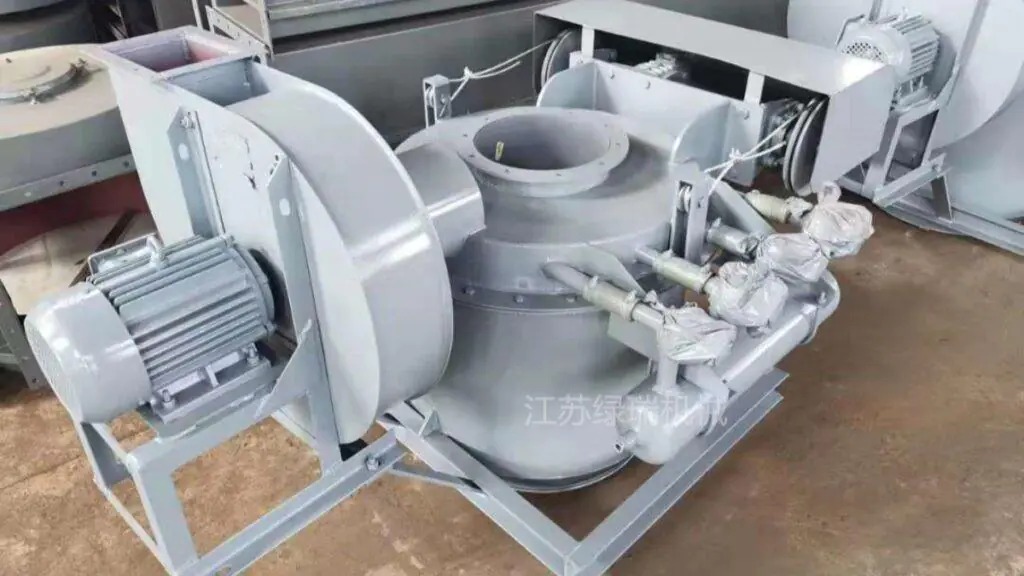
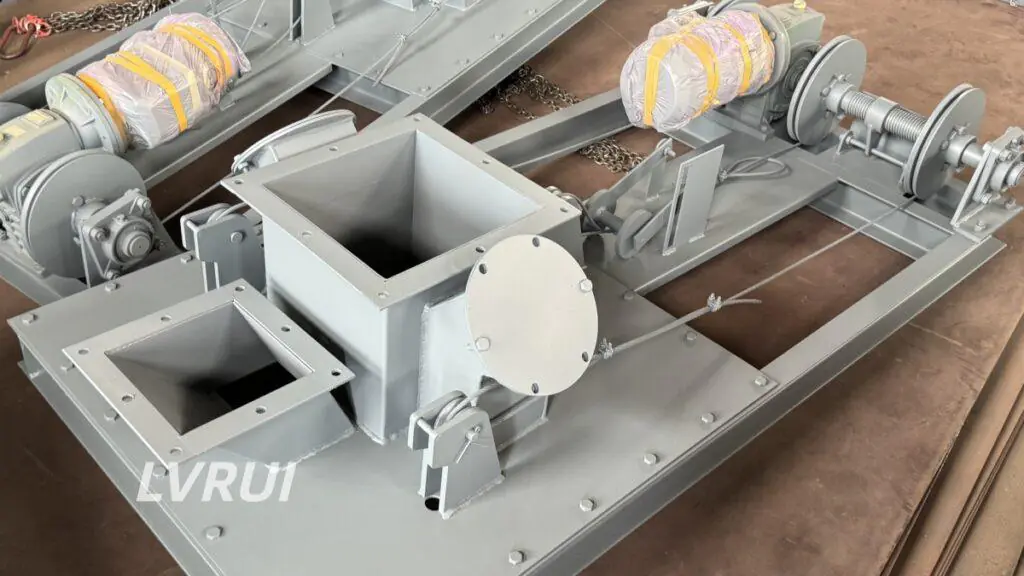
A practical comparison of loading flexibility, material feeding, capacity, dust control, installation and operating conditions
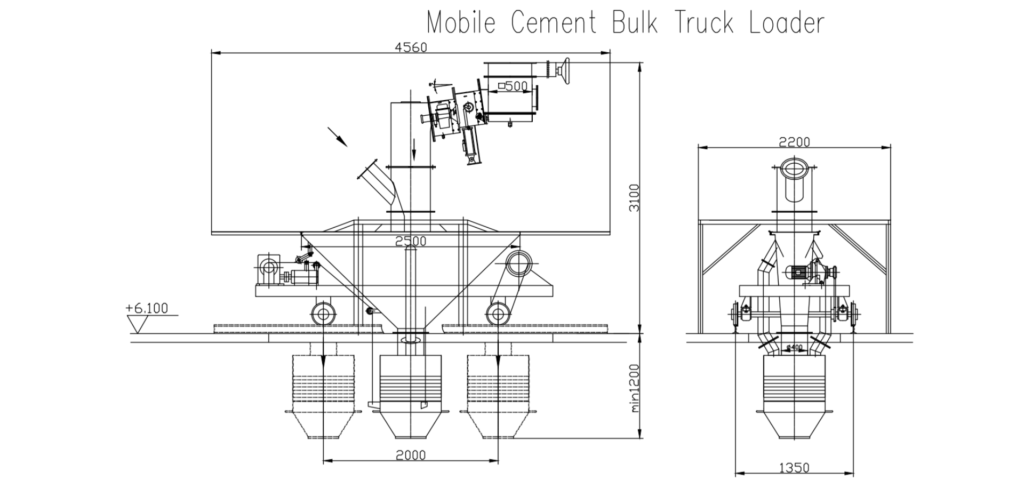
Mobile Bulk Loader or Fixed Loading Station?
A mobile bulk loader is generally more suitable when the loading position changes, several loading points are used at different times, or the plant wants to reduce permanent platforms and fixed loading structures.
A fixed loading station is usually more suitable when trucks always load at the same position, the upstream silo and conveying equipment are permanent, and loading runs frequently for long periods.
The choice should not be based only on whether the loader can move.
The complete decision should consider:
✓ Material supply method
✓ Number of loading positions
✓ Required loading frequency
✓ Truck and tanker types
✓ Dust-control arrangement
✓ Available civil and structural work
✓ Automation requirements
✓ Future changes to the plant layout
The most important distinction is:
A mobile loader changes where loading can take place. It does not eliminate the need for stable material feeding, dust control or correct truck positioning.
1. Loading Position Flexibility
The strongest advantage of a mobile bulk loader is its ability to serve changing loading positions.
This can be useful in:
- Existing cement plants with limited loading infrastructure
- Bulk powder warehouses
- Grinding stations
- Temporary loading yards
- Terminals with several possible truck positions
- Retrofit projects where a permanent loading tower is difficult to install
A mobile unit can be repositioned when the active loading point changes. Current LVRUI mobile-loader configurations use a mobile chassis and telescopic loading section specifically for this type of flexible operation.
A fixed loading station works differently.
The loading position, support structure, upstream material route and truck access are designed around one permanent point.
This is often more efficient when:
- The truck route is already established
- One silo serves one loading bay
- Loading operates every day
- Drivers can repeatedly position tankers under the same outlet
Important Limitation
A mobile bulk loader serving several locations does not normally mean that one unit loads several trucks simultaneously.
Its advantage is sequential use:
Loading Point A → Reposition → Loading Point B
If several loading points must operate at the same time, separate loaders or a multi-point fixed system should be evaluated.
2. How Will Cement Reach the Loader?
This is one of the most important questions and is often ignored during early equipment selection.
A mobile loading unit still needs a reliable source of cement.
Possible upstream arrangements include:
- Silo discharge outlet
- Air slide conveyor
- Screw conveyor
- Flexible transfer connection
- Buffer hopper
- Intermediate feeding system
A fixed station has a natural advantage when it is installed directly beneath or beside a permanent cement silo.
The material route can remain fixed:
Silo → Flow control → Conveyor or chute → Bulk loader
This makes structural support, controls and conveying interfaces relatively straightforward.
A mobile loader requires more planning.
If the loader moves but the material supply remains fixed, the plant must determine how the two systems will reconnect at each loading position.
Questions include:
- Does the conveyor move with the loader?
- Is there a flexible material connection?
- Are several fixed feed points provided?
- Will a buffer hopper travel with the loading unit?
- How is dust sealing maintained after repositioning?
Mobility should therefore be evaluated together with the feeding interface, not as an isolated equipment feature. For general conveyor design and installation references, see CEMA’s conveyor engineering and safety resources.
3. Which System Has Higher Loading Capacity?
Neither mobile nor fixed equipment automatically has the higher capacity.
Actual cement truck loading capacity depends on the complete material path:
Silo discharge → Flow control → Conveying → Loading equipment → Tanker venting
A large mobile loader cannot reach its rated capacity if the upstream conveyor supplies cement too slowly.
Likewise, a large fixed bulk loader will not improve truck loading time if silo discharge or tanker venting is the real bottleneck.
Your existing Cement Bulk Loader page similarly treats the loader as part of the wider silo discharge, flow-control and dust-control system rather than as an independent capacity source.
For both layouts, confirm:
- Required t/h
- Cement bulk density
- Truck or tanker capacity
- Desired loading time per vehicle
- Upstream conveyor capacity
- Loading inlet dimensions
- Tanker venting condition
When Fixed Equipment Has an Advantage
A fixed station may be preferable for continuous, repetitive high-frequency loading because the material interfaces, supports and controls remain permanently connected.
When Mobile Equipment Is Sufficient
A mobile loader can still provide high loading capacity when the feeding system and material interfaces are properly designed.
Therefore:
Do not select fixed or mobile equipment based only on a capacity number. Compare the capacity of the complete loading line.
4. Dust Control: Mobile Does Not Mean Dust-Free by Itself
Fine cement powder displaces dusty air when it enters a tanker.
Both mobile and fixed systems therefore require appropriate dust-control measures.
A fixed loading station can be connected to:
- A central bag filter
- A local dust collector
- A dedicated dust-return line
- An integrated loading-point filter
A mobile bulk loader may use:
- An integrated dust collector
- A mobile dust collection unit
- A flexible connection to an external dust system
The current LVRUI mobile-loader product configuration also allows an integrated dust collector rather than requiring a permanent remote collector.
Regardless of layout, dust-control performance depends on:
- Loading-spout sealing
- Filter condition
- Extraction airflow
- Tanker venting
- Loading rate
- Material connection sealing
A mobile system should therefore not be described as automatically “dust-free.”
Its advantage is that the dust-control equipment can be integrated or adapted to a flexible loading layout.
5. Installation and Civil Work
A fixed loading station usually requires more permanent site preparation.
Depending on the project, this may include:
- Loading platform
- Steel supports
- Fixed material chutes
- Dust ducts
- Electrical cable routes
- Access platforms
- Truck positioning area
- Structural connections to the silo
This investment is reasonable when the loading bay will remain in the same position for many years.
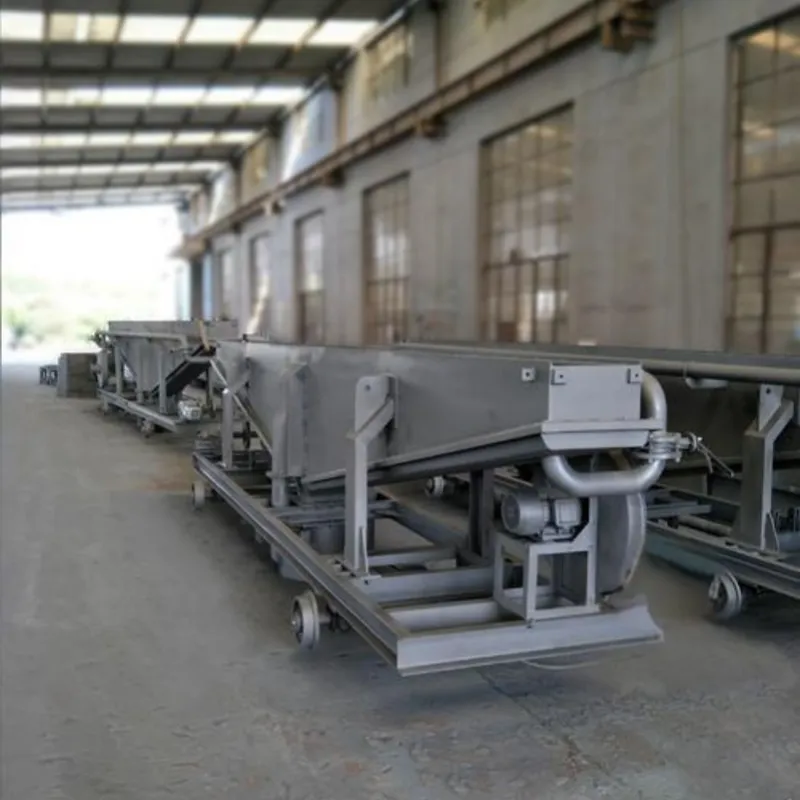
A mobile bulk loader can reduce some permanent structural work.
This makes it attractive for:
- Existing plants
- Loading-yard upgrades
- Temporary projects
- Sites where structural modification is difficult
However, “mobile” does not mean “no installation.”
The site still needs:
✓ Suitable ground condition
✓ Adequate operating space
✓ Electrical supply
✓ Material feed connection
✓ Safe vehicle route
✓ Suitable parking position during loading
If a large mobile loader must be moved between locations, turning radius, floor condition and nearby structures should also be considered.
Mobile Bulk Loader vs Fixed Loading Station
| Selection factor | Mobile bulk loader | Fixed loading station |
|---|---|---|
| Loading position | Can be repositioned | Permanent |
| Multiple loading points | Suitable for sequential use | Separate or shared fixed points |
| Upstream connection | Requires flexible planning | Easier to keep permanently connected |
| Civil work | Usually less permanent work | Usually more permanent structure |
| Dust collection | Integrated, mobile or flexible connection | Often fixed or centralized |
| Continuous operation | Depends on configuration | Well suited to repetitive fixed loading |
| Retrofit projects | Strong advantage | May require structural modification |
| Automation | Possible, but interfaces must move with the system | Easier to integrate permanently |
| Future relocation | Relatively easy | Difficult |
| Best use | Changing or temporary loading positions | Permanent high-use loading bay |
6. Automation and Truck Positioning
Fixed stations generally provide a simpler environment for automation.
The relationship between:
- Silo outlet
- Flow control gate
- Loading spout
- Dust collector
- Level sensor
- Tanker position
remains unchanged.
This makes repeated interlocks and automatic loading sequences easier to standardize.
Mobile equipment can also use:
- Level sensors
- Electric lifting systems
- Remote controls
- Start-stop interlocks
- Position confirmation
But movement introduces additional questions.
Before material loading begins, operators may need to confirm:
- Loader position
- Material connection
- Electrical connection
- Dust connection
- Truck alignment
- Wheel or chassis locking
The decision therefore depends partly on how automated the plant wants the entire loading process to become.
For a frequently repeated high-throughput dispatch line, permanent automation may favor the fixed station.
For flexible operations with fewer loading cycles, the mobility advantage may outweigh the additional positioning steps.
7. Maintenance and Future Plant Changes
A fixed loading station has predictable maintenance access because the equipment stays in one place.
Platforms, lifting access and service areas can be designed around the permanent installation.
A mobile system adds maintenance points associated with mobility, such as:
- Wheels
- Steering components
- Mobile chassis
- Flexible cables
- Flexible material interfaces
However, it can also be moved away from the loading point for certain inspections or repairs, depending on the site layout.
Future plant development is another important consideration.
A fixed station is efficient when the future process layout is known.
A mobile system may be more attractive when:
- New silos may be added
- Loading areas may move
- The plant is still expanding
- Different storage areas may share one loader
- A temporary loading solution is required before permanent construction
When Should You Choose a Mobile Bulk Loader?
A mobile bulk loader is worth considering when:
✓ Truck loading positions change
✓ Several loading points are used sequentially
✓ Permanent civil work should be limited
✓ The project is a retrofit
✓ The loading yard layout may change later
✓ A fixed loading tower is difficult to construct
✓ The upstream material connection can be made flexible
Mobility has the highest value when the plant will actually use it.
If the loader is purchased as a mobile unit but remains permanently parked under one silo, much of the additional mobility has little operational value.
When Is a Fixed Loading Station the Better Choice?
Choose a fixed station when:
✓ One permanent loading position handles most trucks
✓ The silo and upstream conveying system are fixed
✓ Loading is frequent and repetitive
✓ Permanent automation is a priority
✓ A central dust system is already available
✓ Civil construction is not a major restriction
✓ The plant layout is unlikely to change
A fixed cement bulk loader can be the more practical choice for a permanent loading bay with stable upstream feeding and frequent truck loading.
For a stable high-use loading bay, permanent installation can be the simpler and more efficient engineering choice.
Frequently Asked Questions About Mobile Bulk Loaders
Is a mobile bulk loader suitable for cement tanker loading?
Yes. A mobile bulk loader can handle cement tanker loading when the feeding capacity, loading connection, dust collection and tanker venting are correctly matched to the required throughput.
Can one mobile bulk loader serve several loading points?
Yes, when the points are used sequentially. The loader can be repositioned between locations, but one unit normally does not load several separated trucks simultaneously.
Is a mobile loader slower than a fixed loading station?
Not necessarily. Loading speed depends mainly on silo discharge, conveyor capacity, loader size, material flow and tanker venting. Mobility alone does not determine capacity.
Does a mobile bulk loader need a dust collector?
Fine cement loading requires effective dust control. Depending on the design, the loader may use an integrated collector, a mobile dust collector or a connection to an external system.
What is the main disadvantage of a mobile bulk loader?
The material, power and dust-control interfaces must accommodate equipment movement. If loading always occurs at one permanent point, this additional flexibility may provide little benefit.
What information is required before choosing between mobile and fixed loading?
Provide the material, required capacity, number of loading positions, truck type, upstream feeding method, available installation space, loading frequency, dust-control arrangement and site layout.
Conclusion
The decision between a mobile bulk loader and a fixed loading station should begin with the plant layout—not with the loader itself.
Choose a mobile system when loading flexibility has real operational value.
Choose a fixed system when one permanent loading point must operate repeatedly with stable upstream connections and permanent automation.
The correct comparison should evaluate:
Loading points → Material feeding → Capacity → Dust control → Civil work → Automation → Future layout
In many projects, the decisive question is simple:
Will the loading position genuinely need to change during normal operation?
If the answer is no, a fixed station may be the more practical solution.
If the answer is yes, a properly designed mobile bulk loader can avoid unnecessary permanent infrastructure and provide greater operational flexibility.
Need Help Choosing a Mobile or Fixed Cement Loading System?
Jiangsu Lvrui Machinery Co., Ltd. supplies mobile bulk truck loaders, fixed cement bulk loaders, loading spouts and related conveying and dust-control equipment for dry bulk material loading.
For a technical review, please provide:
- Material and bulk density
- Required loading capacity
- Truck or tanker size
- Number of loading positions
- Upstream feeding method
- Available installation space
- Required loading frequency
- Dust-control arrangement
- Site drawing, photos or videos
Based on these details, LVRUI can review whether a mobile or fixed loading layout is more suitable and recommend the required loading, feeding and dust-control configuration.
LVRUI provides equipment drawings, installation drawings and remote technical guidance. On-site installation service is not included.
WhatsApp / WeChat: +86-18261998937
Email: info@lvrui-conveyor.com