A practical comparison of structure, particle size, material load, flow control, drive options and maintenance
Quick Answer
Choose a clamshell gate when the process needs frequent automatic opening and closing, a clear discharge passage and direct feeding to a clinker bulk loader or downstream feeder.
Choose a rod gate when the outlet is large, the material contains very coarse or irregular lumps, or the main requirement is heavy-load isolation above a crusher, screen or feeder.
Neither gate is a precision metering device. A clamshell gate can provide coarse adjustment through partial positioning, while a rod gate mainly provides isolation and gradual material release through sequential rod withdrawal. The final clamshell gate vs rod gate decision should be based on maximum lump size, material-column load, operating frequency and downstream equipment.
How Are the Two Gates Different?
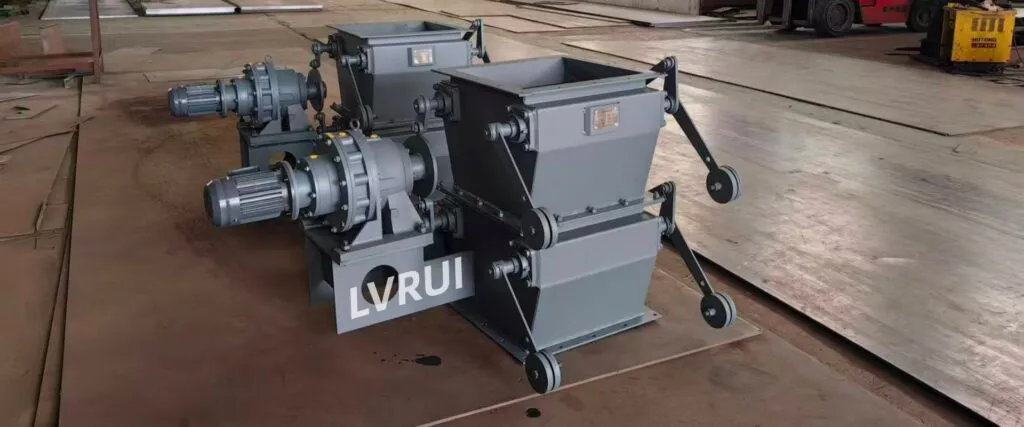
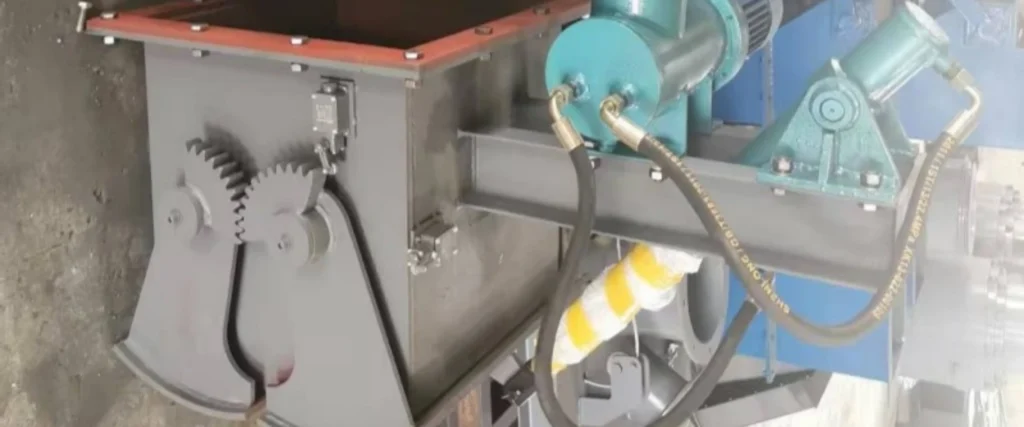
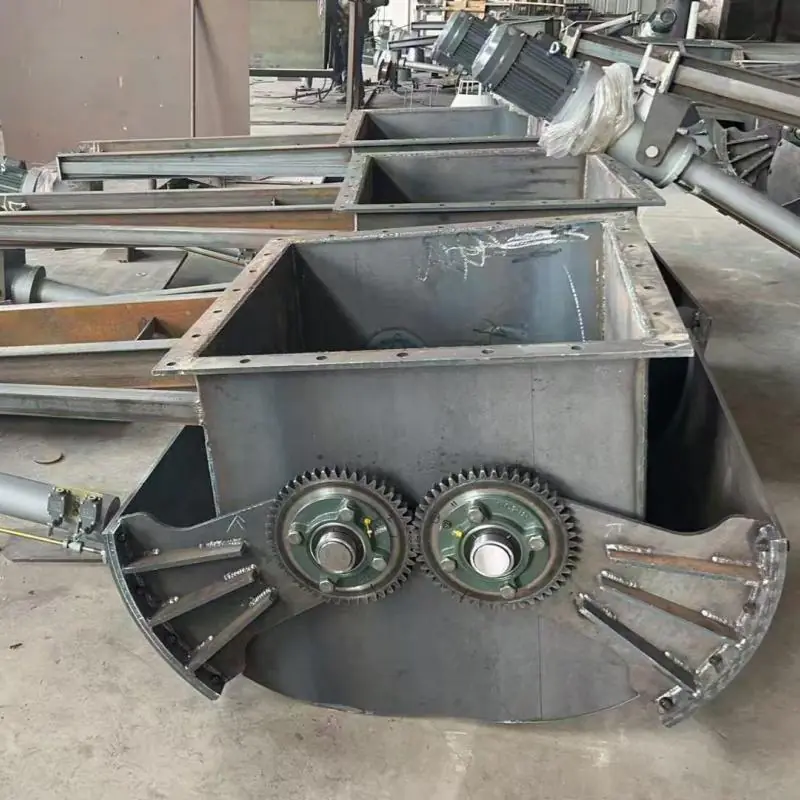
A clamshell gate uses two opposing curved blades. External gears keep the blades synchronized as they open from the centre or close together.
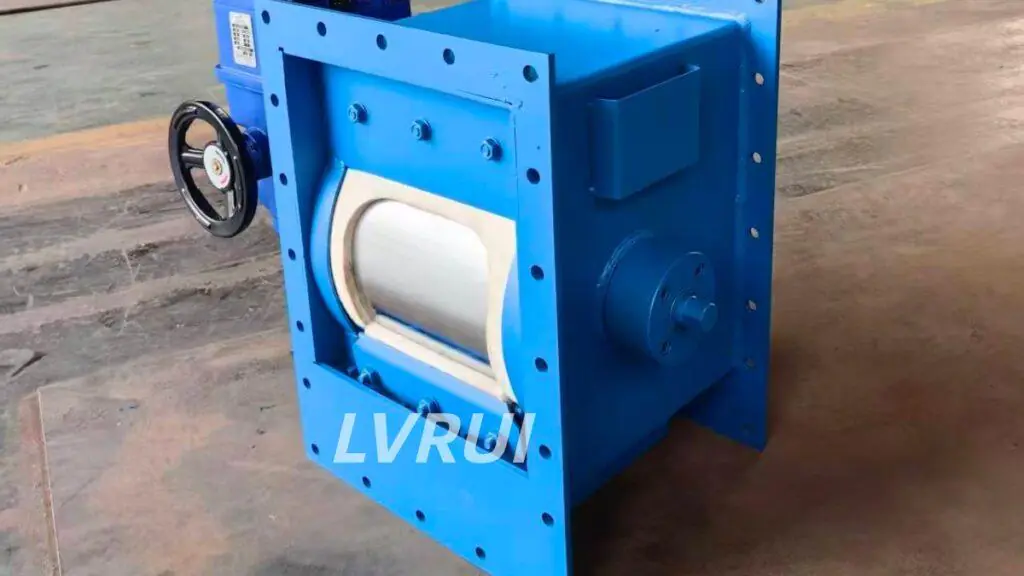
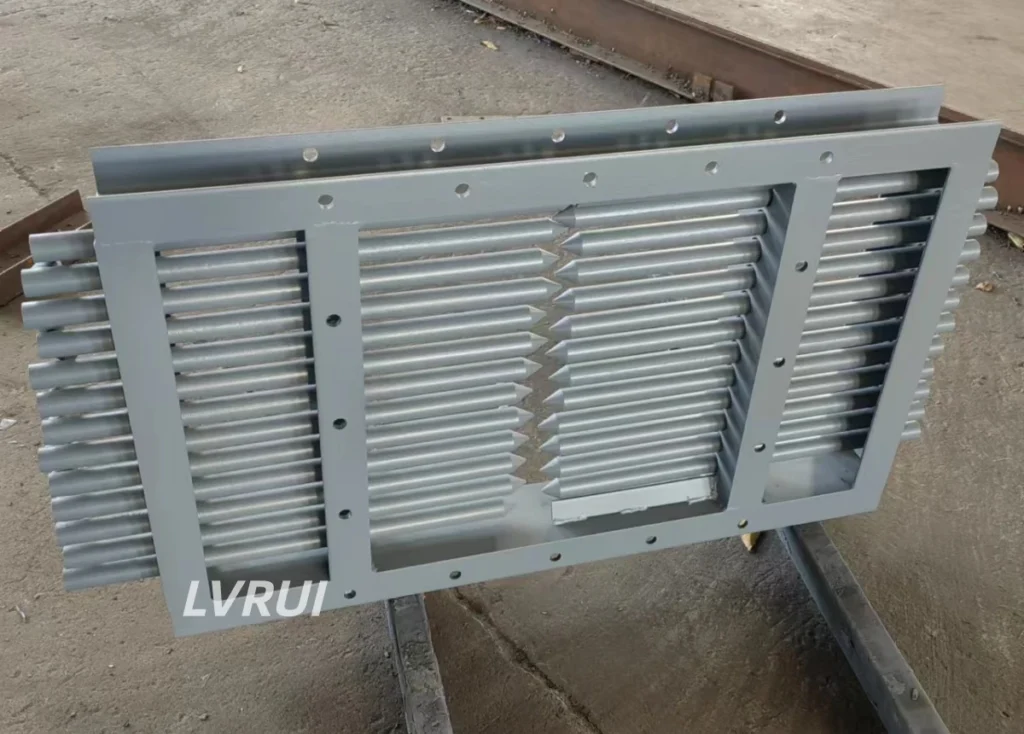
A rod gate uses multiple parallel steel rods across the silo or hopper outlet. When closed, the rods support the material above. The rods are withdrawn individually, sequentially or in groups to open the passage.
This structural difference affects:
- Suitable particle size
- Opening force
- Discharge pattern
- Operating speed
- Sealing performance
- Maintenance requirements
- Installation space
This structural difference is the basis of the clamshell gate vs rod gate comparison throughout the following sections.
1. Internal Structure and Opening Method
Clamshell Gate
A clamshell gate opens the complete outlet through one synchronized blade movement.
When fully opened, the curved blades move away from the main flow path, creating a relatively clear passage for clinker, aggregate, limestone and other coarse bulk materials.
Because both blades move together, the gate can complete the full opening or closing movement in one operating cycle.
This structure is suitable for regular production switching, especially where the gate feeds a loading system or downstream conveyor.
Rod Gate
A rod gate does not use a solid closing blade.
Several steel rods extend across the outlet and support the bulk material above. To open the outlet, the rods are pulled out one at a time, in groups or through a linked mechanism.
This divides the opening operation into smaller steps instead of forcing one complete blade through the full material load.
The rod structure is therefore more suitable for heavy-load isolation and gradual opening under difficult material conditions.
2. Particle Size and Lump Shape
Particle size and lump shape are two of the most important factors in a clamshell gate vs rod gate selection.
A clamshell gate is suitable for granular and moderately lumpy clinker when the following parameters are correctly selected:
- Gate opening
- Blade clearance
- Blade thickness
- Actuator force
- Wear protection
However, a very large or irregular lump can become trapped between the closing blades. If the lump approaches the available blade clearance, the gate may not close completely.
A rod gate is often more suitable for:
- Very coarse clinker
- Irregular lumps
- Interlocking pieces
- Crushed stone
- Coke or ore with variable particle size
Rod diameter and spacing can be selected according to the maximum lump size and material load.
The spacing must still be designed carefully. Excessive spacing may allow too much material to pass while the gate is closed. Insufficient spacing may increase bridging or prevent large particles from moving through the outlet.
3. Discharge Pattern and Flow Control
A clamshell gate creates a central, expanding opening.
As the curved blades move away from the centre, the effective discharge area increases. This makes the gate suitable for:
- Rapid on-off discharge
- Feeding a clinker bulk loader
- Feeding an apron or belt feeder
- Feeding a vibrating feeder
- Coarse flow adjustment through partial positioning
Partial opening can change the discharge area, but a clamshell gate is not a precision feeder.
The actual material flow also depends on:
- Silo outlet dimensions
- Material-column height
- Clinker bulk density
- Particle-size distribution
- Material flowability
- Downstream equipment capacity
A rod gate releases material differently. Each withdrawn rod increases the open area across the outlet.
Sequential rod withdrawal can reduce sudden material release from a heavily loaded silo or hopper. However, this should not be confused with accurate flow metering.
A rod gate is mainly an isolation and heavy-load opening device.
Where a stable and measurable mass flow rate is required, the gate should normally be combined with a feeder, weighing system or another dedicated regulating device.
4. Opening Under a Heavy Material Load
A full clinker silo or hopper can place considerable load on the outlet gate.
A clamshell gate must rotate its curved blades through this material pressure. The following components must therefore be selected according to the actual load:
- Gate frame
- Curved blades
- Shafts
- Bearings
- Synchronization gears
- Actuator
- Connecting linkage
Material-column height is especially important. A higher column of clinker can increase the load acting on the blades and raise the required actuator force.
A rod gate reduces opening resistance through sequential withdrawal.
Instead of moving one complete blade against the material load, individual rods or rod groups are removed in stages. This distributes the opening process and can reduce the force required at a large outlet.
For very large hopper openings or heavy material columns, this operating principle may make a rod gate more practical than a solid-blade gate.
For this reason, the clamshell gate vs rod gate decision becomes especially important when the silo outlet carries a high material-column load.
5. Shut-Off and Fine-Material Sealing
The clamshell gate has solid curved blades and normally provides better physical closure than the open rod structure.
It can stop the main gravity flow of clinker, aggregate, limestone and other coarse materials.
However, fine clinker dust may still pass through blade clearances unless the gate uses a specially designed sealing structure.
A rod gate intentionally contains spaces between the rods. It supports coarse material but is not designed to prevent fine particles from falling through the gaps.
This difference is important when the stored material contains:
- A high proportion of clinker fines
- Cement powder
- Fly ash
- Mineral powder
- Other fine dry materials
Neither gate should automatically be selected for dust-tight powder isolation.
Where tight isolation of fine powder is required, a solid-blade slide gate or another sealed powder valve should be evaluated separately.
6. Drive and Automation Options
Drive configuration and operating frequency are also important factors in a clamshell gate vs rod gate comparison.
Clamshell Gate Drive Options
A clamshell gate can use:
- Electro-hydraulic actuator
- Pneumatic cylinders
Limit switches or position sensors can confirm the full-open and full-close positions.
With suitable actuator and control design, intermediate positioning can also be used for coarse flow adjustment.
This makes the clamshell gate suitable for:
- Automated clinker loading
- Repeated loading cycles
- Remote operation
- PLC interlocking
- Frequent production switching
Rod Gate Drive Options
A rod gate can use:
- Manual operation
- Pneumatic operation
- Electro-hydraulic operation
Manual rod gates are suitable for infrequent maintenance isolation.
Powered configurations can move individual rods or grouped rod assemblies when remote operation is required.
However, controlling several rods is generally more complex than operating one synchronized clamshell mechanism.
The required operating frequency, rod sequence, actuator force and control logic must therefore be confirmed during design.
7. Wear, Maintenance and Installation Space
Clinker is abrasive, so both gate types require regular inspection.
Before inspecting or servicing either gate, all electrical, pneumatic and stored mechanical energy should be isolated according to the plant’s approved procedure for the control of hazardous energy during maintenance.
Clamshell Gate Maintenance Points
Check:
- Curved blade edges
- Replaceable wear plates
- Shafts and bearings
- External synchronization gears
- Actuator linkage
- Limit switches
- Blade closing alignment
- Material buildup near the centre line
Uneven blade wear or incorrect gear synchronization can prevent both blades from closing together.
Rod Gate Maintenance Points
Check:
- Rod straightness
- Rod surface wear
- Rod guides
- Frame alignment
- Withdrawal mechanism
- Material buildup around rod openings
- Pneumatic or electro-hydraulic linkage
Bent rods or misaligned guides can increase withdrawal resistance and prevent smooth operation.
Installation space also creates a major difference.
A clamshell gate requires clearance for its actuator, gear mechanism and linkage around the gate body.
A rod gate requires sufficient horizontal space for the rods to be withdrawn from the material passage.
Nearby columns, platforms, handrails or other equipment may therefore determine whether a rod gate can actually be installed and maintained.
Clamshell Gate vs Rod Gate Comparison
The following clamshell gate vs rod gate table summarizes the main differences affecting clinker silo discharge selection.
| Selection factor | Clamshell gate | Rod gate |
|---|---|---|
| Main structure | Two synchronized curved blades | Multiple removable steel rods |
| Best material condition | Granular or moderately lumpy clinker | Very coarse or irregular lumps |
| Opening method | Blades rotate away from the centre | Rods withdraw individually or in groups |
| Main duty | Fast on-off discharge and coarse adjustment | Heavy-load isolation and gradual opening |
| Operating speed | Generally faster | Depends on rod quantity and sequence |
| Precision metering | No | No |
| Fine-powder sealing | Limited without special sealing | Poor because of rod spacing |
| Heavy material column | Requires correctly sized actuator | Sequential withdrawal reduces resistance |
| Drive options | Pneumatic or electro-hydraulic | Manual, pneumatic or electro-hydraulic |
| Main wear points | Blades, gears, shafts and bearings | Rods, guides and withdrawal mechanism |
| Space requirement | Actuator and linkage clearance | Horizontal rod-withdrawal clearance |
| Typical downstream equipment | Clinker bulk loader or fixed feeder | Crusher, screen or heavy-duty feeder |
Which Gate Should You Choose?
A practical clamshell gate vs rod gate selection should begin with the material condition and required operating duty, not only the silo outlet dimensions.
Choose a Clamshell Gate When:
- The material is granular or moderately lumpy clinker.
- Frequent automatic opening and closing is required.
- The gate feeds a clinker bulk loader.
- A relatively clear full-open passage is important.
- Pneumatic or electro-hydraulic operation is available.
- Coarse adjustment through partial opening is useful.
- There is limited horizontal space for rod withdrawal.
Choose a Rod Gate When:
- The clinker contains very coarse or irregular lumps.
- The silo or hopper outlet is large.
- A heavy material column makes solid-gate opening difficult.
- The main duty is isolation above a crusher, screen or feeder.
- Gradual opening through sequential rod withdrawal is preferred.
- Frequent fast cycling is not the main requirement.
- Sufficient horizontal withdrawal space is available.
The final choice should be based on actual material and site data, not only on the silo outlet dimensions.
Information Required Before Selection
Before making the final clamshell gate vs rod gate selection, confirm the following material, process and installation data.
- Material name
- Bulk density
- Normal particle size
- Maximum lump size
- Material temperature
- Moisture and abrasiveness
- Silo or hopper outlet dimensions
- Material-column height
- Required discharge capacity
- Downstream equipment
- Operating frequency
- Available installation space
- Maintenance-access requirements
- Preferred drive and control method
- Site drawing or interface dimensions
Maximum lump size and material-column height are particularly important.
Maximum lump size affects the required opening, blade clearance and rod spacing. Material-column height affects the structural load and required actuator force.
Frequently Asked Questions About Clamshell Gate vs Rod Gate
Clamshell gate vs rod gate: which is better for clinker silo discharge?
A clamshell gate is generally more suitable for frequent automated opening and closing or direct feeding to loading and conveying equipment. A rod gate is generally more suitable for large outlets, high material-column loads and applications requiring staged material release. The final choice depends on the operating duty and installation conditions.
Which gate opens and closes faster?
In most clamshell gate vs rod gate applications, the clamshell gate operates faster because its two curved blades complete one synchronized cycle. A rod gate may require several rods or rod groups to be withdrawn or inserted, so its operating time depends on the rod quantity and drive arrangement.
Can a rod gate regulate clinker flow?
A rod gate can release clinker gradually by withdrawing individual rods or rod groups in stages. However, it is not a precision flow-control device. Stable or measurable flow regulation normally requires a downstream feeder, weigh hopper or weighing system.
Which gate handles larger clinker lumps?
A rod gate is generally more suitable for very large, irregular or interlocking clinker lumps because the rods support the material and can be withdrawn gradually. A clamshell gate can handle coarse clinker when correctly sized, but oversized lumps may obstruct the curved blades during closing.
Which gate requires more installation and maintenance space?
A clamshell gate requires clearance around its actuator, synchronized gears and linkage. A rod gate requires sufficient horizontal space to withdraw the rods completely. The surrounding columns, platforms, handrails and downstream equipment must therefore be checked before selection.
What drive options should be considered in a clamshell gate vs rod gate selection?
A clamshell gate can use pneumatic cylinders or an electro-hydraulic actuator. A rod gate can use manual, pneumatic or electro-hydraulic operation. The drive should be selected according to outlet size, material-column load, operating frequency, required opening speed and automation requirements.
Conclusion
The clamshell gate vs rod gate comparison shows that these two devices are designed for different clinker discharge conditions.
The clamshell gate is better suited to frequent on-off discharge, automated clinker loading and applications requiring a clear central opening.
The rod gate is better suited to large outlets, heavy material columns and very coarse or irregular lumps that can be released more gradually through sequential rod withdrawal.
The correct decision should consider:
- Particle size
- Maximum lump shape
- Material-column load
- Required operating frequency
- Downstream equipment
- Automation requirements
- Available installation space
Need Help Selecting a Clamshell Gate or Rod Gate?
Jiangsu Lvrui Machinery Co., Ltd. supplies clamshell gates and rod gates for clinker, aggregate, limestone, coke, ore and other coarse bulk materials.
Available options include:
- Customized opening and flange dimensions
- Wear-resistant blades, liners and rods
- Pneumatic or electro-hydraulic clamshell gate drives
- Manual, pneumatic or electro-hydraulic rod gate configurations
- Limit switches and PLC-compatible signals
- Equipment drawings
- Installation drawings
- Remote technical guidance
On-site installation service is not included.
For a technical recommendation, please provide the material data, maximum lump size, outlet dimensions, material-column height, downstream equipment, preferred drive type and site drawing.
WhatsApp / WeChat: +86-18261998937
Email: info@lvrui-conveyor.com