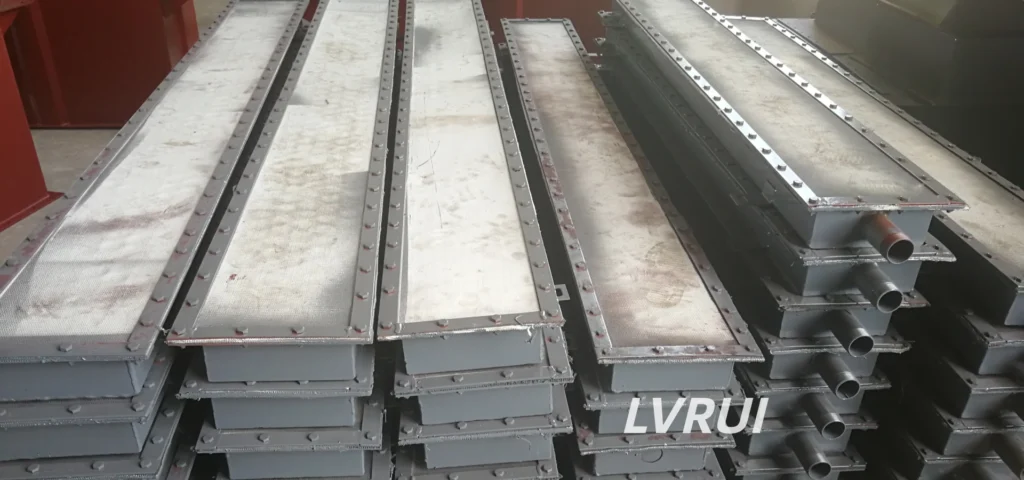
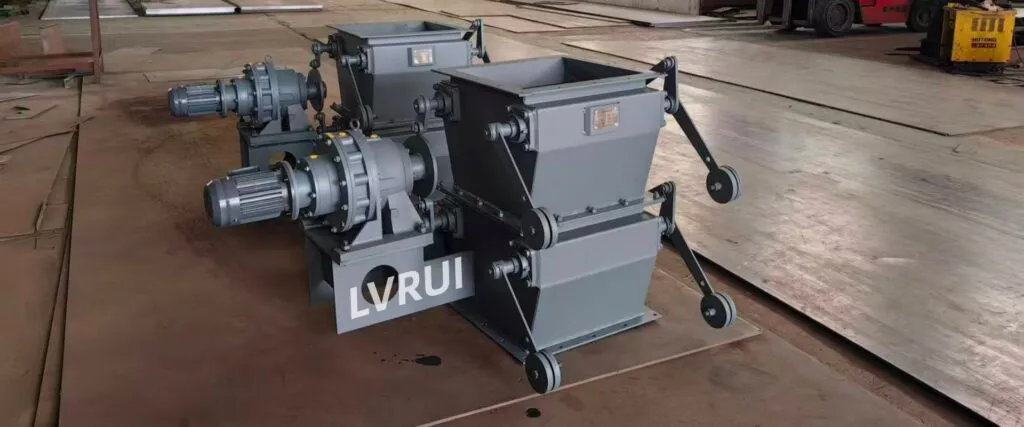
How flow control gates regulate powder entering or leaving an air slide conveyor and how installation position affects conveying stability
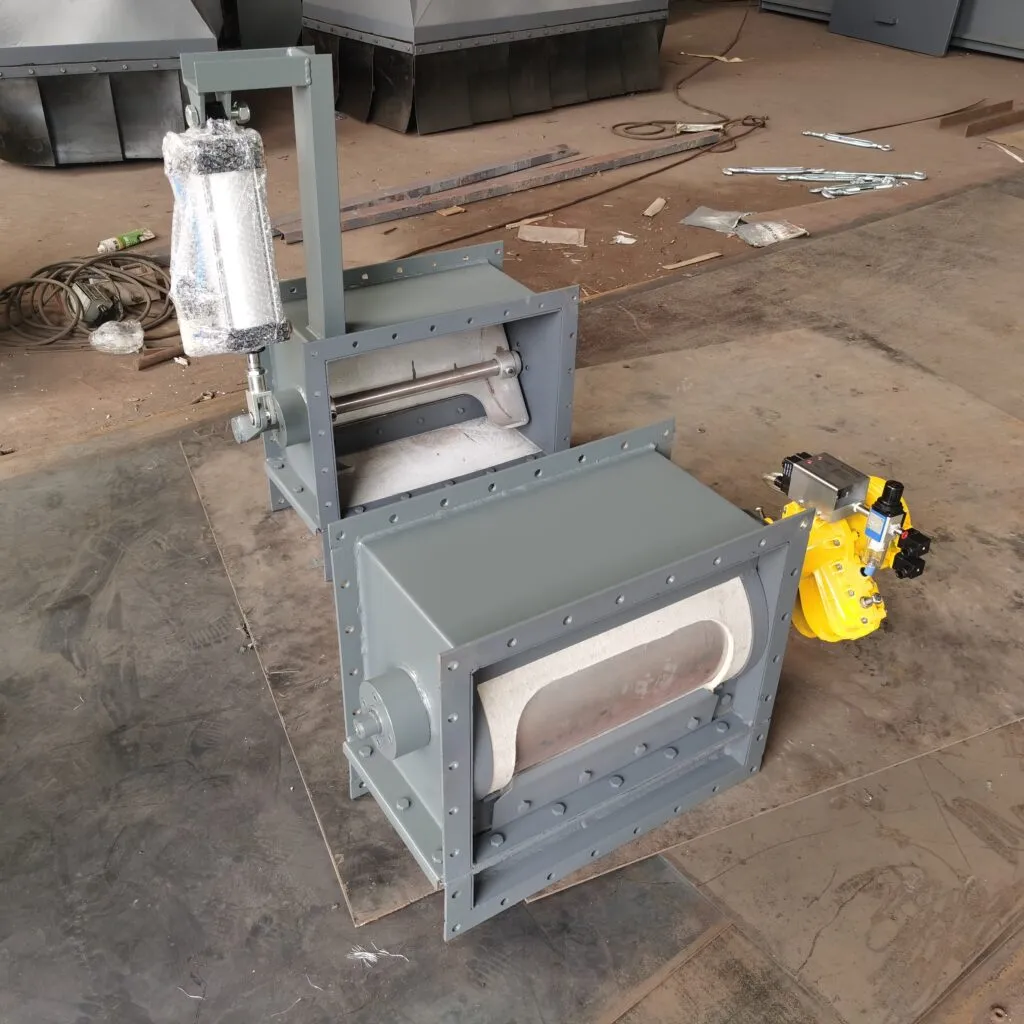
Why Flow Control Matters at the Air Slide Interface
An air slide conveyor can transport fine dry powder efficiently only when the material entering the conveyor is properly aerated and the incoming material load remains within the capacity of the conveying section.
Stable operation depends on coordinating the incoming material load with the conveying capacity of the air slide. The flow control gate is one part of this interface, while aeration and material-flow measurement remain separate functions.
If these functions are not matched correctly, the system may experience excessive incoming material, accumulation near the air slide inlet, unstable downstream discharge, or overloading of connected equipment.
How a Flow Control Gate for Air Slide Conveyor Controls Powder Discharge
A flow control gate valve adjusts the effective opening through which dry powder enters or leaves part of an air slide conveying system.
A typical arrangement may be:
Silo or hopper → isolation device where required → flow control gate → air slide conveyor → downstream equipment
The gate can help limit excessive powder discharge and match the incoming material load with the receiving capacity of the air slide.
However, actual powder flow is not determined by gate opening alone. It is also influenced by:
✓ Material bulk density
✓ Powder flowability
✓ Material head above the gate
✓ Silo aeration condition
✓ Outlet geometry
✓ Air slide width and conveying capacity
✓ Downstream resistance
For this reason, gate position should be treated as one operating variable within the complete conveying system rather than as a direct measurement of tons per hour.
Where Should the Flow Control Gate Be Installed?
The correct installation position depends on where powder discharge needs to be regulated within the conveying route.
Before the Air Slide Inlet
This is a common arrangement when cement, fly ash, or other fine powder is discharged from a silo or hopper into an air slide conveyor.
The flow control gate adjusts the material entering the conveyor so that excessive discharge does not overload the receiving section.
The gate should be positioned close enough to the discharge interface to provide effective control while still allowing sufficient space for inspection, actuator access, and maintenance.
At an Air Slide Outlet
A flow control gate may also be installed where material leaving an air slide must be regulated before entering downstream conveying, storage, or loading equipment.
Excessive restriction at the outlet can cause material to accumulate upstream, so gate position should be evaluated together with actual conveying behavior.
At a Branch or Distribution Point
Where an air slide system feeds multiple downstream branches, individual flow control gates may be installed on selected branches to regulate the material entering each route.
If the system must actively switch material from one conveying route to another, a dedicated diverter or distribution device may also be required.
At Transfer Interfaces
A gate may also be used between storage, conveying, loading, or process equipment where gravity discharge needs to be matched to downstream capacity.
The key principle is simple:
Install the flow control gate where material discharge needs to be regulated—not merely where there is convenient space for a valve.
Matching Gate Discharge to Air Slide Capacity
A flow control gate cannot compensate for an undersized or incorrectly designed air slide conveyor.
The gate should be adjusted so that the incoming powder load remains compatible with the conveying capacity of the downstream air slide section.
If material enters the air slide faster than it can be conveyed, possible symptoms include:
✓ Increasing material depth near the inlet
✓ Powder accumulation in the conveying section
✓ Unstable downstream discharge
✓ Dust release around transfer points
✓ Increased load on downstream equipment
Reducing the gate opening may reduce the incoming material load, but it does not guarantee a fixed mass-flow rate. Bulk solids flow properties, silo head, aeration conditions, and downstream resistance may continue to change during operation.
For this reason, commissioning should evaluate actual material behavior through the air slide rather than relying on gate position alone.
Flow Control Gate vs Air Slide Aeration
A flow control gate and the air slide aeration system perform different functions.
Flow Control Gate
The gate adjusts the effective opening through which powder enters or leaves the conveying system.
Air Slide Aeration
Low-pressure air enters the lower air chamber and passes through the permeable air slide fabric, reducing friction within the powder layer and allowing suitable fine material to move along the inclined conveyor.
Changing the gate opening cannot correct problems caused by:
✓ Insufficient aeration air
✓ Blocked or damaged air slide fabric
✓ Poor air distribution
✓ Incorrect conveying slope
✓ Downstream restriction
Likewise, increasing aeration air should not be used as a substitute for controlling excessive material discharge.
Stable operation requires the discharge opening and the aeration condition to work together.
Typical Air Slide Interfaces
A flow control gate for air slide conveyor applications is commonly considered where fine dry powder enters or leaves the conveying system.
Typical interfaces include:
✓ Cement silo to air slide conveyor
✓ Fly ash silo to air slide conveyor
✓ Raw meal silo or hopper to air slide
✓ Air slide discharge to downstream conveying equipment
✓ Branch or distribution points in powder conveying systems
✓ Air slide transfer before bulk loading equipment
The important factor is not the industry name itself, but whether the powder discharge at the air slide interface must be adjusted to match downstream conveying conditions.
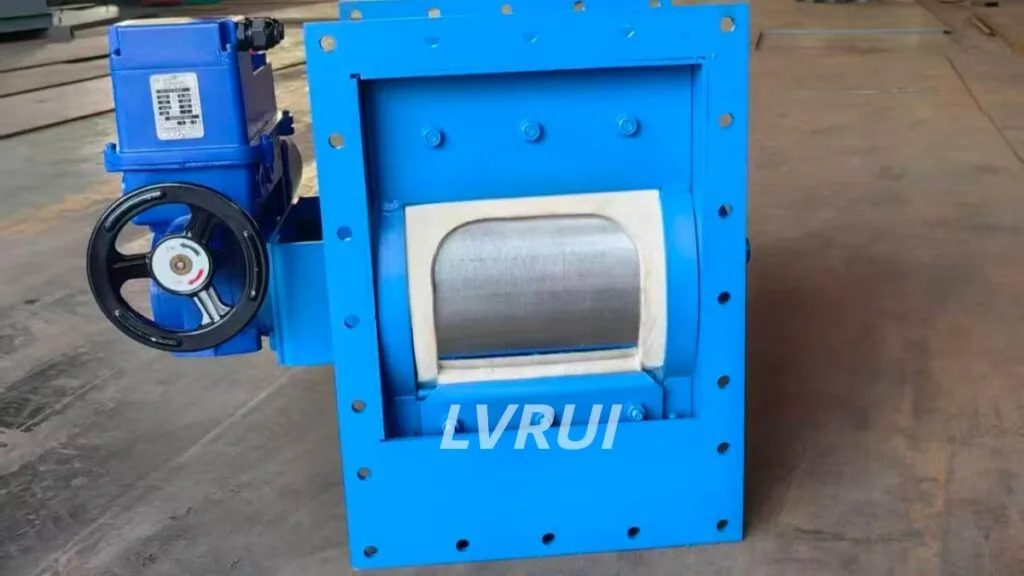
Actuation Options
Flow control gates used with air slide conveyors may be manually, pneumatically, or electrically operated.
Manual operation can be suitable where the gate position is adjusted infrequently. Pneumatic or motorized actuation can support remote operation, frequent adjustment, or integration with plant control systems.
The actuation method should be selected according to:
✓ Operating frequency
✓ Available compressed air or electrical supply
✓ Required gate positioning
✓ Position feedback requirements
✓ PLC or local control requirements
✓ Maintenance conditions
For detailed drive-type selection, see our Flow Control Gate Selection Guide.
Flow Regulation vs Isolation
A flow control gate and a slide gate may appear in the same silo-to-air-slide conveying line, but their primary functions are different.
A flow control gate adjusts the effective material discharge opening.
A slide gate or other shut-off device is mainly used where material isolation is required for shutdown, inspection, or maintenance.
Some systems use both devices in sequence when adjustable material discharge and independent isolation are both required.
For a detailed comparison, see our Flow Control Gate Valve vs Slide Gate guide.
Information Needed for Air Slide Integration
When evaluating a flow control gate for an air slide conveyor, the following operating information should be confirmed:
✓ Material type
✓ Bulk density
✓ Powder flowability
✓ Silo or hopper outlet dimensions
✓ Air slide width
✓ Required conveying capacity
✓ Gate installation position
✓ Aeration arrangement
✓ Downstream equipment
✓ Actuation requirement
✓ Available installation and maintenance space
These parameters help determine whether the gate and air slide interface are mechanically and operationally compatible.
Commissioning a Flow Control Gate with an Air Slide Conveyor
The flow control gate should be commissioned together with the air slide conveyor rather than adjusted as an isolated component.
A practical commissioning sequence may include:
- Confirm that the air slide aeration system is operating correctly.
- Verify that the conveying route and downstream equipment are ready.
- Start with a controlled gate opening.
- Observe material depth and movement near the air slide inlet.
- Check whether powder is being conveyed steadily through the downstream section.
- Increase or reduce the gate opening gradually according to actual conveying behavior.
- Confirm that downstream equipment is not being overloaded.
- Record suitable operating positions where repeatable gate adjustment is required.
If material begins to accumulate, do not assume that the gate opening is the only cause. Aeration, fabric condition, conveying slope, material characteristics, and downstream restrictions should also be checked.
Inspection Points at the Air Slide Interface
During routine inspection, check the gate and surrounding transfer point for:
✓ Smooth gate movement
✓ Material buildup around the opening
✓ Connection and flange alignment
✓ Dust leakage
✓ Actuator or cylinder condition
✓ Limit switches or position feedback
✓ Material accumulation near the air slide inlet or outlet
✓ Condition of nearby conveying interfaces
If the gate sticks, fails to reach the commanded position, or produces unstable discharge, the cause may be mechanical, pneumatic, electrical, or material-related.
For detailed fault diagnosis, see our Flow Control Gate Troubleshooting guide.
FAQs About Flow Control Gate for Air Slide Conveyor
What does a flow control gate do in an air slide conveyor system?
It adjusts the effective material discharge opening to help match the incoming or outgoing powder load with the conveying capacity of the air slide.
Does a flow control gate control the airflow in an air slide?
No. It regulates material flow. Aeration airflow is supplied separately below the conveying fabric.
Where is a flow control gate normally installed?
Common positions include between a silo outlet and air slide inlet, at an air slide outlet or at selected transfer and branch discharge points.
Does 50% gate opening mean 50% material flow?
No. Gate opening and actual material flow do not have a fixed linear relationship. The discharge rate also depends on bulk density, powder flowability, material head, aeration condition, outlet geometry, and downstream resistance.
What is the difference between a flow control gate and a shut-off gate?
A flow control gate adjusts the discharge opening, while a shut-off gate is mainly used for full-open/full-close isolation.
Can a flow control gate solve air slide blockage?
Only when excessive incoming material is contributing to the problem. A flow control gate cannot correct insufficient aeration, blocked or damaged air slide fabric, unsuitable conveying slope, poor material fluidization, or downstream restriction.
Conclusion
A flow control gate for air slide conveyor applications should be treated as part of the complete powder-discharge and conveying interface.
Its main role is to adjust the effective material opening so that powder entering or leaving the air slide remains compatible with downstream conveying conditions. It does not replace silo aeration, air slide aeration, independent isolation, or material-flow measurement.
Stable operation therefore depends on coordinating gate position with powder properties, aeration conditions, air slide capacity, installation position, and downstream resistance.
Commissioning the gate together with the complete air slide conveying route provides a more reliable basis for operation than relying on gate opening alone.
Need Help Matching a Flow Control Gate to an Air Slide Conveyor?
If you are evaluating a flow control gate for an air slide conveyor system, please provide:
- Material name and bulk density
- Silo or hopper outlet dimensions
- Air slide width
- Required conveying capacity
- Gate installation position
- Aeration arrangement
- Downstream equipment
- Manual, pneumatic, or motorized actuation requirement
- Layout drawing or available installation space
LVRUI can review the operating conditions and help evaluate the gate configuration, installation position, actuation method, and interface with the air slide conveying system.
WhatsApp: +86 18261998937
WeChat: +86 18261998937
Email: info@lvrui-conveyor.com